Coney (Cephalopholis fulva)
Key facts
- Scientific name
- Cephalopholis fulva
- Common name
- Coney
- Category
- Fish
- Family
- Epinephelidae
- Genus
- Cephalopholis
- Size
- 25–41 cm
- Depth
- 1–150 m
- IUCN status
- Least concern (LC)
- Danger level
- Harmless
- Habitats
- coral-reef
- Behaviours
- solitary, predator
- Ocean zones
- Caribbean, Eastern Pacific
Description
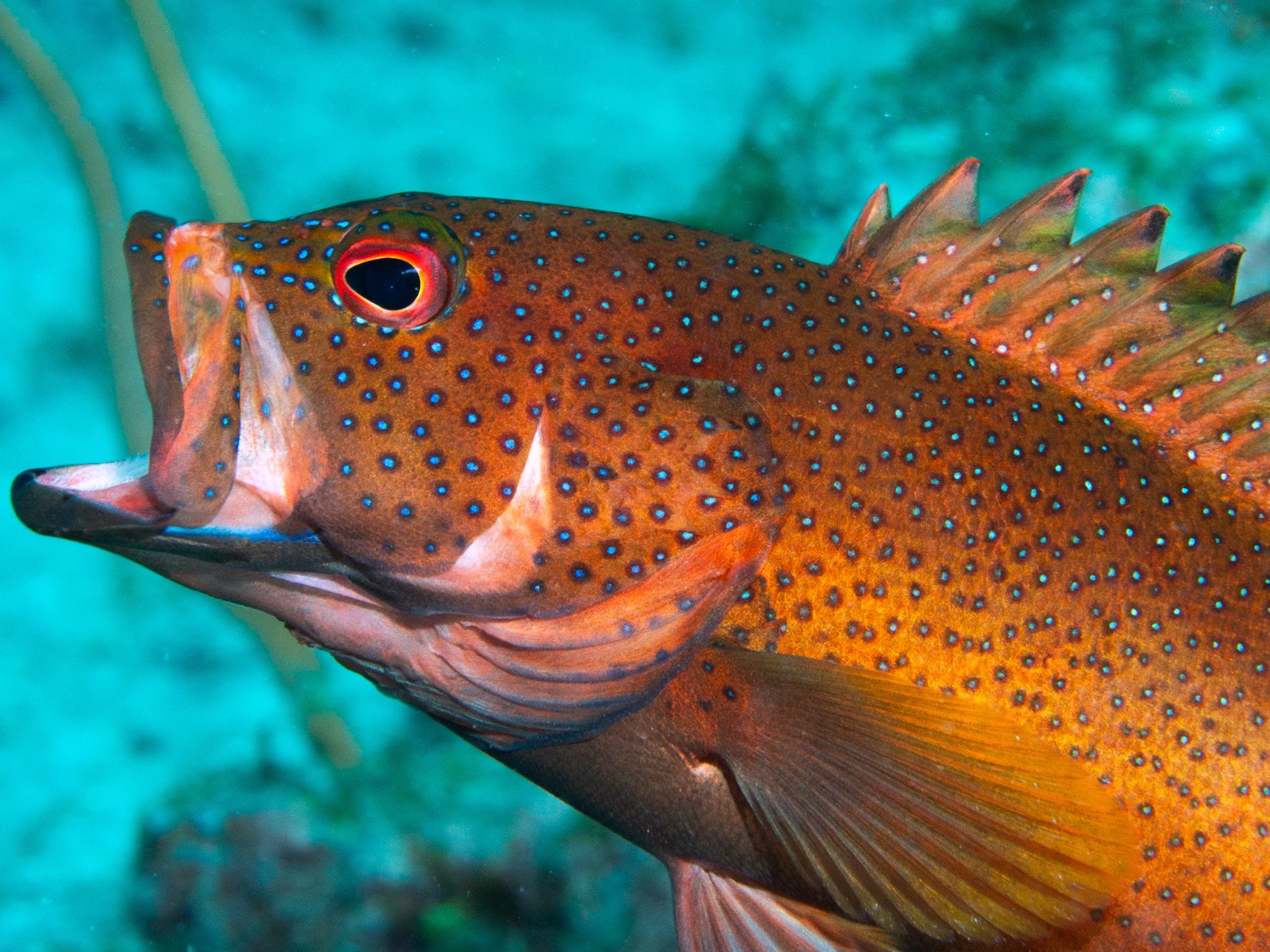
Cephalopholis fulva reaches 41 cm. Small Caribbean grouper with three main color phases: uniform dark brown, bright golden-yellow, or bicolor (dark above, white below). Always covered with small black-circled electric blue spots and two distinctive black spots on caudal peduncle. Lives from 1 to 150 m on coral reefs of Caribbean and tropical western Atlantic. Ambush territorial predator. Iconic photo subject of Caribbean dives for its vivid changing colors.
Photo of Coney
Frequently asked questions
- How big is the Coney?
- Coney (Cephalopholis fulva) reaches 25–41 cm in length.
- At what depth can you find the Coney?
- Coney is found between 1–150 m deep.
- Is the Coney dangerous to divers?
- Danger level: Harmless.
- What is the conservation status of the Coney?
- IUCN status: Least concern (LC).
- Where can you find the Coney?
- Found in: Caribbean, Eastern Pacific.
Other species in the genus Cephalopholis
- Cephalopholis cruentata - Graysby
- Cephalopholis taeniops - African hind
- Cephalopholis miniata - Coral grouper
- Cephalopholis argus - Peacock grouper
- Cephalopholis nigri - Niger hind
- Cephalopholis panamensis - Panama Grouper
Other species in the family Epinephelidae
- Epinephelus marginatus - Dusky grouper
- Epinephelus itajara - Atlantic goliath grouper
- Epinephelus striatus - Nassau grouper
- Mycteroperca tigris - Tiger grouper
- Epinephelus fasciatus - Blacktip grouper
- Plectropomus leopardus - Leopard coralgrouper
Sources
- Taxonomy: WoRMS (AphiaID 279148)
- Photos: iNaturalist (CC BY-NC)
- Distribution: GBIF (taxonKey 2388809)
- Conservation: IUCN Red List
- Encyclopedia: Wikipedia