Panama Grouper (Cephalopholis panamensis)
Key facts
- Scientific name
- Cephalopholis panamensis
- Common name
- Panama Grouper
- Category
- Fish
- Family
- Epinephelidae
- Genus
- Cephalopholis
- Size
- 20–40 cm
- Depth
- 3–50 m
- IUCN status
- Least concern (LC)
- Danger level
- Harmless
- Habitats
- coral-reef, rocky-reef
- Behaviours
- benthic, territorial
- Ocean zones
- Caribbean, Eastern Pacific
Description
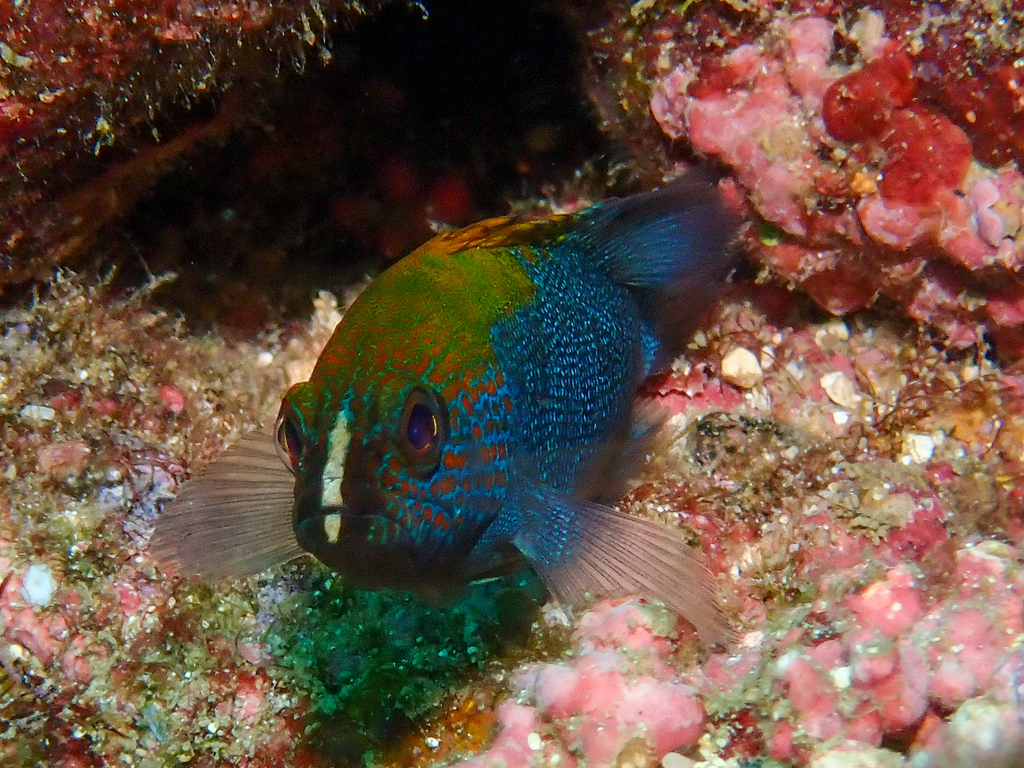
Cephalopholis panamensis reaches 40 cm. Grouper (Serranidae) endemic East Pacific & Galapagos. Uniform reddish-brown or white-spotted, red eyes, pale lips. Solitary piscivore, ambushes near corals. Rocky & coral reef 3-50 m. Territorial. Little active by day. No threats = LC. Ichthyophage regulating small reef fish.
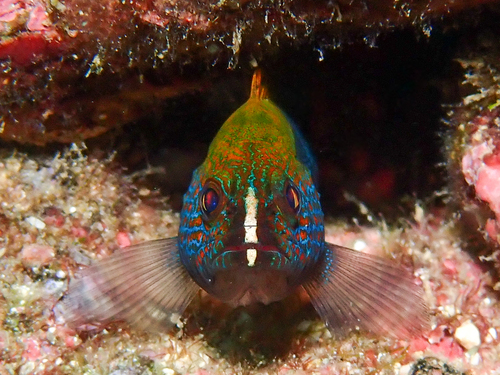
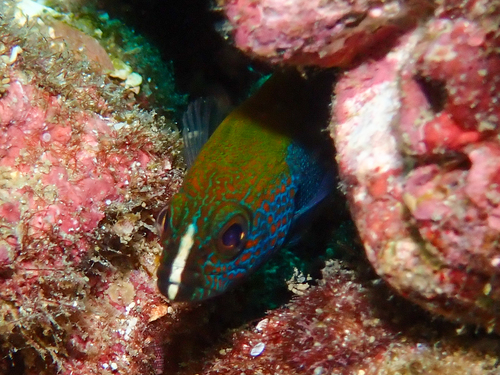
Photo of Panama Grouper
Frequently asked questions
- How big is the Panama Grouper?
- Panama Grouper (Cephalopholis panamensis) reaches 20–40 cm in length.
- At what depth can you find the Panama Grouper?
- Panama Grouper is found between 3–50 m deep.
- Is the Panama Grouper dangerous to divers?
- Danger level: Harmless.
- What is the conservation status of the Panama Grouper?
- IUCN status: Least concern (LC).
- Where can you find the Panama Grouper?
- Found in: Caribbean, Eastern Pacific.
Other species in the genus Cephalopholis
- Cephalopholis fulva - Coney
- Cephalopholis cruentata - Graysby
- Cephalopholis taeniops - African hind
- Cephalopholis miniata - Coral grouper
- Cephalopholis argus - Peacock grouper
- Cephalopholis nigri - Niger hind
Other species in the family Epinephelidae
- Epinephelus marginatus - Dusky grouper
- Epinephelus itajara - Atlantic goliath grouper
- Epinephelus striatus - Nassau grouper
- Mycteroperca tigris - Tiger grouper
- Epinephelus fasciatus - Blacktip grouper
- Plectropomus leopardus - Leopard coralgrouper
Sources
- Taxonomy: WoRMS (AphiaID 279152)
- Photos: iNaturalist (CC BY-NC)
- Distribution: GBIF (taxonKey 2388821)
- Conservation: IUCN Red List
- Encyclopedia: Wikipedia