Blacktip grouper (Epinephelus fasciatus)
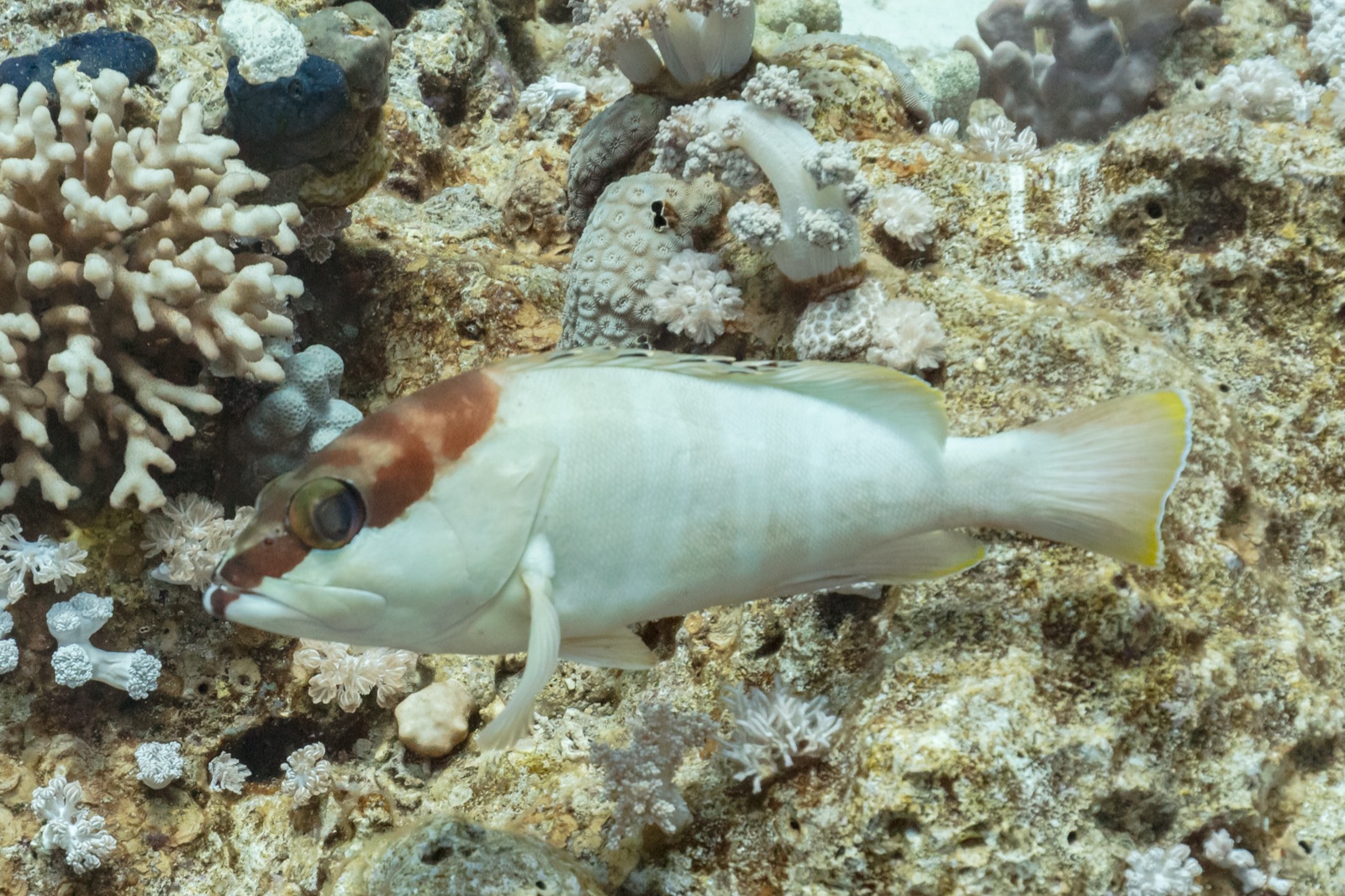
Key facts
- Scientific name
- Epinephelus fasciatus
- Common name
- Blacktip grouper
- Category
- Fish
- Family
- Epinephelidae
- Genus
- Epinephelus
- Size
- 20–40 cm
- Depth
- 1–160 m
- IUCN status
- Least concern (LC)
- Danger level
- Harmless
- Habitats
- reef
- Behaviours
- solitary, territorial
- Ocean zones
- Asian Pacific, Indian Ocean & Red Sea
Description
Epinephelus fasciatus reaches 40 cm. Red-orange to pink body marked with 5 darker vertical bars, black tips on the spiny dorsal fin. Protogynous hermaphrodite. Lives alone on Indo-Pacific reefs from 1 to 160 m, often near coral shelters. One of the most common and accessible groupers on regional dives, from the Red Sea to the Pacific islands.
Frequently asked questions
- How big is the Blacktip grouper?
- Blacktip grouper (Epinephelus fasciatus) reaches 20–40 cm in length.
- At what depth can you find the Blacktip grouper?
- Blacktip grouper is found between 1–160 m deep.
- Is the Blacktip grouper dangerous to divers?
- Danger level: Harmless.
- What is the conservation status of the Blacktip grouper?
- IUCN status: Least concern (LC).
- Where can you find the Blacktip grouper?
- Found in: Asian Pacific, Indian Ocean & Red Sea.
Other species in the genus Epinephelus
- Epinephelus marginatus - Dusky grouper
- Epinephelus itajara - Atlantic goliath grouper
- Epinephelus striatus - Nassau grouper
- Epinephelus lanceolatus - Giant grouper
- Epinephelus costae - Golden grouper
- Epinephelus aeneus - White grouper
Other species in the family Epinephelidae
- Cephalopholis fulva - Coney
- Cephalopholis cruentata - Graysby
- Mycteroperca tigris - Tiger grouper
- Plectropomus leopardus - Leopard coralgrouper
- Cromileptes altivelis - Humpback grouper
- Variola louti - Yellow-edged lyretail grouper
Sources
- Taxonomy: WoRMS (AphiaID 218207)
- Photos: iNaturalist (CC BY-NC)
- Distribution: GBIF (taxonKey 2388344)
- Conservation: IUCN Red List
- Encyclopedia: Wikipedia