Zebra seabream (Diplodus cervinus)
Key facts
- Scientific name
- Diplodus cervinus
- Common name
- Zebra seabream
- Category
- Fish
- Family
- Sparidae
- Genus
- Diplodus
- Size
- 25–55 cm
- Depth
- 15–300 m
- IUCN status
- Least concern (LC)
- Danger level
- Harmless
- Habitats
- rocky-reef
- Behaviours
- schooling
- Ocean zones
- East Atlantic, Macaronesia, Mediterranean
Description
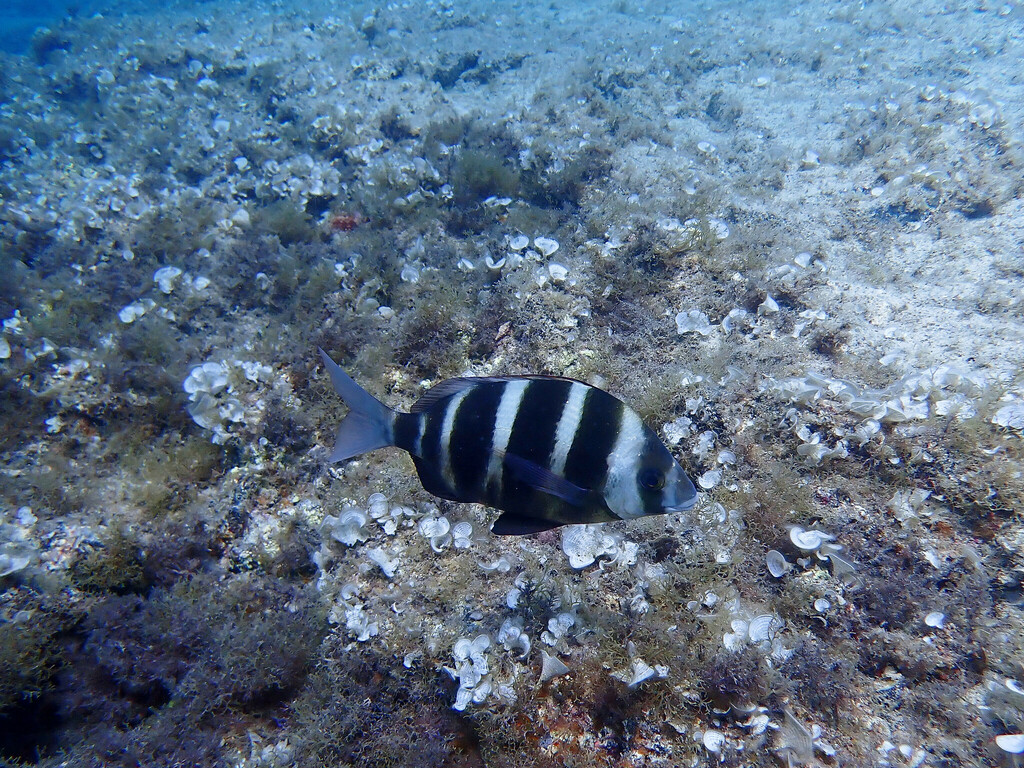
Diplodus cervinus reaches 55 cm. Large silver seabream with 5 highly contrasting vertical black bands (hence zebra seabream nickname) and prominent snout. Lives in small groups on rocky drop-offs and scree from 15 to 300 m. Distribution East Atlantic (Biscay to Senegal), Mediterranean, Macaronesia. Shyer than other Diplodus, prefers depths over 30 m. Photo subject appreciated for graphic black and white pattern.
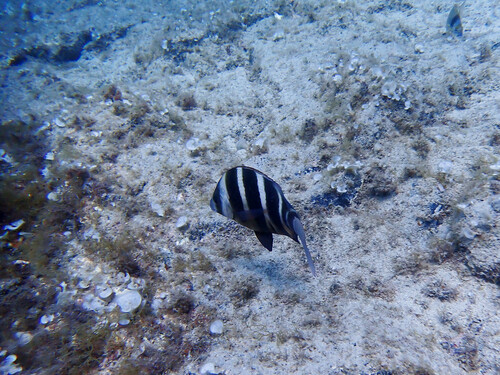
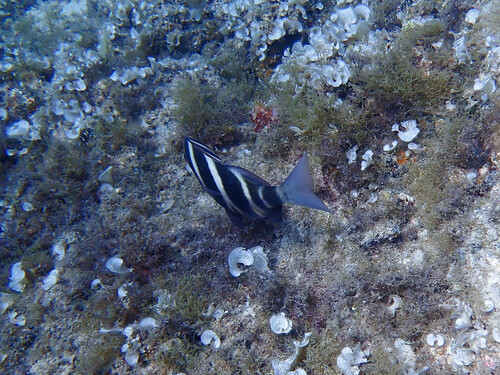
Photo of Zebra seabream
Frequently asked questions
- How big is the Zebra seabream?
- Zebra seabream (Diplodus cervinus) reaches 25–55 cm in length.
- At what depth can you find the Zebra seabream?
- Zebra seabream is found between 15–300 m deep.
- Is the Zebra seabream dangerous to divers?
- Danger level: Harmless.
- What is the conservation status of the Zebra seabream?
- IUCN status: Least concern (LC).
- Where can you find the Zebra seabream?
- Found in: East Atlantic, Macaronesia, Mediterranean.
Other species in the genus Diplodus
- Diplodus puntazzo - Sharpsnout seabream
- Diplodus annularis - Annular seabream
- Diplodus sargus - White seabream
- Diplodus vulgaris - Common two-banded seabream
- Diplodus bellottii - Senegal seabream
Other species in the family Sparidae
- Spicara smaris - Picarel
- Spicara maena - Blotched picarel
- Oblada melanura - Saddled seabream
- Boops boops - Bogue
- Spondyliosoma cantharus - Black seabream
- Pagrus pagrus - Common seabream
Sources
- Taxonomy: WoRMS (AphiaID 127051)
- Photos: iNaturalist (CC BY-NC)
- Distribution: GBIF (taxonKey 5712108)
- Conservation: IUCN Red List
- Encyclopedia: Wikipedia