False clownfish (Amphiprion ocellaris)
Key facts
- Scientific name
- Amphiprion ocellaris
- Common name
- False clownfish
- Category
- Fish
- Family
- Pomacentridae
- Genus
- Amphiprion
- Size
- 6–11 cm
- Depth
- 1–15 m
- IUCN status
- Least concern (LC)
- Danger level
- Harmless
- Habitats
- reef
- Behaviours
- symbiotic, territorial
- Ocean zones
- Asian Pacific, Indian Ocean & Red Sea
Description
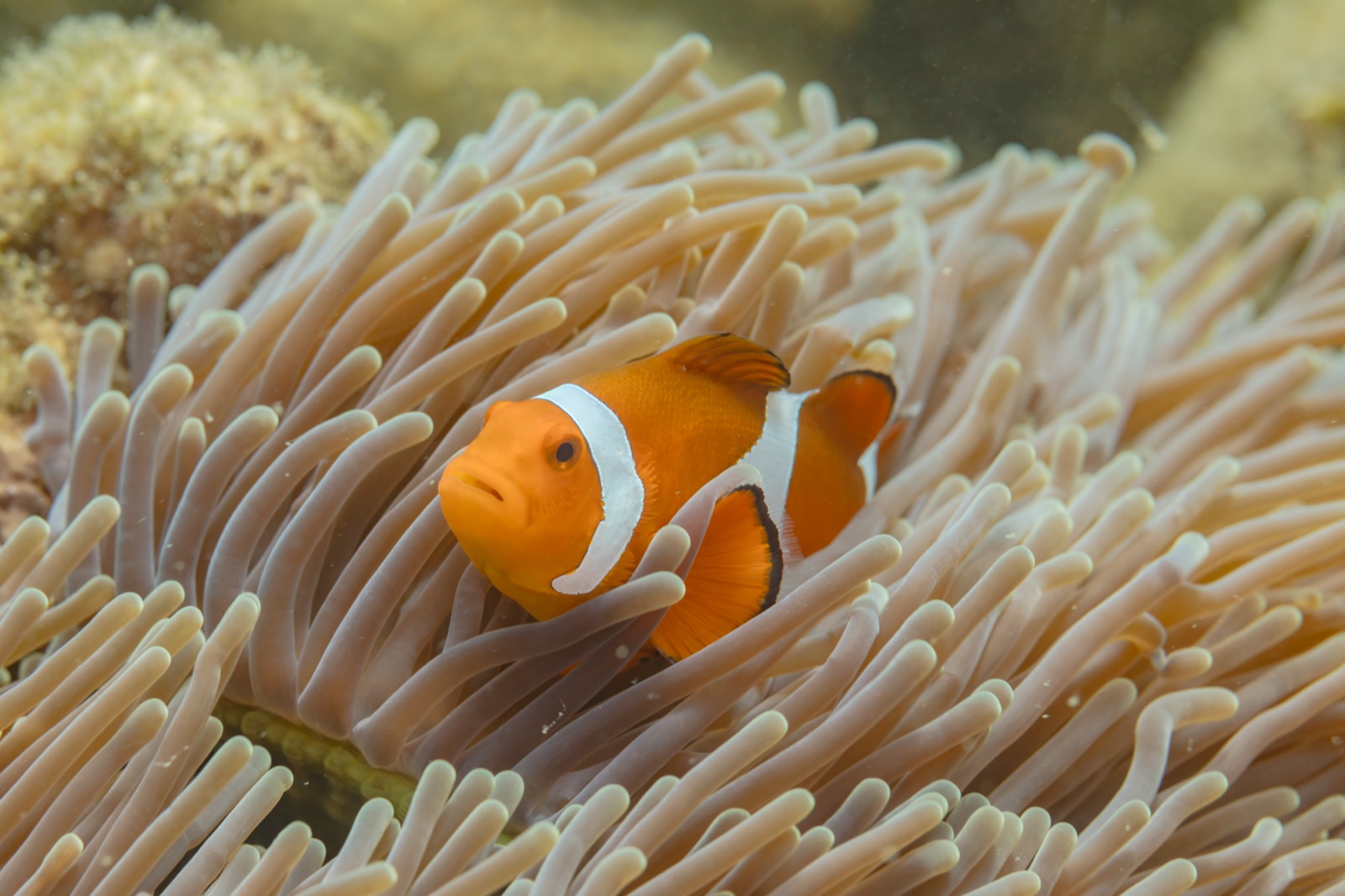
Amphiprion ocellaris is the most famous clownfish, popularized by Finding Nemo. Bright orange with three white bands. Lives in a hierarchical group within a host anemone: the largest is female, the second-largest male, juveniles wait their turn. All are born male and change sex as needed.
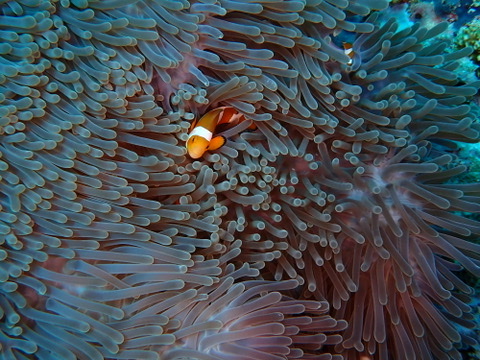
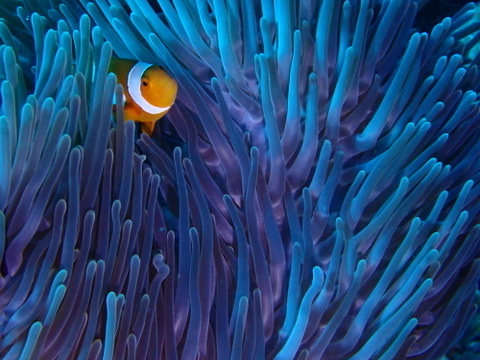
Photo of False clownfish
Frequently asked questions
- How big is the False clownfish?
- False clownfish (Amphiprion ocellaris) reaches 6–11 cm in length.
- At what depth can you find the False clownfish?
- False clownfish is found between 1–15 m deep.
- Is the False clownfish dangerous to divers?
- Danger level: Harmless.
- What is the conservation status of the False clownfish?
- IUCN status: Least concern (LC).
- Where can you find the False clownfish?
- Found in: Asian Pacific, Indian Ocean & Red Sea.
Other species in the genus Amphiprion
- Amphiprion bicinctus - Two-band anemonefish
- Amphiprion akallopisos - Skunk clownfish
- Amphiprion clarkii - Clark's anemonefish
- Amphiprion perideraion - Pink skunk clownfish
- Amphiprion polymnus - Saddleback Clownfish
- Amphiprion akindynos - Barrier Reef Clownfish
Other species in the family Pomacentridae
- Chromis chromis - Mediterranean damselfish
- Abudefduf saxatilis - Sergeant major (Atlantic)
- Chromis cyanea - Blue chromis
- Stegastes partitus - Bicolor damselfish
- Dascyllus trimaculatus - Three-spot damsel
- Chromis viridis - Blue-green chromis
Sources
- Taxonomy: WoRMS (AphiaID 278400)
- Photos: iNaturalist (CC BY-NC)
- Distribution: GBIF (taxonKey 5212106)
- Conservation: IUCN Red List
- Encyclopedia: Wikipedia