Palometa (Trachinotus goodei)
Key facts
- Scientific name
- Trachinotus goodei
- Common name
- Palometa
- Category
- Fish
- Family
- Carangidae
- Genus
- Trachinotus
- Size
- 25–50 cm
- Depth
- 0–7 m
- IUCN status
- Least concern (LC)
- Danger level
- Harmless
- Habitats
- sand, open-water
- Behaviours
- schooling, fast-moving
- Ocean zones
- Caribbean, Eastern Pacific
Description
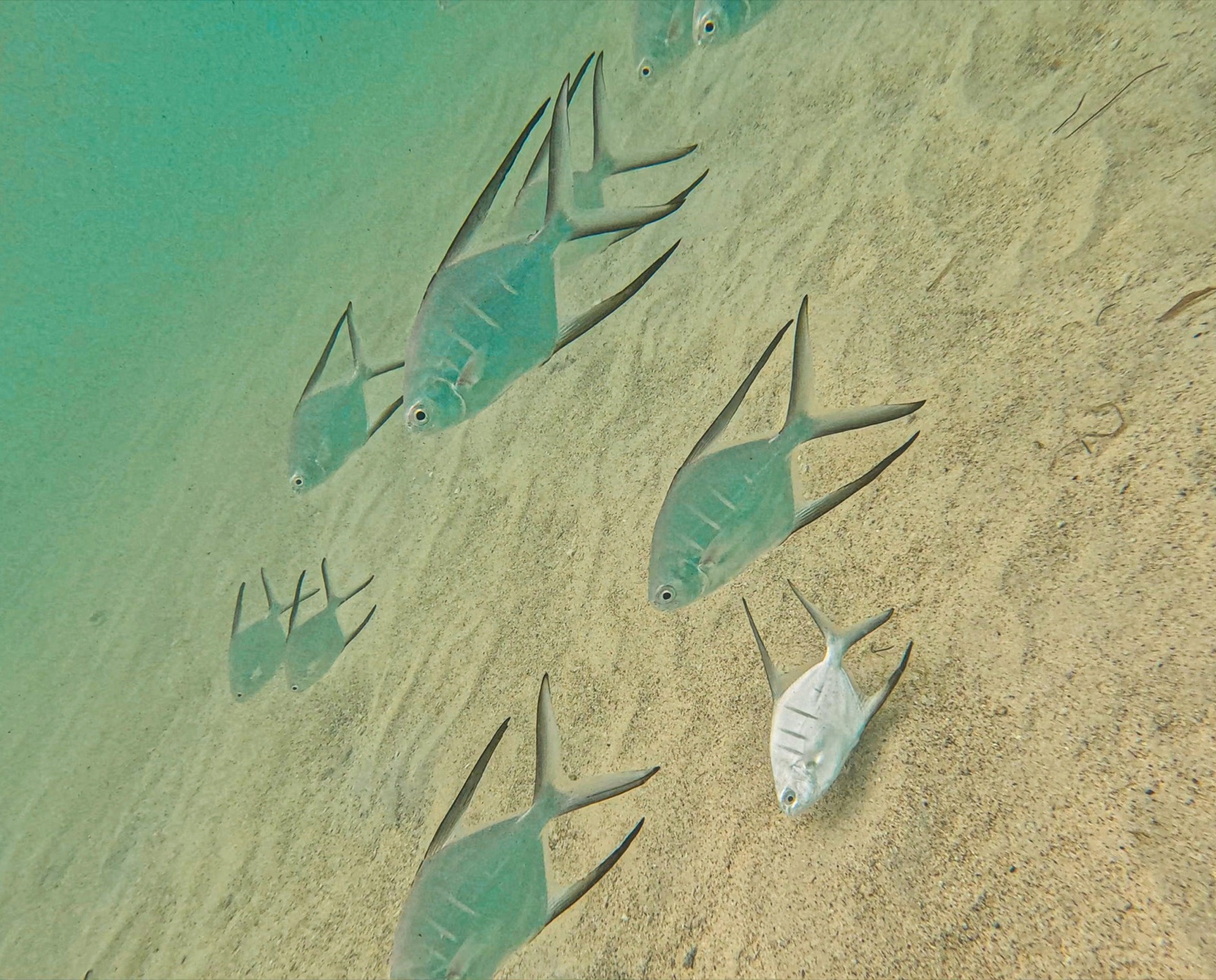
Trachinotus goodei reaches 50 cm. Caribbean pompano with high laterally compressed silver body with 3-4 distinctive dark vertical bands on flanks, very forked tail. Lives in schools from 0 to 7 m in surf zone and breakers near beaches of Caribbean and tropical western Atlantic. Predator of small crustaceans, mollusks. Rarer in diving than jacks but frequent in coastal snorkeling. Commercially and recreationally fished.
Photo of Palometa
Frequently asked questions
- How big is the Palometa?
- Palometa (Trachinotus goodei) reaches 25–50 cm in length.
- At what depth can you find the Palometa?
- Palometa is found between 0–7 m deep.
- Is the Palometa dangerous to divers?
- Danger level: Harmless.
- What is the conservation status of the Palometa?
- IUCN status: Least concern (LC).
- Where can you find the Palometa?
- Found in: Caribbean, Eastern Pacific.
Other species in the genus Trachinotus
Other species in the family Carangidae
- Seriola dumerili - Greater amberjack
- Caranx latus - Horse-eye jack
- Caranx melampygus - Bluefin trevally
- Caranx crysos - Blue runner
- Caranx ruber - Bar jack
- Pseudocaranx dentex - White trevally
Sources
- Taxonomy: WoRMS (AphiaID 159654)
- Photos: iNaturalist (CC BY-NC)
- Distribution: GBIF (taxonKey 5210682)
- Conservation: IUCN Red List
- Encyclopedia: Wikipedia