Common pandora (Pagellus erythrinus)
Key facts
- Scientific name
- Pagellus erythrinus
- Common name
- Common pandora
- Category
- Fish
- Family
- Sparidae
- Genus
- Pagellus
- Size
- 20–60 cm
- Depth
- 10–300 m
- IUCN status
- Least concern (LC)
- Danger level
- Harmless
- Habitats
- sand, rocky-reef
- Behaviours
- schooling
- Ocean zones
- East Atlantic, Macaronesia, Mediterranean
Description
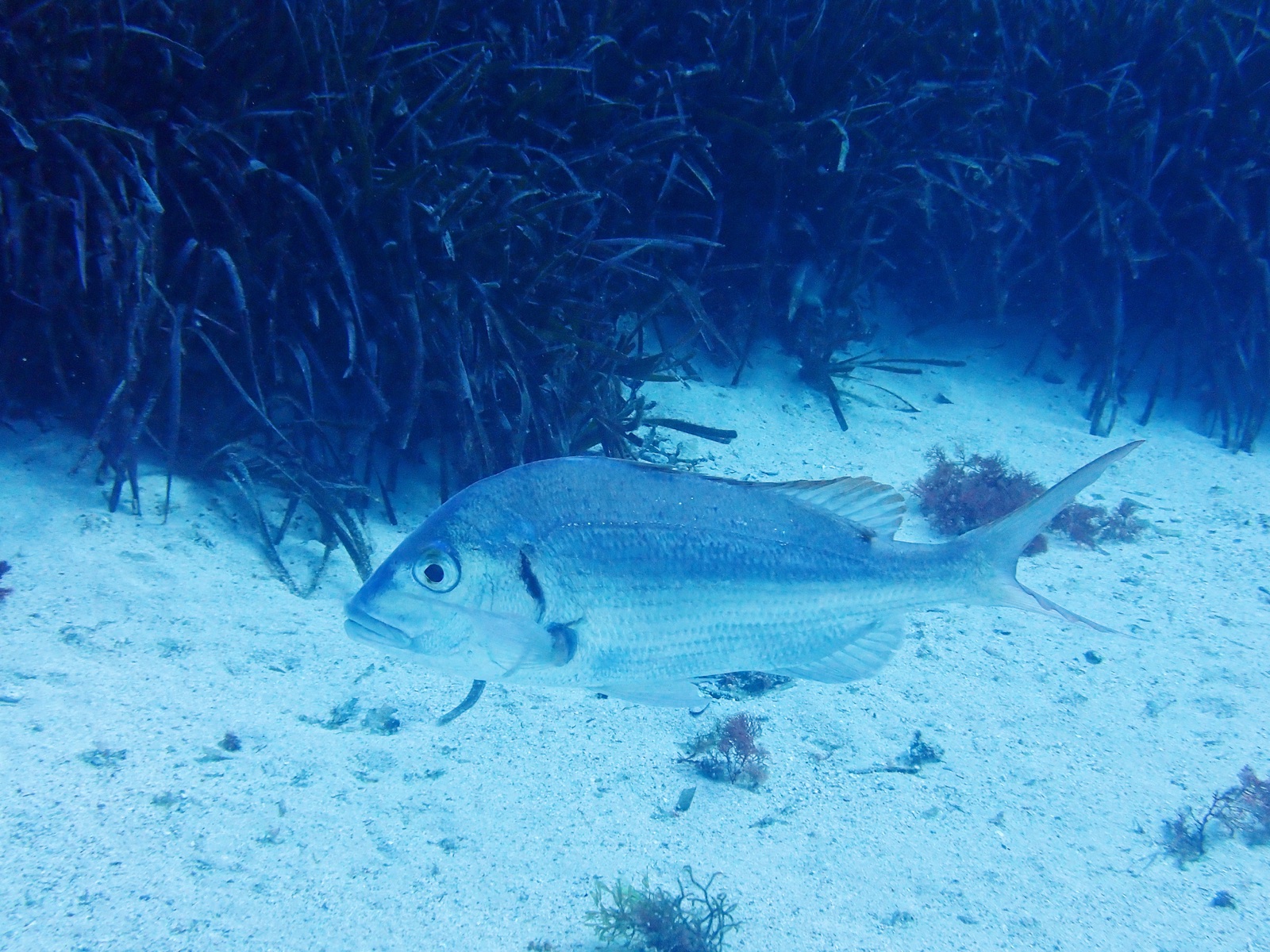
Pagellus erythrinus reaches 60 cm. Sparid (Sparidae) Mediterranean and East temperate Atlantic. Pink-red silver body with more orange-red back. Lives in schools from 10 to 300 m on sand, rocky bottoms and drop-offs of Mediterranean, Northeast Atlantic, North Sea. Protogynous hermaphrodite. Very important commercial fishery (common pandora, major fishing resource). Wide-angle photo subject of Med dives in cohesive schools on sand.
Photo of Common pandora
Frequently asked questions
- How big is the Common pandora?
- Common pandora (Pagellus erythrinus) reaches 20–60 cm in length.
- At what depth can you find the Common pandora?
- Common pandora is found between 10–300 m deep.
- Is the Common pandora dangerous to divers?
- Danger level: Harmless.
- What is the conservation status of the Common pandora?
- IUCN status: Least concern (LC).
- Where can you find the Common pandora?
- Found in: East Atlantic, Macaronesia, Mediterranean.
Other species in the genus Pagellus
Other species in the family Sparidae
- Sparus aurata - Gilt-head bream
- Dentex dentex - Common dentex
- Diplodus sargus - White seabream
- Diplodus vulgaris - Common two-banded seabream
- Sarpa salpa - Salema
- Pagrus pagrus - Common seabream
Sources
- Taxonomy: WoRMS (AphiaID 127060)
- Photos: iNaturalist (CC BY-NC)
- Distribution: GBIF (taxonKey 2392554)
- Conservation: IUCN Red List
- Encyclopedia: Wikipedia