Axillary seabream (Pagellus acarne)
Key facts
- Scientific name
- Pagellus acarne
- Common name
- Axillary seabream
- Category
- Fish
- Family
- Sparidae
- Genus
- Pagellus
- Size
- 18–36 cm
- Depth
- 30–500 m
- IUCN status
- Least concern (LC)
- Danger level
- Harmless
- Habitats
- sand, rocky-reef
- Behaviours
- schooling
- Ocean zones
- East Atlantic, Macaronesia, Mediterranean
Description
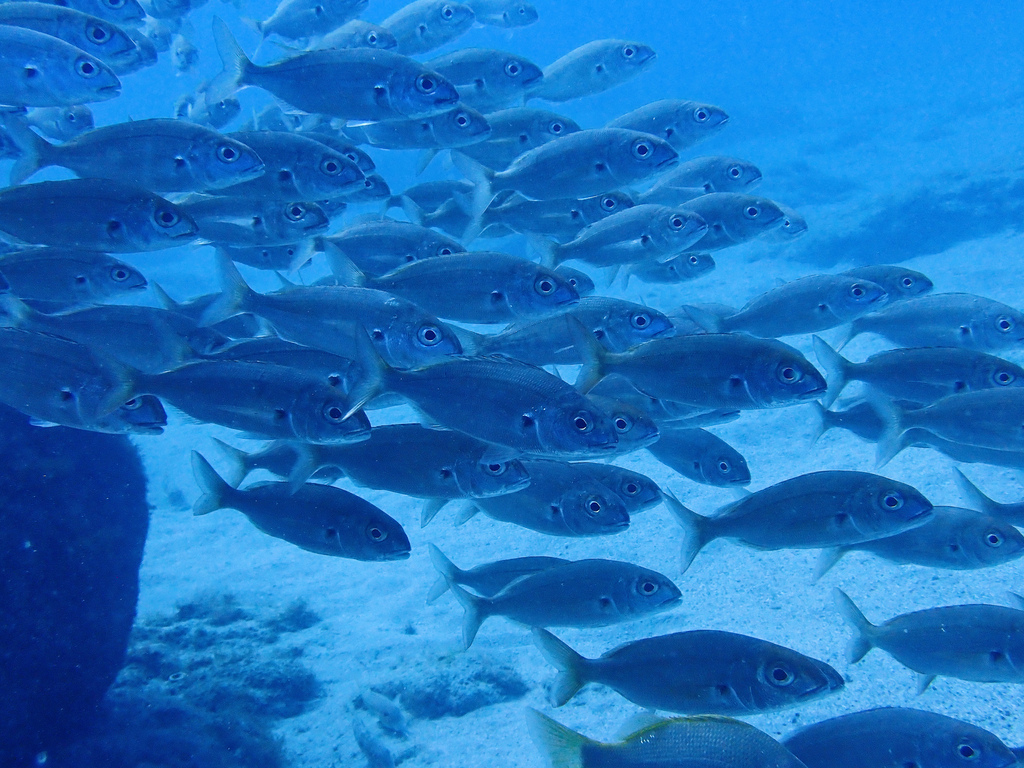
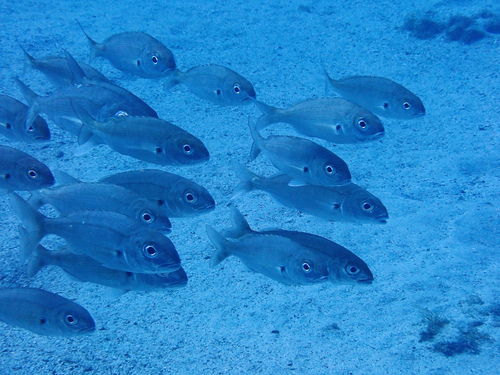
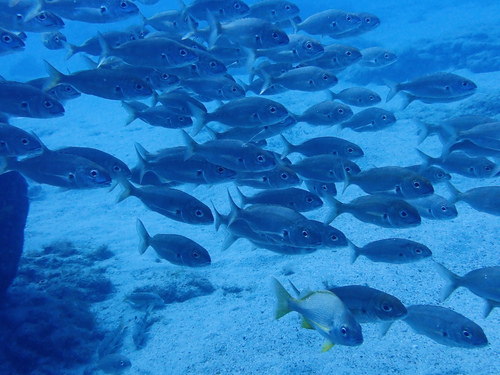
Pagellus acarne reaches 36 cm. Small pink-silver seabream with distinctive dark spot at pectoral fin base and sometimes diffuse transverse bands. Lives from 30 to 500 m on shell sands and rocky edges of East Atlantic, Mediterranean and Macaronesia. Protogynous hermaphrodite like most Pagellus. Forms dense schools. Artisanal and industrial fishery. Flesh appreciated although less prized than P. bogaraveo. Common schools on Macaronesian sands.
Photo of Axillary seabream
Frequently asked questions
- How big is the Axillary seabream?
- Axillary seabream (Pagellus acarne) reaches 18–36 cm in length.
- At what depth can you find the Axillary seabream?
- Axillary seabream is found between 30–500 m deep.
- Is the Axillary seabream dangerous to divers?
- Danger level: Harmless.
- What is the conservation status of the Axillary seabream?
- IUCN status: Least concern (LC).
- Where can you find the Axillary seabream?
- Found in: East Atlantic, Macaronesia, Mediterranean.
Other species in the genus Pagellus
Other species in the family Sparidae
- Sparus aurata - Gilt-head bream
- Dentex dentex - Common dentex
- Diplodus sargus - White seabream
- Diplodus vulgaris - Common two-banded seabream
- Sarpa salpa - Salema
- Pagrus pagrus - Common seabream
Sources
- Taxonomy: WoRMS (AphiaID 127057)
- Photos: iNaturalist (CC BY-NC)
- Distribution: GBIF (taxonKey 2392566)
- Conservation: IUCN Red List
- Encyclopedia: Wikipedia