Giant moray (Gymnothorax javanicus)
Key facts
- Scientific name
- Gymnothorax javanicus
- Common name
- Giant moray
- Category
- Fish
- Family
- Muraenidae
- Genus
- Gymnothorax
- Size
- 150–300 cm
- Depth
- 1–50 m
- IUCN status
- Least concern (LC)
- Danger level
- Caution
- Habitats
- reef, cave
- Behaviours
- solitary, nocturnal
- Ocean zones
- Asian Pacific, Indian Ocean & Red Sea
Description
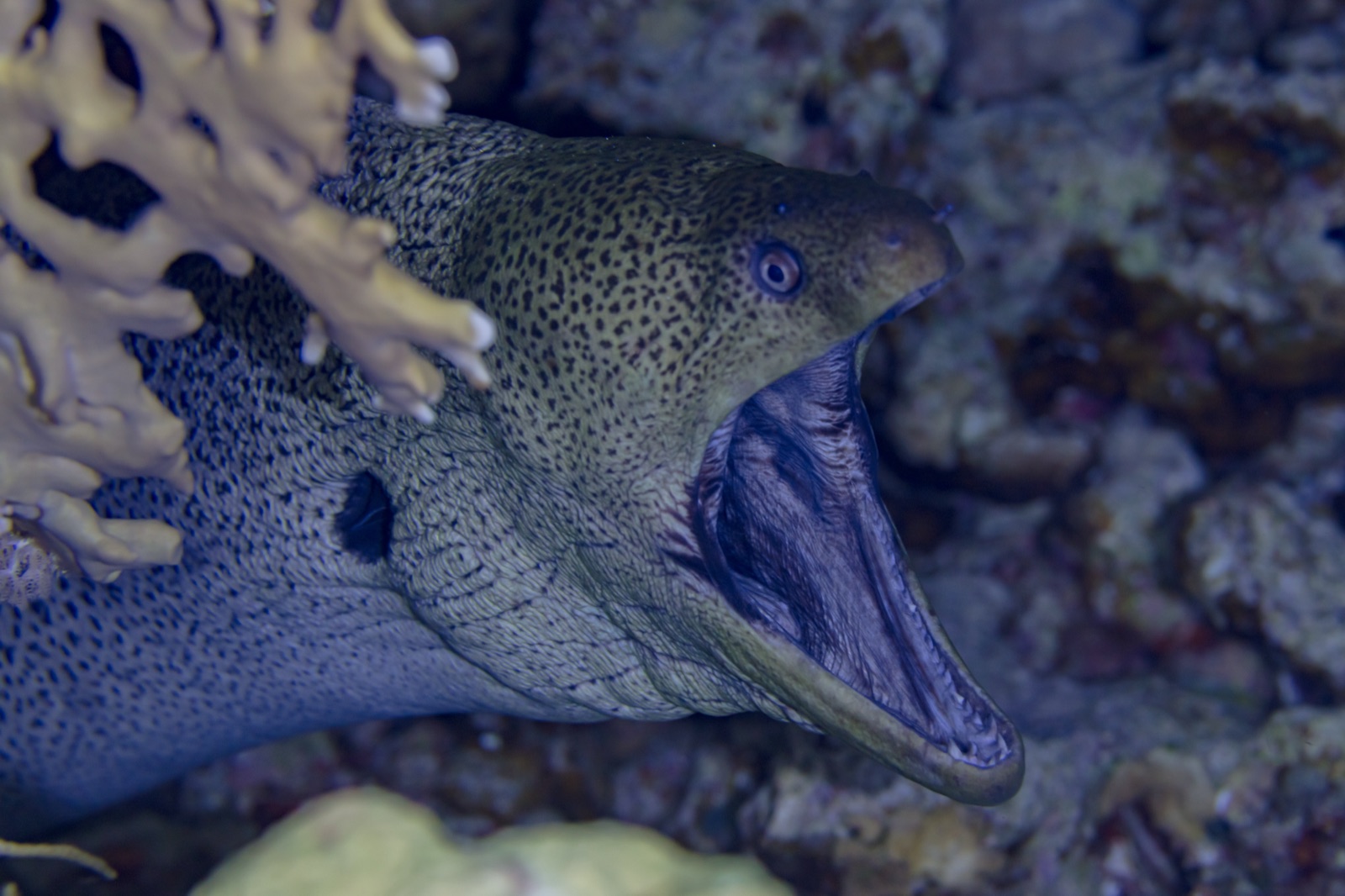
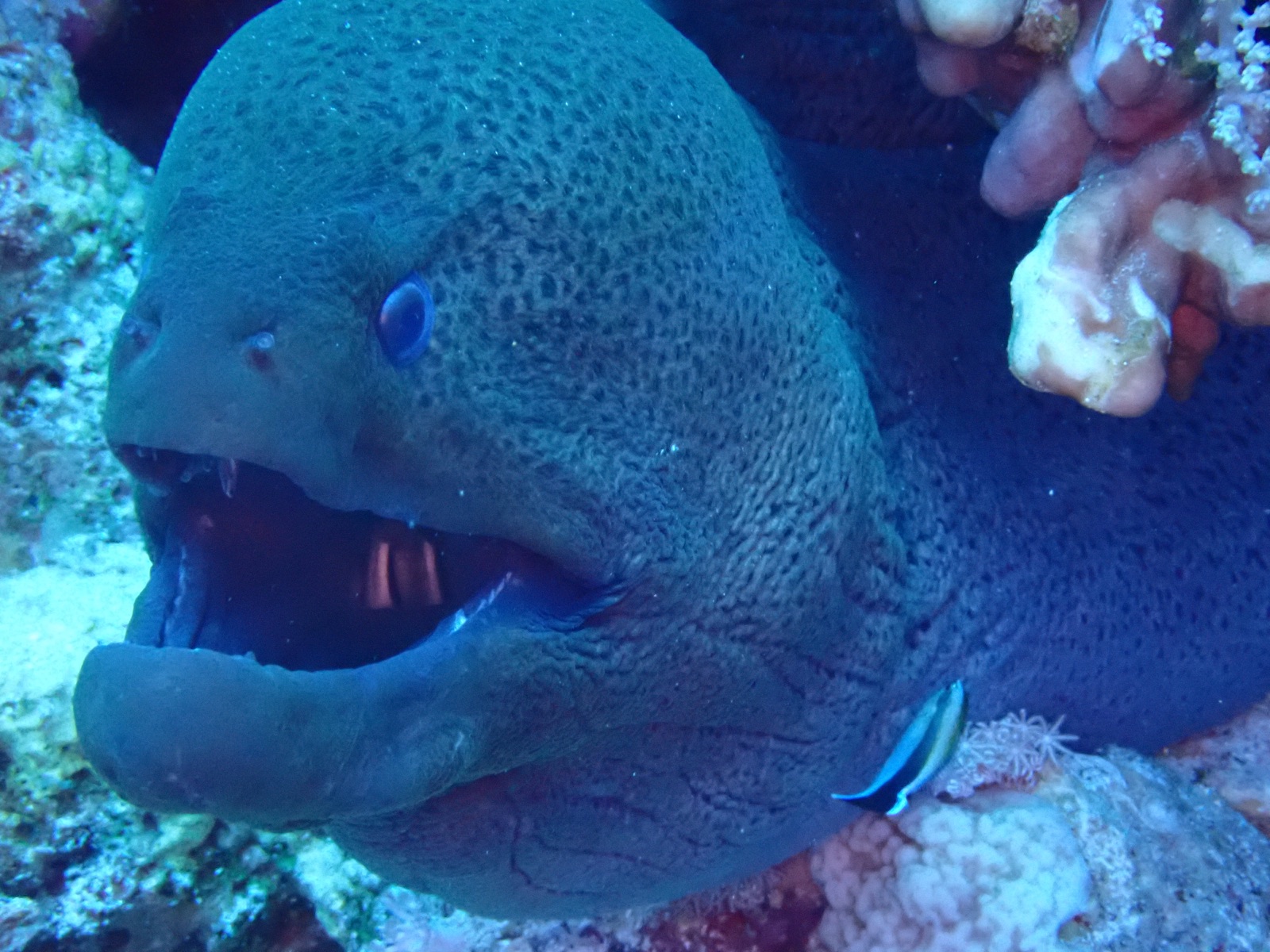
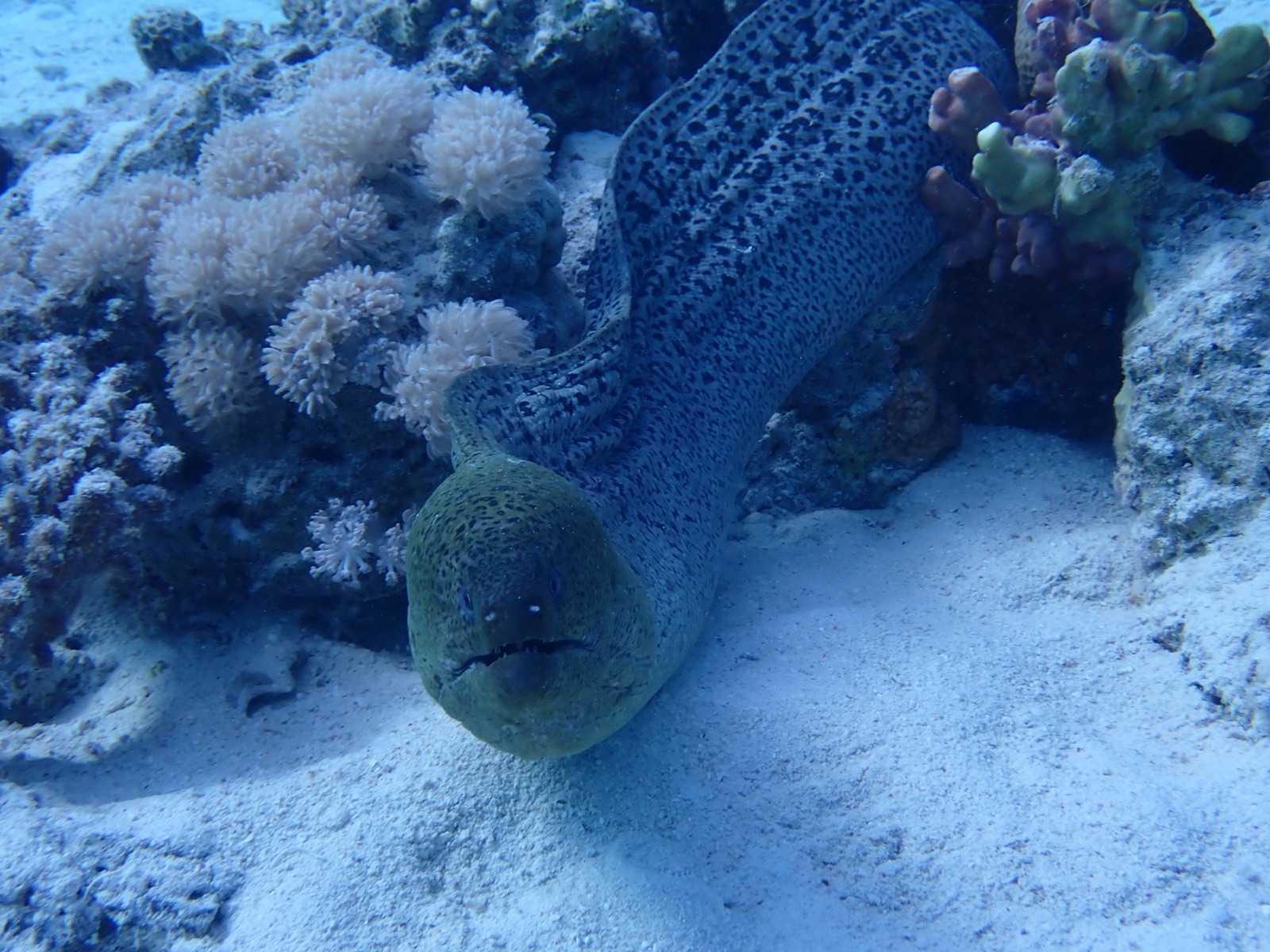
Gymnothorax javanicus reaches 3 m and 30 kg, the world's largest moray by mass. Massive brown-ocher body spotted with large dark blotches, head relatively small compared to body. Solitary, lives in large coral caves and overhangs Indo-Pacific from 1 to 50 m. Nocturnal predator of fish and cephalopods. Long sharp teeth. Impressive in size but rarely aggressive without provocation. Icon of the Red Sea and Maldives.
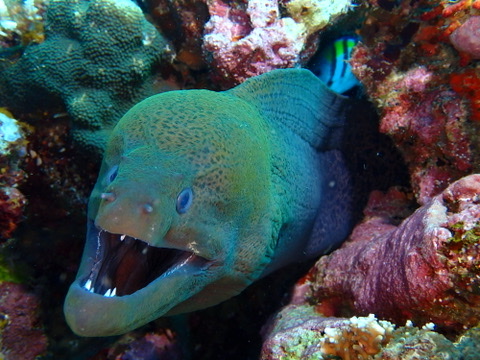
Photo of Giant moray
Frequently asked questions
- How big is the Giant moray?
- Giant moray (Gymnothorax javanicus) reaches 150–300 cm in length.
- At what depth can you find the Giant moray?
- Giant moray is found between 1–50 m deep.
- Is the Giant moray dangerous to divers?
- Danger level: Caution.
- What is the conservation status of the Giant moray?
- IUCN status: Least concern (LC).
- Where can you find the Giant moray?
- Found in: Asian Pacific, Indian Ocean & Red Sea.
Other species in the genus Gymnothorax
- Gymnothorax funebris - Green moray
- Gymnothorax moringa - Spotted moray
- Gymnothorax undulatus - Undulated moray
- Gymnothorax unicolor - Brown moray
- Gymnothorax castaneus - Panamic green moray
- Gymnothorax flavimarginatus - Yellow-margined Moray
Other species in the family Muraenidae
- Muraena helena - Mediterranean moray
- Echidna catenata - Chain moray
- Enchelycore anatina - Fangtooth moray
- Muraena augusti - Black moray
- Rhinomuraena quaesita - Ribbon moray
- Echidna nocturna - Panamic green moray
Sources
- Taxonomy: WoRMS (AphiaID 217502)
- Photos: iNaturalist (CC BY-NC)
- Distribution: GBIF (taxonKey 2403808)
- Conservation: IUCN Red List
- Encyclopedia: Wikipedia