Bastard grunt (Pomadasys incisus)
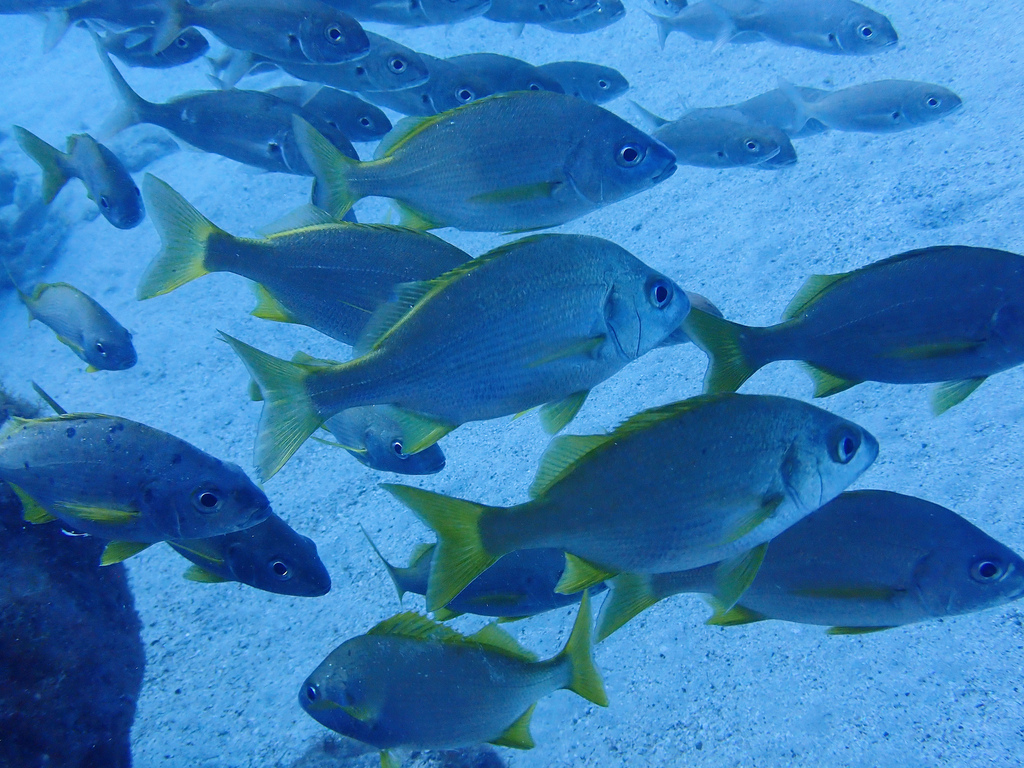
Key facts
- Scientific name
- Pomadasys incisus
- Common name
- Bastard grunt
- Category
- Fish
- Family
- Haemulidae
- Genus
- Pomadasys
- Size
- 20–50 cm
- Depth
- 5–100 m
- IUCN status
- Least concern (LC)
- Danger level
- Harmless
- Habitats
- rocky-reef, sand
- Behaviours
- schooling
- Ocean zones
- East Atlantic, Macaronesia, Mediterranean
Description
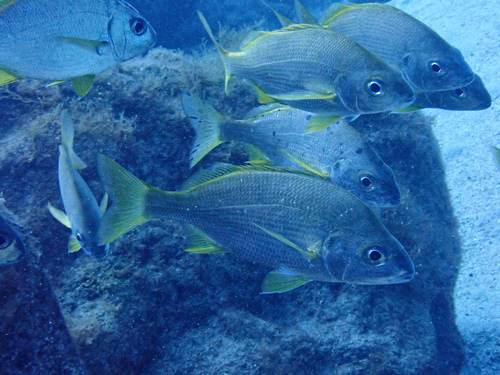
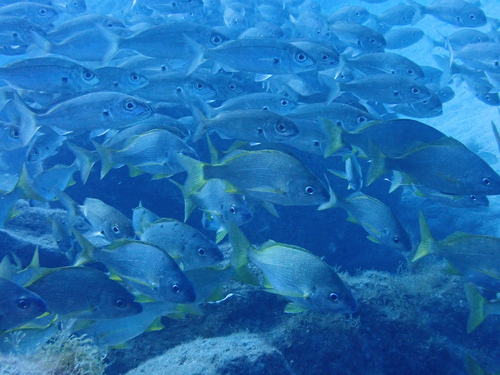
Pomadasys incisus reaches 50 cm. Tropical East Atlantic and eastern Mediterranean haemulid. Silver-bronze body with yellowish belly with distinctive dark spot on operculum, large head. Lives in schools from 5 to 100 m on rocky reefs, sands and river mouths of tropical African coasts (Senegal, Cape Verde, Guinea, Angola) and eastern Mediterranean. African cousin of Caribbean Haemulon (batch 13). Nocturnal, comes out to hunt benthic invertebrates. Important commercial and artisanal fishery in West Africa.
Photo of Bastard grunt
Frequently asked questions
- How big is the Bastard grunt?
- Bastard grunt (Pomadasys incisus) reaches 20–50 cm in length.
- At what depth can you find the Bastard grunt?
- Bastard grunt is found between 5–100 m deep.
- Is the Bastard grunt dangerous to divers?
- Danger level: Harmless.
- What is the conservation status of the Bastard grunt?
- IUCN status: Least concern (LC).
- Where can you find the Bastard grunt?
- Found in: East Atlantic, Macaronesia, Mediterranean.
Other species in the genus Pomadasys
Other species in the family Haemulidae
- Haemulon flavolineatum - French grunt
- Haemulon sciurus - Bluestriped grunt
- Plectorhinchus vittatus - Oriental sweetlips
- Plectorhinchus chaetodonoides - Harlequin sweetlips
- Haemulon parra - Sailor's choice
- Anisotremus virginicus - Porkfish
Sources
- Taxonomy: WoRMS (AphiaID 126947)
- Photos: iNaturalist (CC BY-NC)
- Distribution: GBIF (taxonKey 2382461)
- Conservation: IUCN Red List
- Encyclopedia: Wikipedia