Atlantic halibut (Hippoglossus hippoglossus)
Key facts
- Scientific name
- Hippoglossus hippoglossus
- Common name
- Atlantic halibut
- Category
- Fish
- Family
- Pleuronectidae
- Genus
- Hippoglossus
- Size
- 100–470 cm
- Depth
- 50–2000 m
- IUCN status
- Near threatened (NT)
- Danger level
- Harmless
- Habitats
- sand, rocky
- Behaviours
- solitary, benthic
- Ocean zones
- East Atlantic
Description
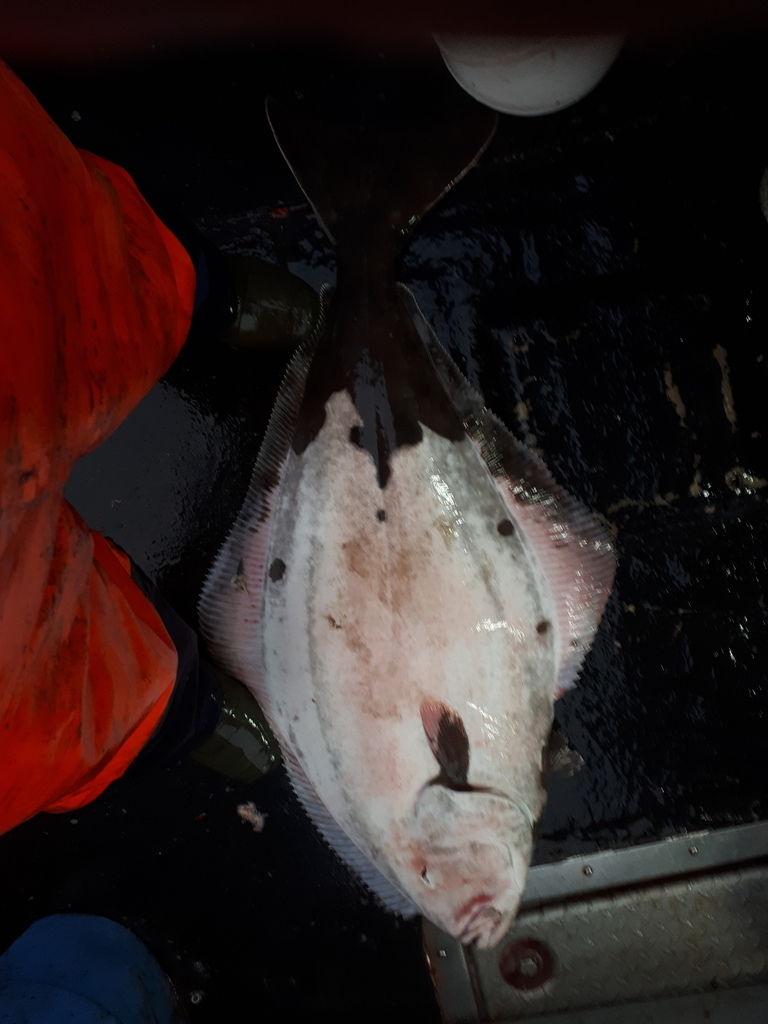
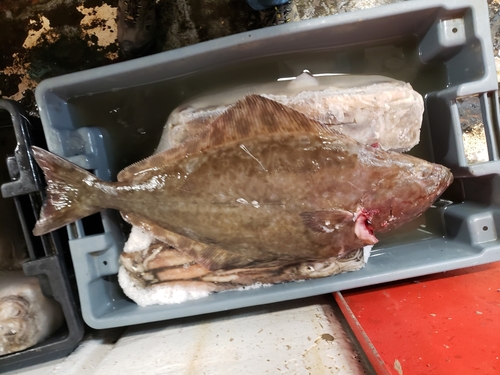
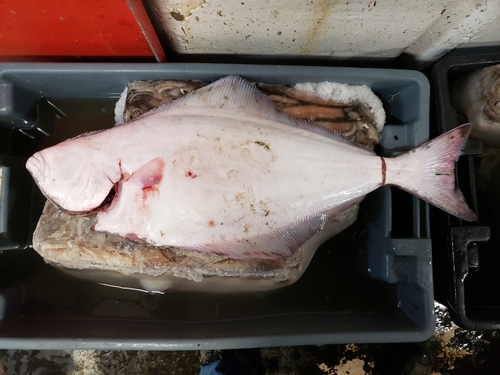
Hippoglossus hippoglossus reaches 4.7 m and 320 kg, the world's largest flatfish. Right side olive-brown to dark green, left side white. Elongated diamond shape. Lives on deep sandy and gravelly bottoms of the North Atlantic (Greenland, Iceland, Norway, Canada, Scotland) between 50 and 2000 m. Lifespan up to 50 years. Populations heavily reduced by overfishing, IUCN Near Threatened. Farmed in Norwegian aquaculture.
Photo of Atlantic halibut
Frequently asked questions
- How big is the Atlantic halibut?
- Atlantic halibut (Hippoglossus hippoglossus) reaches 100–470 cm in length.
- At what depth can you find the Atlantic halibut?
- Atlantic halibut is found between 50–2000 m deep.
- Is the Atlantic halibut dangerous to divers?
- Danger level: Harmless.
- What is the conservation status of the Atlantic halibut?
- IUCN status: Near threatened (NT).
- Where can you find the Atlantic halibut?
- Found in: East Atlantic.
Other species in the genus Hippoglossus
Other species in the family Pleuronectidae
- Pleuronectes platessa - European plaice
- Glyptocephalus cynoglossus - Witch flounder
- Microstomus kitt - Lemon sole
- Limanda limanda - Common dab
- Platichthys flesus - European flounder
- Hippoglossoides platessoides - American plaice
Sources
- Taxonomy: WoRMS (AphiaID 127138)
- Photos: iNaturalist (CC BY-NC)
- Distribution: GBIF (taxonKey 2409218)
- Conservation: IUCN Red List
- Encyclopedia: Wikipedia