Witch flounder (Glyptocephalus cynoglossus)
Key facts
- Scientific name
- Glyptocephalus cynoglossus
- Common name
- Witch flounder
- Category
- Fish
- Family
- Pleuronectidae
- Genus
- Glyptocephalus
- Size
- 30–70 cm
- Depth
- 18–1500 m
- IUCN status
- Least concern (LC)
- Danger level
- Harmless
- Habitats
- mud
- Behaviours
- solitary, cryptic
- Ocean zones
- East Atlantic
Description
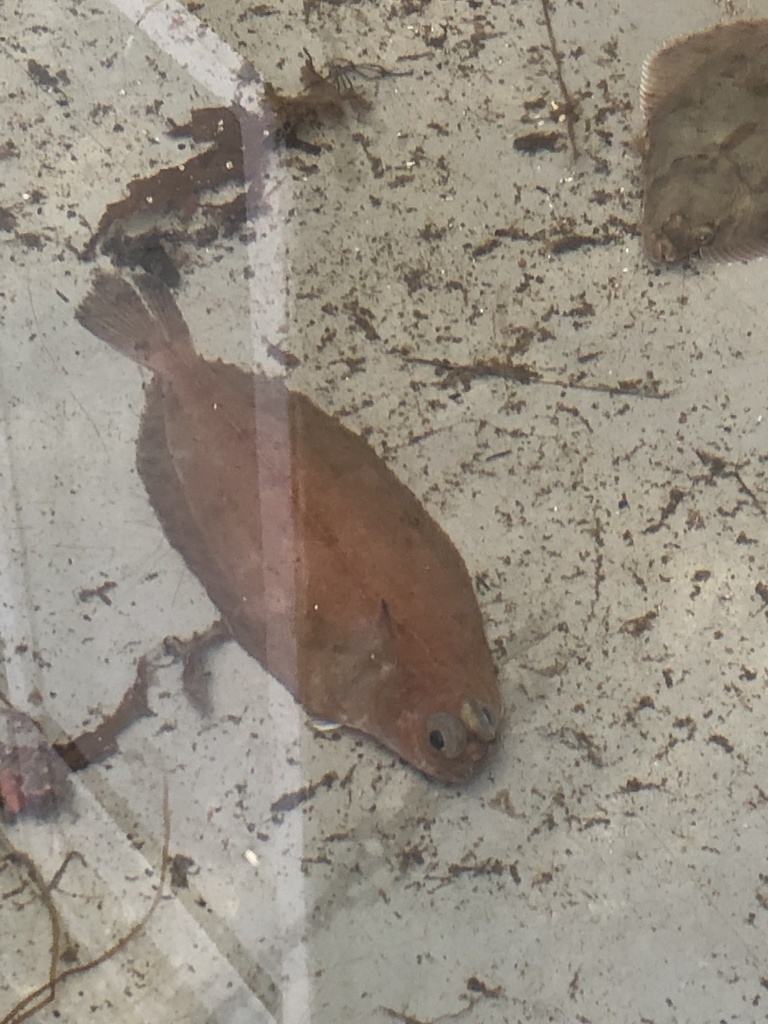
Glyptocephalus cynoglossus reaches 70 cm. Flatfish (Pleuronectidae) North Atlantic (east and west) with right-eyed elongated flat uniformly gray-brown to red-brown body. Lives from 18 to 1500 m on deep muddy bottoms of North Atlantic, North Sea, Baltic Sea, Northwest Atlantic. Exceptional longevity (over 40 years). Very important commercial fishery (witch flounder). Rare recreational diving wide-angle photo subject.
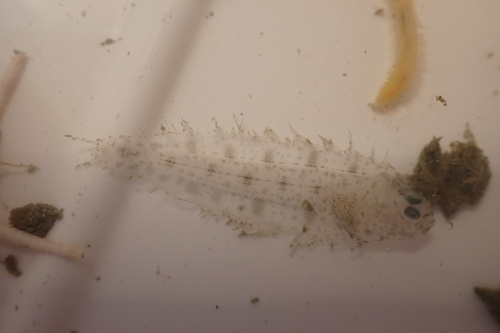
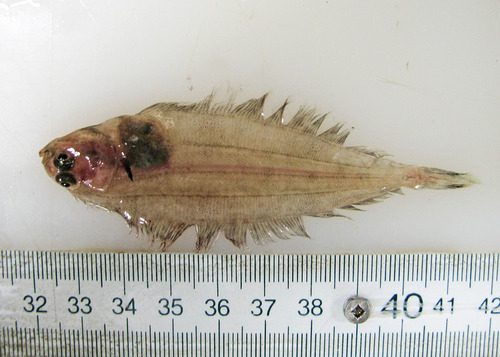
Photo of Witch flounder
Frequently asked questions
- How big is the Witch flounder?
- Witch flounder (Glyptocephalus cynoglossus) reaches 30–70 cm in length.
- At what depth can you find the Witch flounder?
- Witch flounder is found between 18–1500 m deep.
- Is the Witch flounder dangerous to divers?
- Danger level: Harmless.
- What is the conservation status of the Witch flounder?
- IUCN status: Least concern (LC).
- Where can you find the Witch flounder?
- Found in: East Atlantic.
Other species in the family Pleuronectidae
- Pleuronectes platessa - European plaice
- Hippoglossus hippoglossus - Atlantic halibut
- Microstomus kitt - Lemon sole
- Limanda limanda - Common dab
- Platichthys flesus - European flounder
- Hippoglossoides platessoides - American plaice
Sources
- Taxonomy: WoRMS (AphiaID 127136)
- Photos: iNaturalist (CC BY-NC)
- Distribution: GBIF (taxonKey 5213996)
- Conservation: IUCN Red List
- Encyclopedia: Wikipedia