Maxima clam (Tridacna maxima)
Key facts
- Scientific name
- Tridacna maxima
- Common name
- Maxima clam
- Category
- Molluscs
- Family
- Cardiidae
- Genus
- Tridacna
- Size
- 20–40 cm
- Depth
- 1–20 m
- IUCN status
- Least concern (LC)
- Danger level
- Harmless
- Habitats
- reef
- Behaviours
- sessile, photosynthetic
- Ocean zones
- Asian Pacific, Indian Ocean & Red Sea
Description
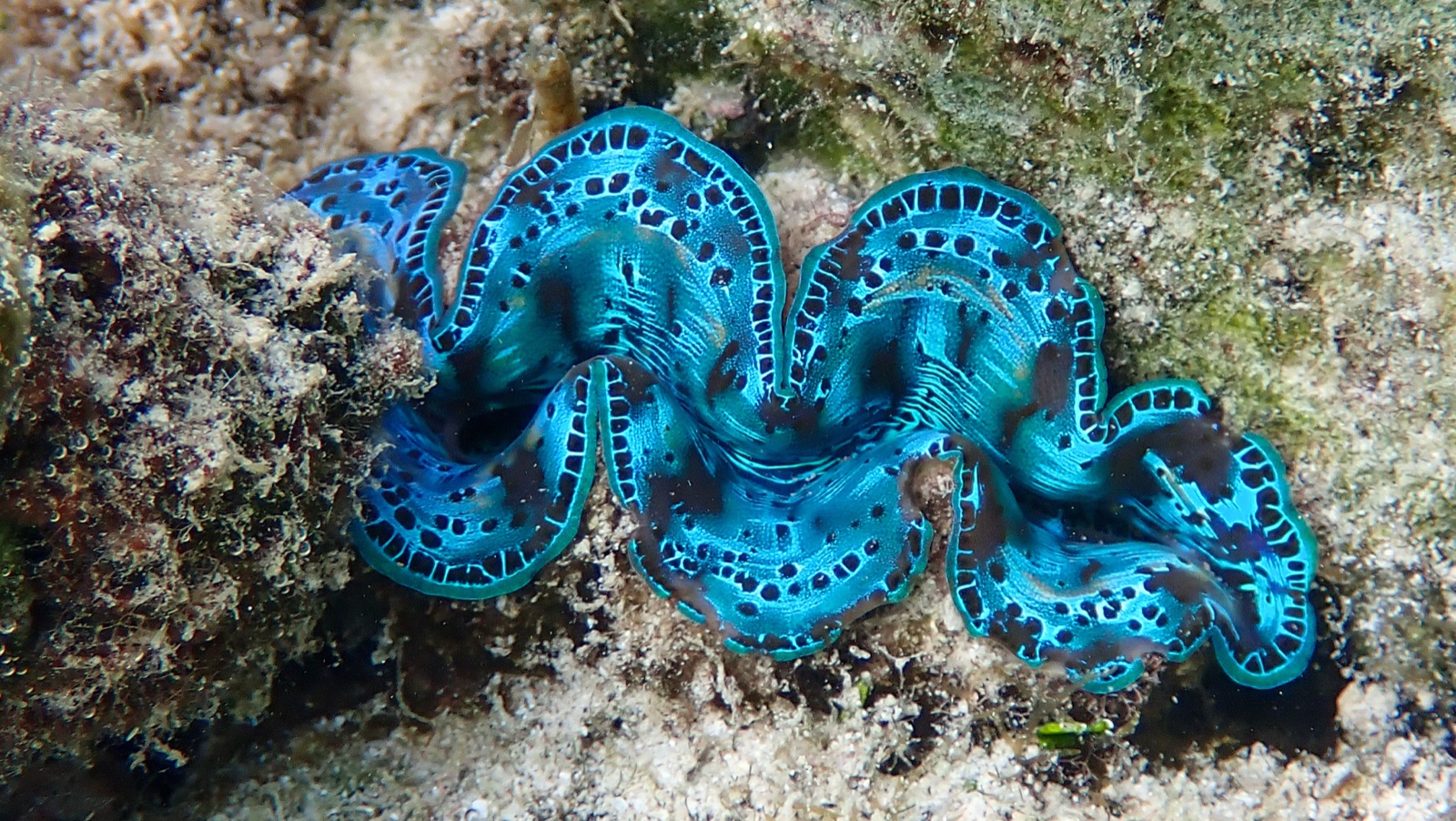
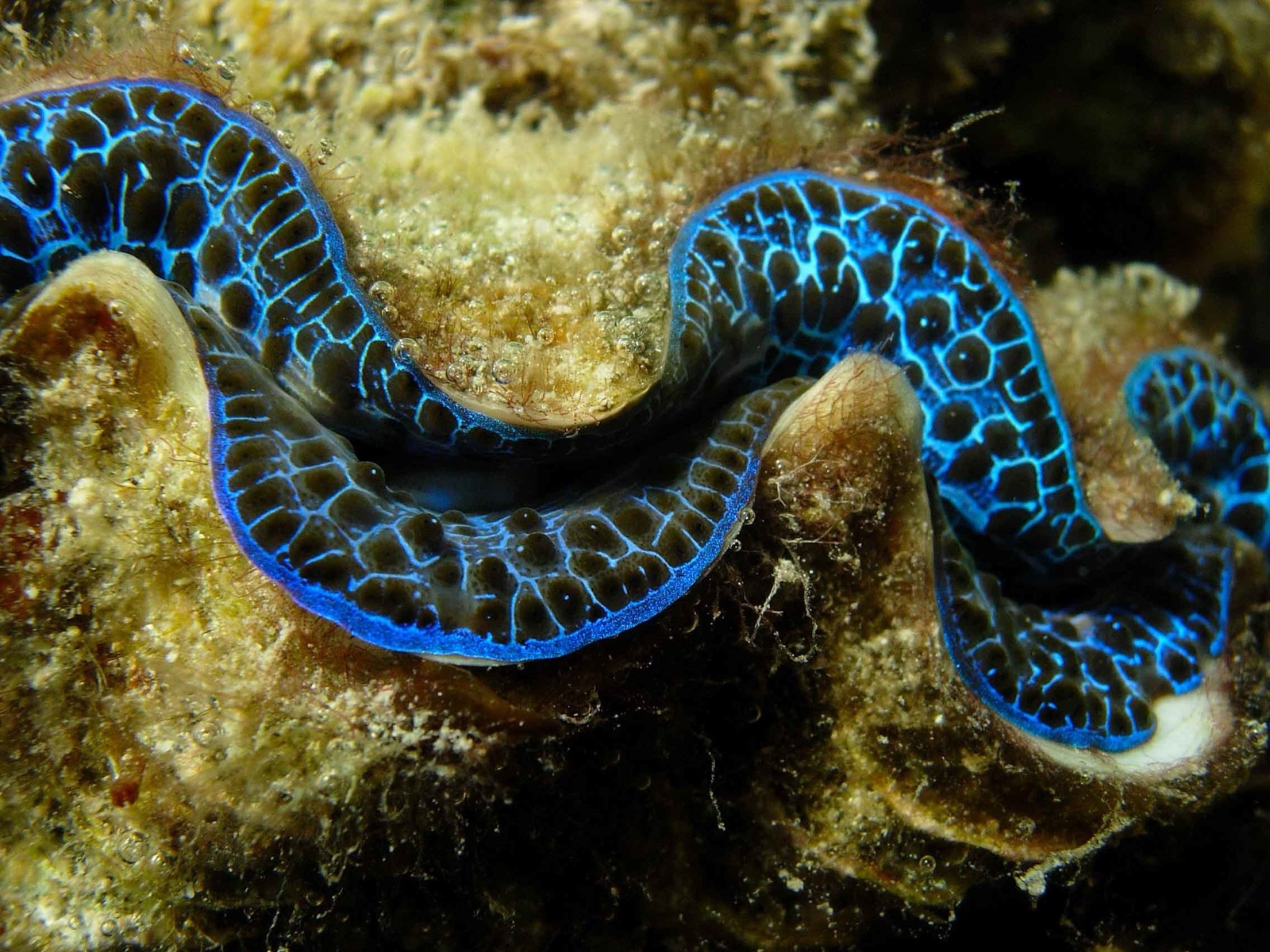
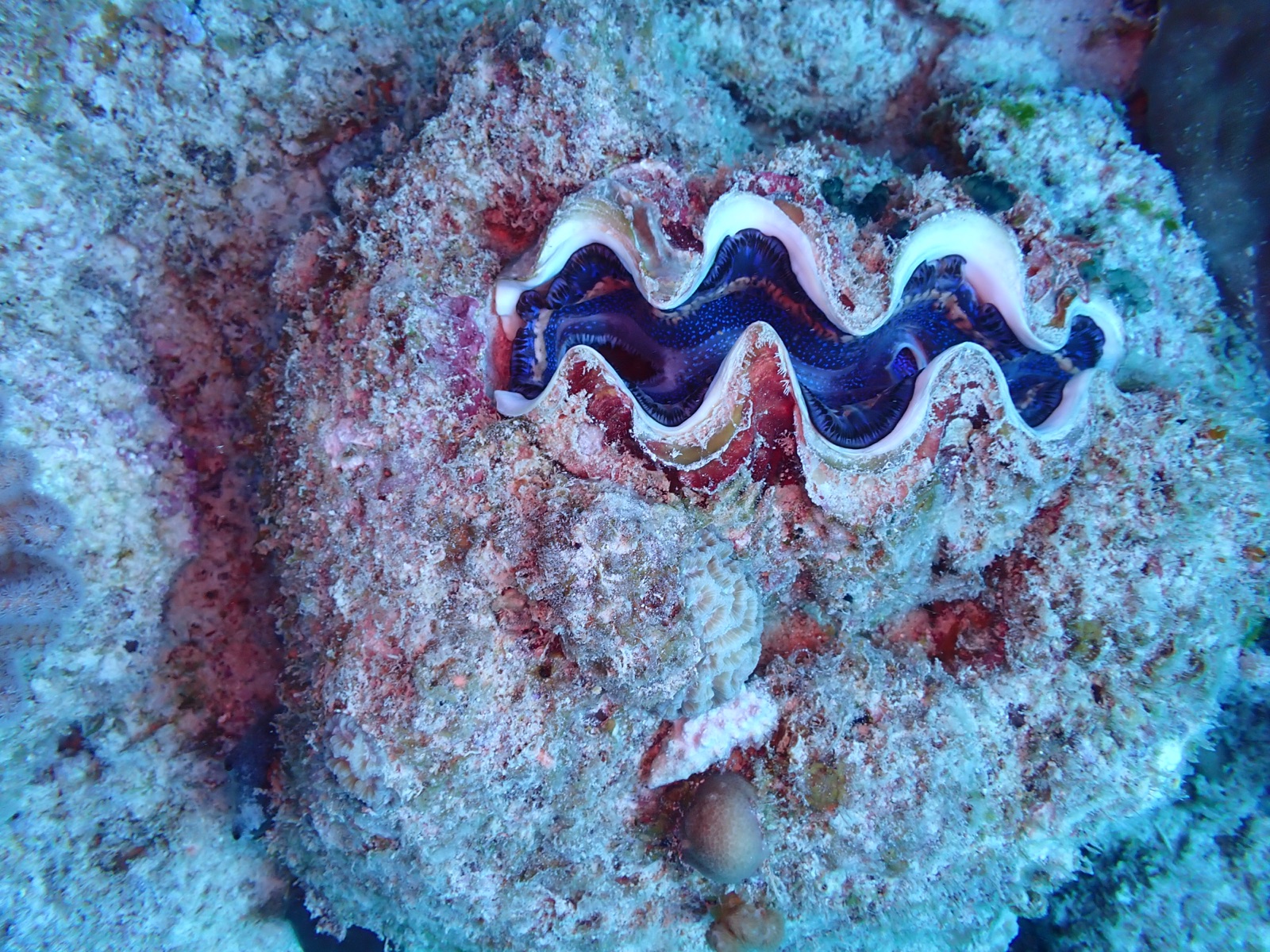
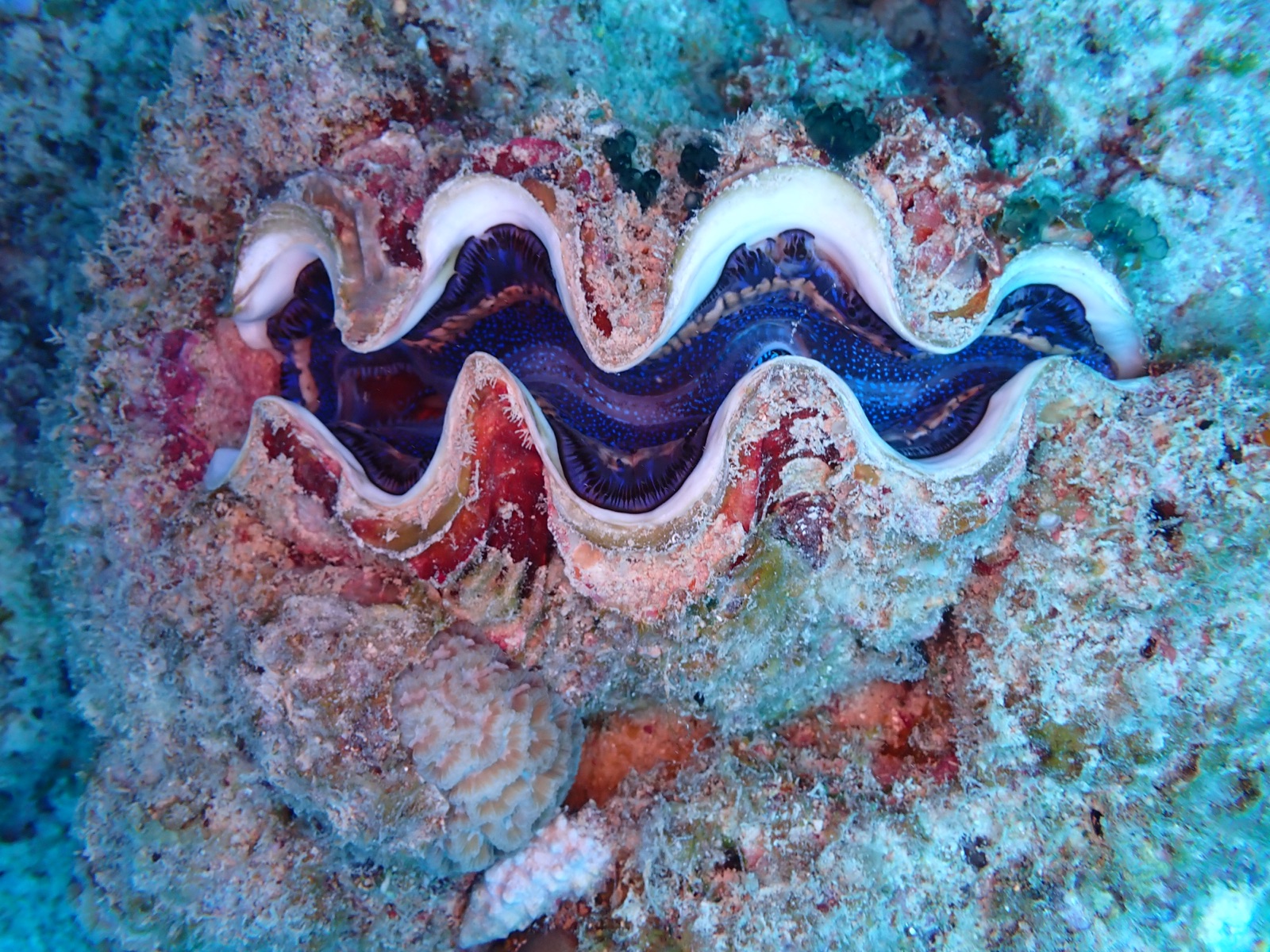
Tridacna maxima reaches 40 cm. Giant bivalve embedded in coral, colored mantle displayed between valves with spectacular blue-turquoise, green and black patterns. Colors come from zooxanthellae (symbiotic algae) providing sugars via photosynthesis. Permanently anchored in coral or calcareous substrate. Simultaneous hermaphrodite. Present from the Red Sea to Polynesia between 1 and 20 m. Exploited for aquarium trade, local protections.
Photo of Maxima clam
Frequently asked questions
- How big is the Maxima clam?
- Maxima clam (Tridacna maxima) reaches 20–40 cm in length.
- At what depth can you find the Maxima clam?
- Maxima clam is found between 1–20 m deep.
- Is the Maxima clam dangerous to divers?
- Danger level: Harmless.
- What is the conservation status of the Maxima clam?
- IUCN status: Least concern (LC).
- Where can you find the Maxima clam?
- Found in: Asian Pacific, Indian Ocean & Red Sea.
Other species in the genus Tridacna
- Tridacna gigas - Giant clam
- Tridacna squamosa - Fluted giant clam
- Tridacna crocea - Crocus giant clam
- Tridacna derasa - Smooth Clam
Other species in the family Cardiidae
- Acanthocardia tuberculata - Rough cockle
- Cerastoderma glaucum - Lagoon cockle
- Hippopus hippopus - Hippopus Clam
Sources
- Taxonomy: WoRMS (AphiaID 207675)
- Photos: iNaturalist (CC BY-NC)
- Distribution: GBIF (taxonKey 4372625)
- Conservation: IUCN Red List
- Encyclopedia: Wikipedia