Crocus giant clam (Tridacna crocea)
Key facts
- Scientific name
- Tridacna crocea
- Common name
- Crocus giant clam
- Category
- Molluscs
- Family
- Cardiidae
- Genus
- Tridacna
- Size
- 8–15 cm
- Depth
- 0–20 m
- IUCN status
- Least concern (LC)
- Danger level
- Harmless
- Habitats
- coral-reef
- Behaviours
- sessile, filter-feeder, symbiotic
- Ocean zones
- Asian Pacific, Indian Ocean & Red Sea
Description
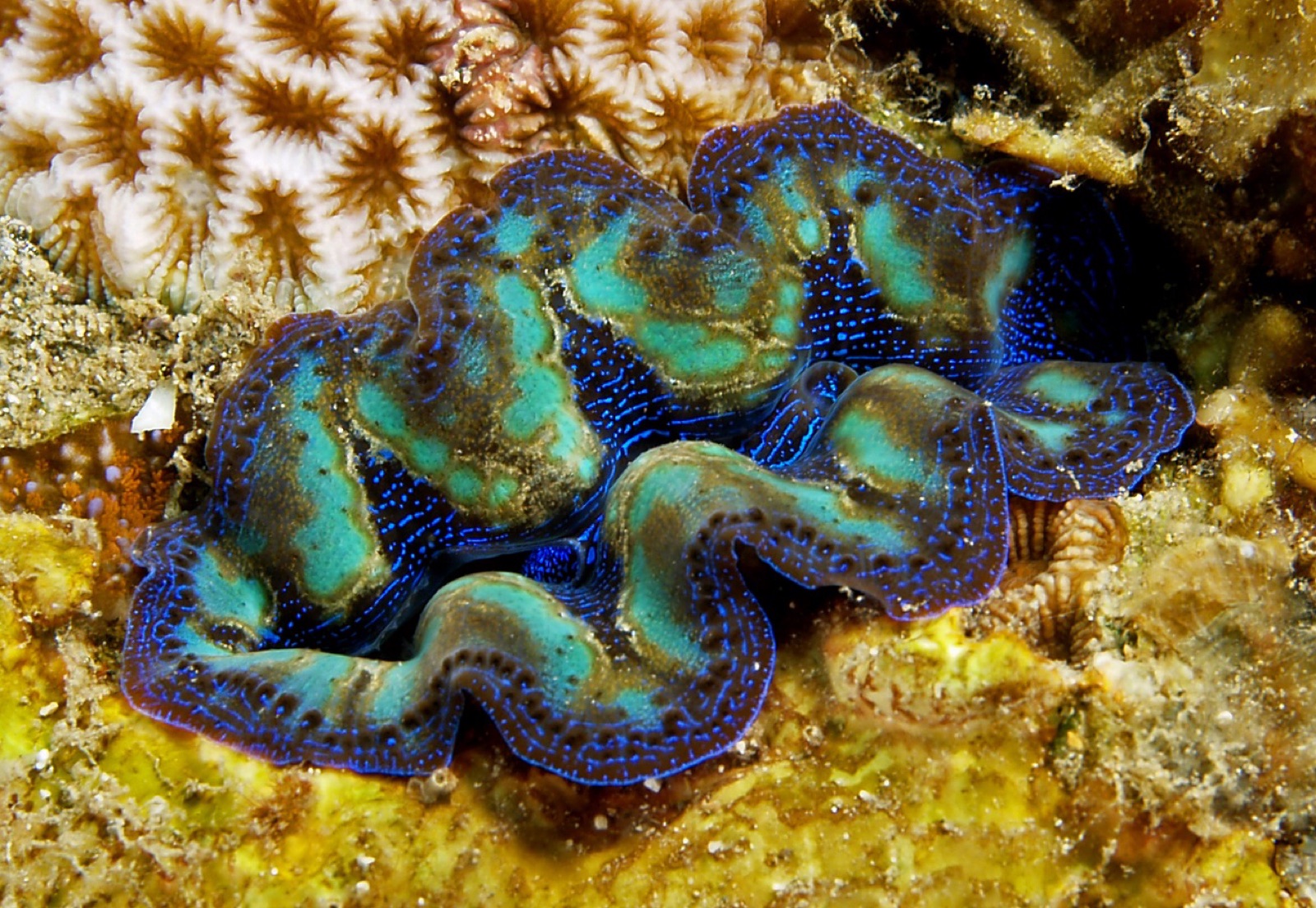
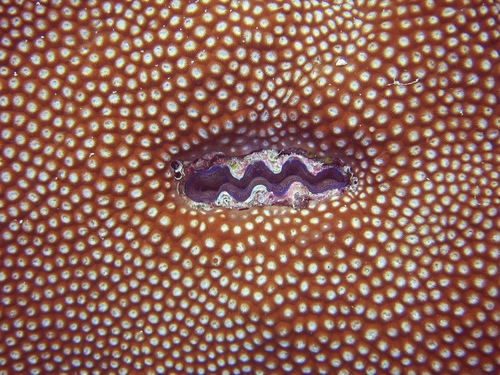
Tridacna crocea reaches 15 cm, smallest of Tridacna giant clams. Shell deeply embedded in cavities it digs in hard corals (Porites notably) with its 4 strong radial ribs. Mantle yellow (hence crocea, saffron), green or vivid blue very compact, very colorful visible when open. Lives from 0 to 20 m on coral reefs of central Indo-Pacific. Listed LC. Filter feeder and photosynthetic. Capable of retracting mantle and closing strongly. Iconic macro photo subject for vivid mosaic colors.
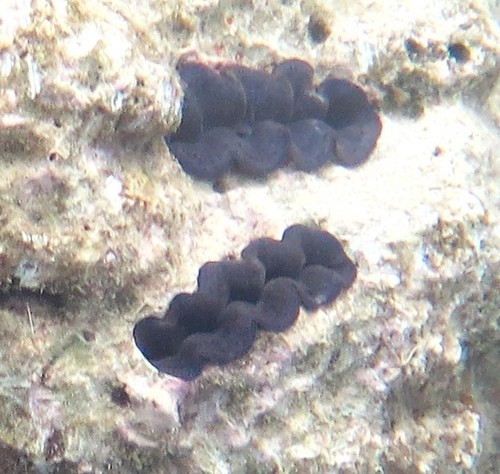
Photo of Crocus giant clam
Frequently asked questions
- How big is the Crocus giant clam?
- Crocus giant clam (Tridacna crocea) reaches 8–15 cm in length.
- At what depth can you find the Crocus giant clam?
- Crocus giant clam is found between 0–20 m deep.
- Is the Crocus giant clam dangerous to divers?
- Danger level: Harmless.
- What is the conservation status of the Crocus giant clam?
- IUCN status: Least concern (LC).
- Where can you find the Crocus giant clam?
- Found in: Asian Pacific, Indian Ocean & Red Sea.
Other species in the genus Tridacna
- Tridacna maxima - Maxima clam
- Tridacna gigas - Giant clam
- Tridacna squamosa - Fluted giant clam
- Tridacna derasa - Smooth Clam
Other species in the family Cardiidae
- Acanthocardia tuberculata - Rough cockle
- Cerastoderma glaucum - Lagoon cockle
- Hippopus hippopus - Hippopus Clam
Sources
- Taxonomy: WoRMS (AphiaID 207673)
- Photos: iNaturalist (CC BY-NC)
- Distribution: GBIF (taxonKey 4372638)
- Conservation: IUCN Red List
- Encyclopedia: Wikipedia