Feathery hydroid (Plumularia setacea)
Key facts
- Scientific name
- Plumularia setacea
- Common name
- Feathery hydroid
- Category
- Cnidarians
- Family
- Plumulariidae
- Genus
- Plumularia
- IUCN status
- Least concern (LC)
- Danger level
- Harmless
- Habitats
- rocky-reef, artificial
- Behaviours
- sessile, colonial, filter-feeder
- Ocean zones
- Asian Pacific, Caribbean, East Atlantic, Mediterranean, Eastern Pacific
Description
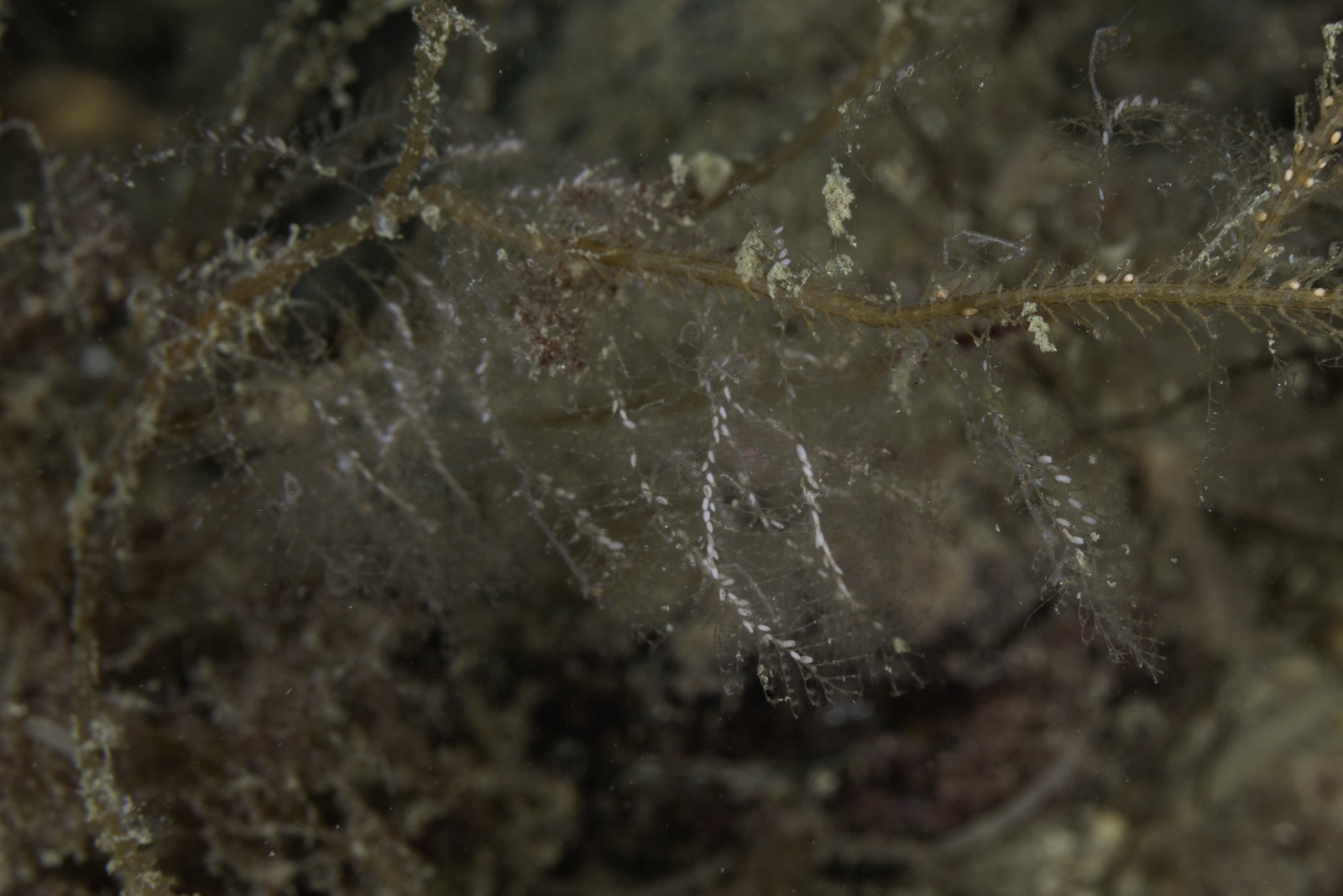
Plumularia setacea forms small filiform colonies of 3 to 5 cm resembling gray-brown feathers. Single stem with alternate branches bearing hydrothecae. Lives from 0 to 200 m on rocks, algae, wrecks and ropes in Northeast Atlantic and Mediterranean. Cnidarian hydroid with alternating cycle including tiny pelagic medusa form. Can slightly sting sensitive skin on contact. Indicator of low to moderate currents. Often supports other epibionts.
Photo of Feathery hydroid
Frequently asked questions
- Is the Feathery hydroid dangerous to divers?
- Danger level: Harmless.
- What is the conservation status of the Feathery hydroid?
- IUCN status: Least concern (LC).
- Where can you find the Feathery hydroid?
- Found in: Asian Pacific, Caribbean, East Atlantic, Mediterranean, Eastern Pacific.
Similar species
- Cotylorhiza tuberculata - Fried egg jellyfish
- Pelagia noctiluca - Mauve stinger
- Velella velella - By-the-wind sailor
- Rhizostoma pulmo - Barrel jellyfish
- Millepora alcicornis - Branching fire coral
- Cyanea capillata - Lion's mane jellyfish
Sources
- Taxonomy: WoRMS (AphiaID 117824)
- Photos: iNaturalist (CC BY-NC)
- Distribution: GBIF (taxonKey 2266926)
- Conservation: IUCN Red List
- Encyclopedia: Wikipedia