Giant Kelp (Macrocystis pyrifera)
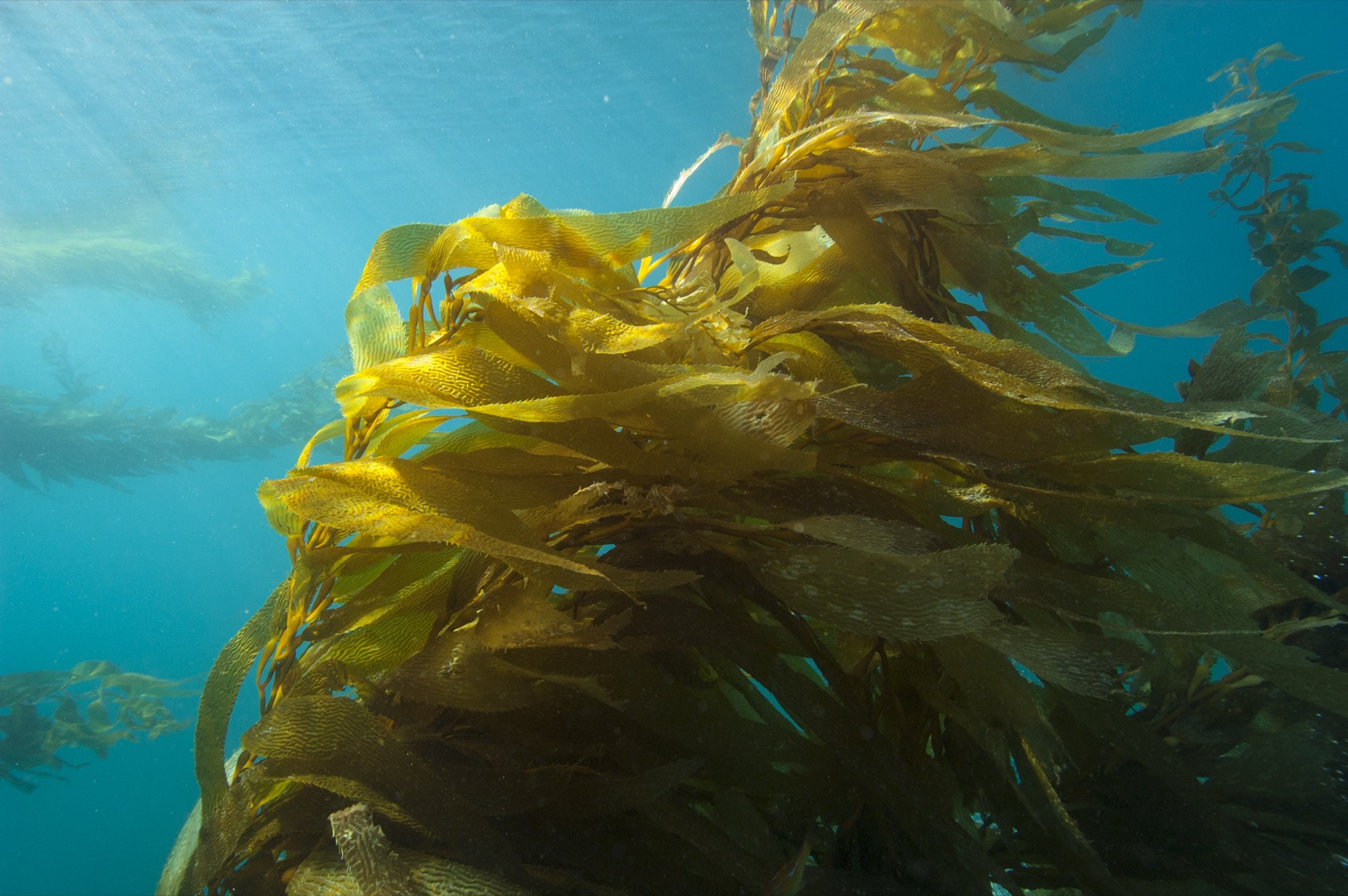
Key facts
- Scientific name
- Macrocystis pyrifera
- Common name
- Giant Kelp
- Category
- Algae
- Family
- Laminariaceae
- Genus
- Macrocystis
- Size
- 1000–3000 cm
- Depth
- 0–30 m
- IUCN status
- Least concern (LC)
- Danger level
- Harmless
- Habitats
- kelp-forest
- Behaviours
- benthic
- Ocean zones
- Eastern Pacific, Mediterranean
Description
Macrocystis pyrifera is the world's largest alga, reaching 30 m long. Brown alga (Phaeophyceae) of temperate East Pacific and southern coasts. Floating body with pneumatocysts, anchored by strong holdfasts. Forms dense underwater forests, similar to terrestrial forests. Critical habitat for sea urchins, fish, sea lions. Commercially harvested for alginic acid. Least threatened = LC. Iconic for California divers.
Frequently asked questions
- How big is the Giant Kelp?
- Giant Kelp (Macrocystis pyrifera) reaches 1000–3000 cm in length.
- At what depth can you find the Giant Kelp?
- Giant Kelp is found between 0–30 m deep.
- Is the Giant Kelp dangerous to divers?
- Danger level: Harmless.
- What is the conservation status of the Giant Kelp?
- IUCN status: Least concern (LC).
- Where can you find the Giant Kelp?
- Found in: Eastern Pacific, Mediterranean.
Other species in the family Laminariaceae
- Laminaria hyperborea - Cuvie
- Saccharina latissima - Sugar Kelp
- Nereocystis luetkeana - Bull Kelp
- Laminaria digitata - Oarweed
- Postelsia palmaeformis - Sea Palm
Sources
- Taxonomy: WoRMS (AphiaID 232231)
- Photos: iNaturalist (CC BY-NC)
- Distribution: GBIF (taxonKey 5422328)
- Conservation: IUCN Red List
- Encyclopedia: Wikipedia