Cluster hydroid (Eudendrium racemosum)
Key facts
- Scientific name
- Eudendrium racemosum
- Common name
- Cluster hydroid
- Category
- Cnidarians
- Family
- Eudendriidae
- Genus
- Eudendrium
- Size
- 5–15 cm
- Depth
- 3–50 m
- IUCN status
- Least concern (LC)
- Danger level
- Harmless
- Habitats
- rocky-reef
- Behaviours
- benthic, colonial
- Ocean zones
- East Atlantic, Mediterranean
Description
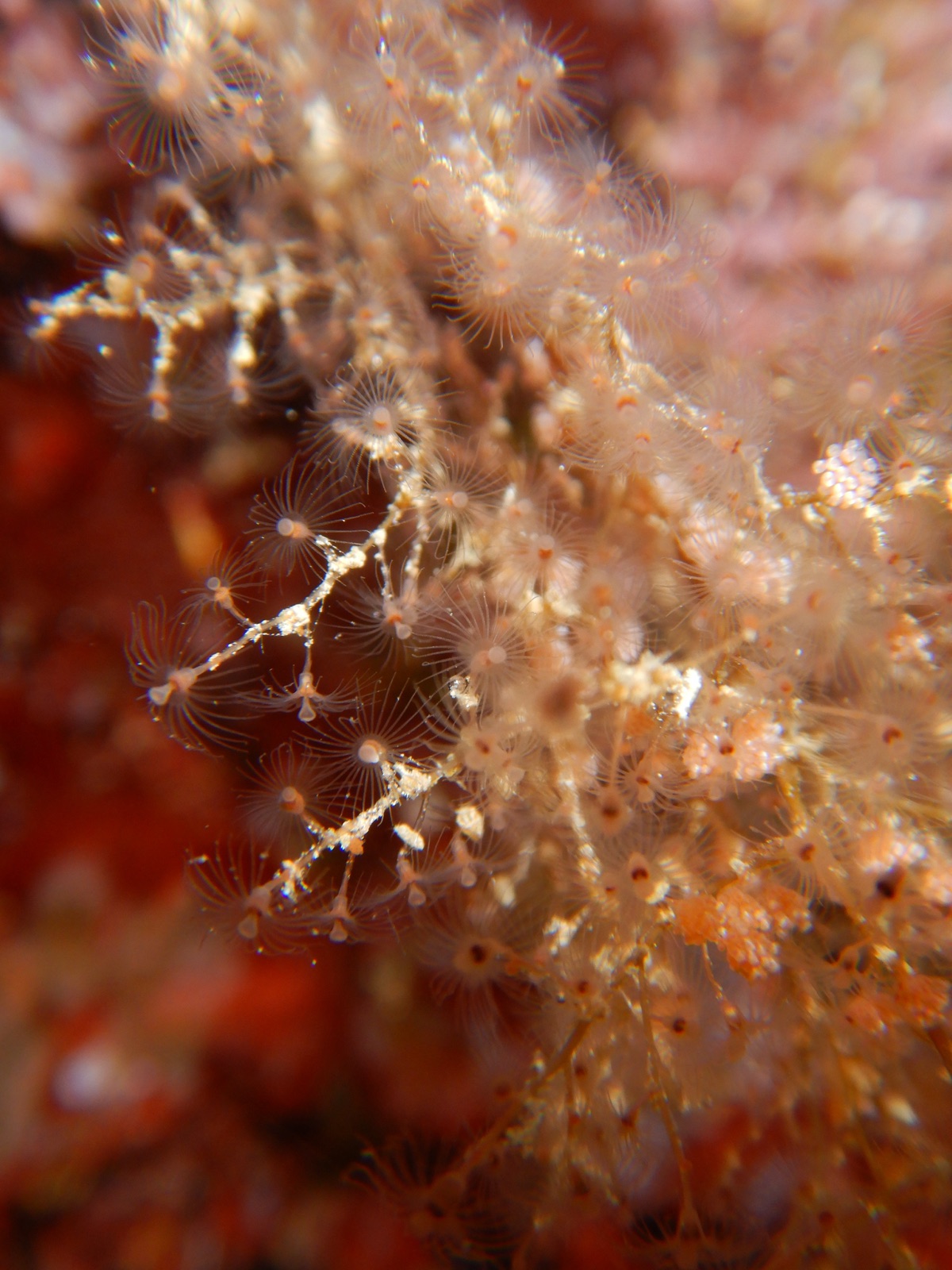
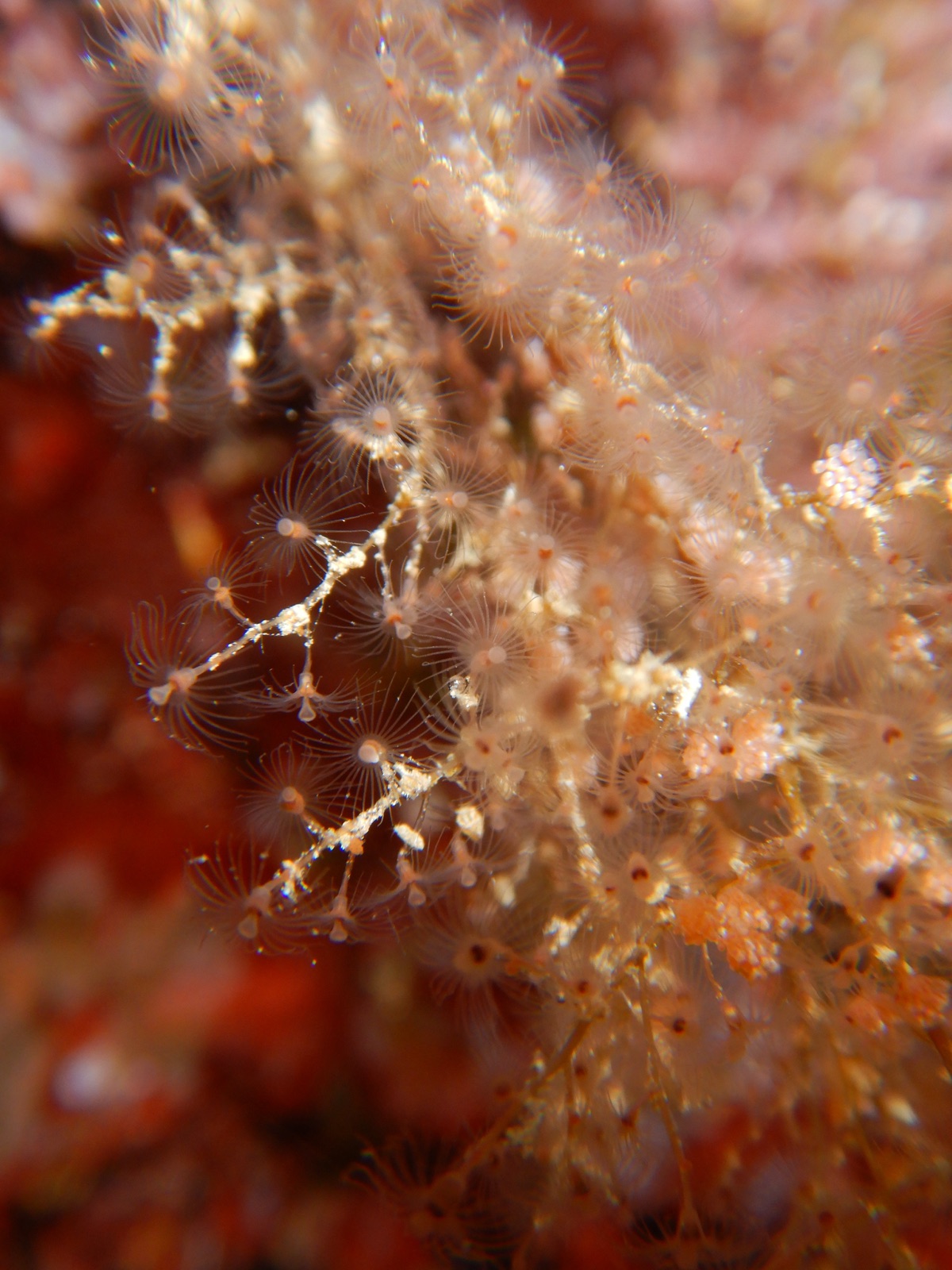
Eudendrium racemosum reaches 15 cm. Colonial hydroid (Eudendriidae) Mediterranean and East Atlantic with dichotomously branched colonial body brown-pink to beige, terminal polyps orange to red in clusters (hence racemosum) deployed in tentacle crown for plankton capture. Lives from 3 to 50 m on rocky reefs and coralligenous, attached to hard substrates and gorgonians. Fleshier than feather hydroids. Interesting macro dive photo subject for details of orange polyps, observable on shaded walls.
Photo of Cluster hydroid
Frequently asked questions
- How big is the Cluster hydroid?
- Cluster hydroid (Eudendrium racemosum) reaches 5–15 cm in length.
- At what depth can you find the Cluster hydroid?
- Cluster hydroid is found between 3–50 m deep.
- Is the Cluster hydroid dangerous to divers?
- Danger level: Harmless.
- What is the conservation status of the Cluster hydroid?
- IUCN status: Least concern (LC).
- Where can you find the Cluster hydroid?
- Found in: East Atlantic, Mediterranean.
Similar species
- Cotylorhiza tuberculata - Fried egg jellyfish
- Pelagia noctiluca - Mauve stinger
- Velella velella - By-the-wind sailor
- Rhizostoma pulmo - Barrel jellyfish
- Millepora alcicornis - Branching fire coral
- Cyanea capillata - Lion's mane jellyfish
Sources
- Taxonomy: WoRMS (AphiaID 117553)
- Photos: iNaturalist (CC BY-NC)
- Distribution: GBIF (taxonKey 2266177)
- Conservation: IUCN Red List
- Encyclopedia: Wikipedia