Ange yellowtail (Centropyge bispinosa)
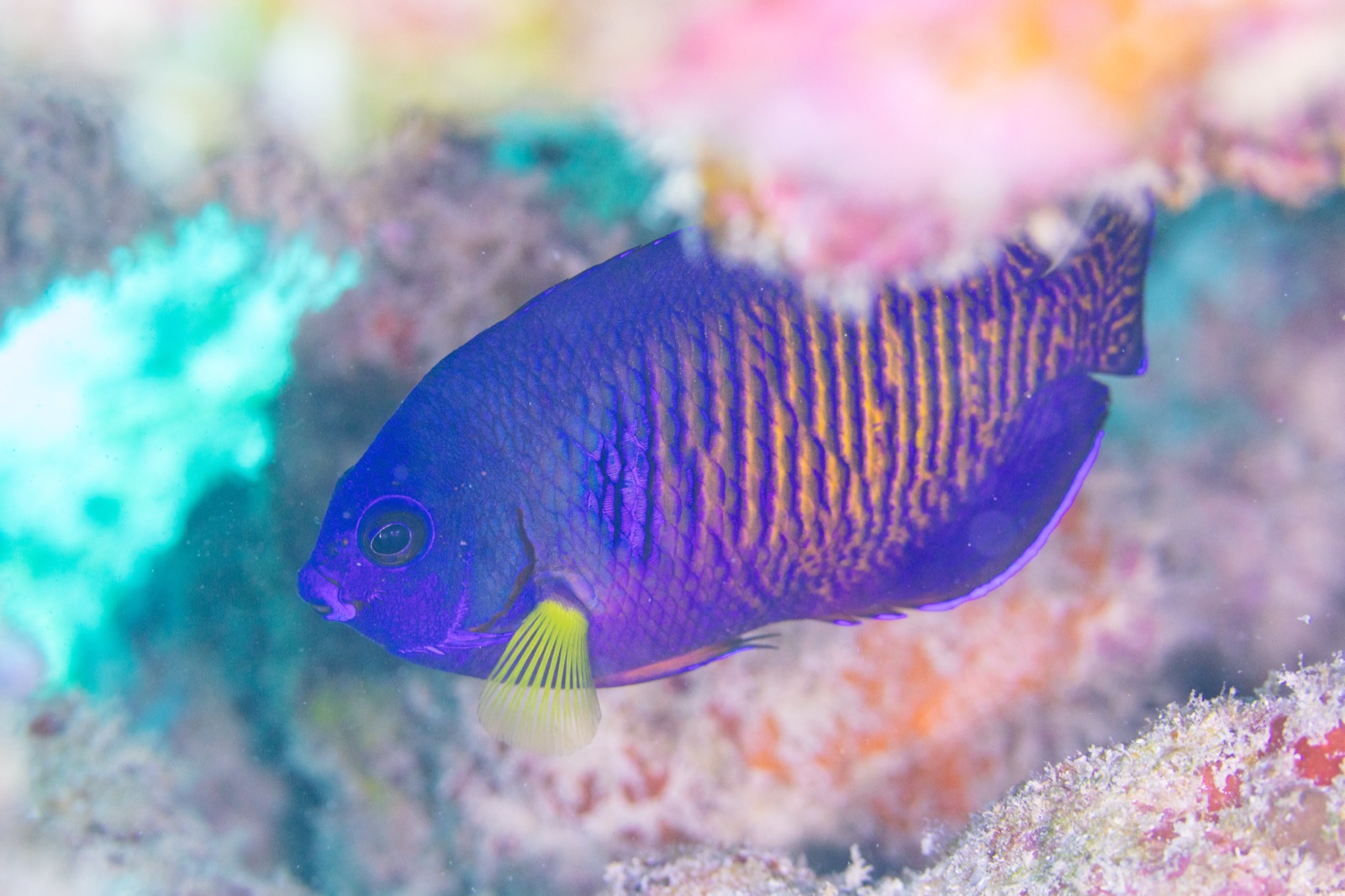
Caractéristiques
- Nom scientifique
- Centropyge bispinosa
- Nom commun
- Ange yellowtail
- Catégorie
- Poissons
- Famille
- Pomacanthidae
- Genre
- Centropyge
- Taille
- 6–9 cm
- Profondeur
- 5–50 m
- Statut UICN
- Préoccupation mineure (LC)
- Niveau de danger
- Inoffensif
- Habitats
- coral-reef
- Comportements
- benthic, solitary, territorial, diurnal
- Zones océaniques
- Pacifique asiatique, Océan Indien & Mer Rouge
Description
Centropyge bispinosa atteint 6-9 cm. Corps noir charbon avec queue jaune très distinctive contrastant. Tête souvent bleuâtre. Indo-Pacifique à 5-50 m très commun. Ultra-territorial. Omnivore opportuniste. Très visible. Moins spectaculaire que flame mais très commun et robuste. Apprécié des plongeurs.
Questions fréquentes
- Quelle est la taille de Ange yellowtail ?
- Ange yellowtail (Centropyge bispinosa) mesure entre 6–9 cm.
- À quelle profondeur trouve-t-on Ange yellowtail ?
- On rencontre Ange yellowtail entre 5–50 m de profondeur.
- Ange yellowtail est-il dangereux pour les plongeurs ?
- Niveau de danger : Inoffensif.
- Quel est le statut de conservation de Ange yellowtail ?
- Statut UICN : Préoccupation mineure (LC).
- Où trouver Ange yellowtail ?
- Présent en: Pacifique asiatique, Océan Indien & Mer Rouge.
Autres espèces du genre Centropyge
- Centropyge aurantonotus - Poisson-ange flamboyant
- Centropyge bicolor - Ange nain bicolore
- Centropyge acanthops - Nain ange à tache africain
- Centropyge vrolikii - Ange cherubim
- Centropyge tibicen - Ange zèbre
- Centropyge loricula - Ange flamme
Autres espèces de la famille Pomacanthidae
- Holacanthus ciliaris - Demoiselle royale
- Holacanthus tricolor - Poisson-ange rock beauty
- Pomacanthus paru - Poisson-ange français
- Pomacanthus arcuatus - Ange gris caribéen
- Pomacanthus maculosus - Poisson-ange à barre jaune
- Pygoplites diacanthus - Ange royal
Sources
- Taxonomie: WoRMS (AphiaID 278830)
- Photos: iNaturalist (CC BY-NC)
- Distribution: GBIF (taxonKey 2396495)
- Conservation: IUCN Red List
- Encyclopédie: Wikipedia