Bluntnose Stingray (Urotrygon aspidura)
Key facts
- Scientific name
- Urotrygon aspidura
- Common name
- Bluntnose Stingray
- Category
- Fish
- Family
- Urotrygonidae
- Genus
- Urotrygon
- Size
- 25–45 cm
- Depth
- 15–180 m
- IUCN status
- Least concern (LC)
- Danger level
- Harmless
- Habitats
- sandy-bottom, muddy-bottom
- Behaviours
- benthic
- Ocean zones
- Caribbean, Eastern Pacific
Description
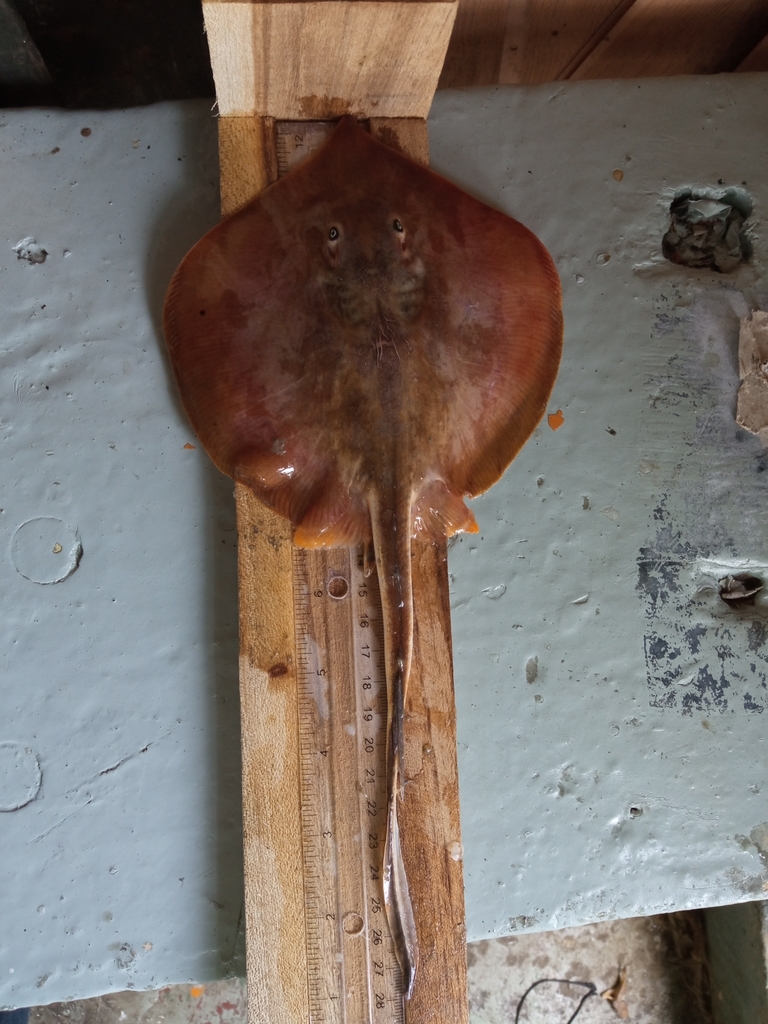
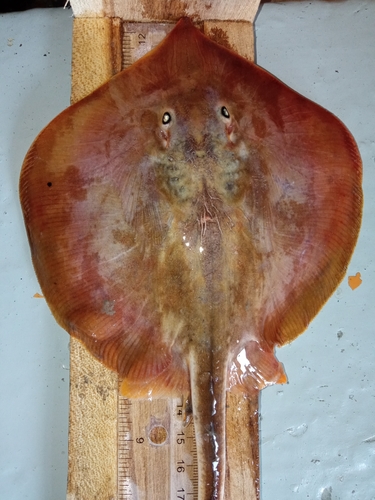
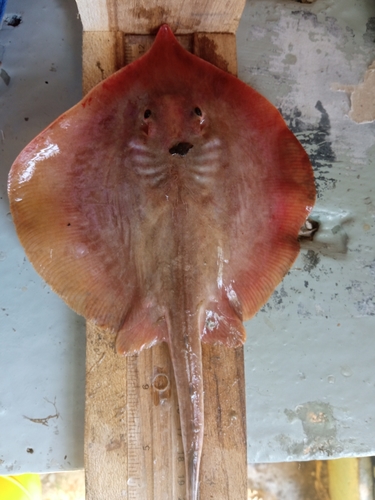
Urotrygon aspidura reaches 45 cm. Benthic rajid, deep East Pacific & Galapagos. Brown-olive, round disc, long & sharp caudal spine. Buried at rest, likely active at night. Soft bottoms 15-180 m. Few observations = LC data. Moderate scientific interest. Inaccessible to most divers.
Photo of Bluntnose Stingray
Frequently asked questions
- How big is the Bluntnose Stingray?
- Bluntnose Stingray (Urotrygon aspidura) reaches 25–45 cm in length.
- At what depth can you find the Bluntnose Stingray?
- Bluntnose Stingray is found between 15–180 m deep.
- Is the Bluntnose Stingray dangerous to divers?
- Danger level: Harmless.
- What is the conservation status of the Bluntnose Stingray?
- IUCN status: Least concern (LC).
- Where can you find the Bluntnose Stingray?
- Found in: Caribbean, Eastern Pacific.
Other species in the genus Urotrygon
Other species in the family Urotrygonidae
Sources
- Taxonomy: WoRMS (AphiaID 283113)
- Photos: iNaturalist (CC BY-NC)
- Distribution: GBIF (taxonKey 2420486)
- Conservation: IUCN Red List
- Encyclopedia: Wikipedia