Thornback ray (Raja clavata)
Key facts
- Scientific name
- Raja clavata
- Common name
- Thornback ray
- Category
- Fish
- Family
- Rajidae
- Genus
- Raja
- Size
- 60–140 cm
- Depth
- 10–300 m
- IUCN status
- Near threatened (NT)
- Danger level
- Caution
- Habitats
- sand, rocky
- Behaviours
- solitary, benthic
- Ocean zones
- East Atlantic, Mediterranean
Description
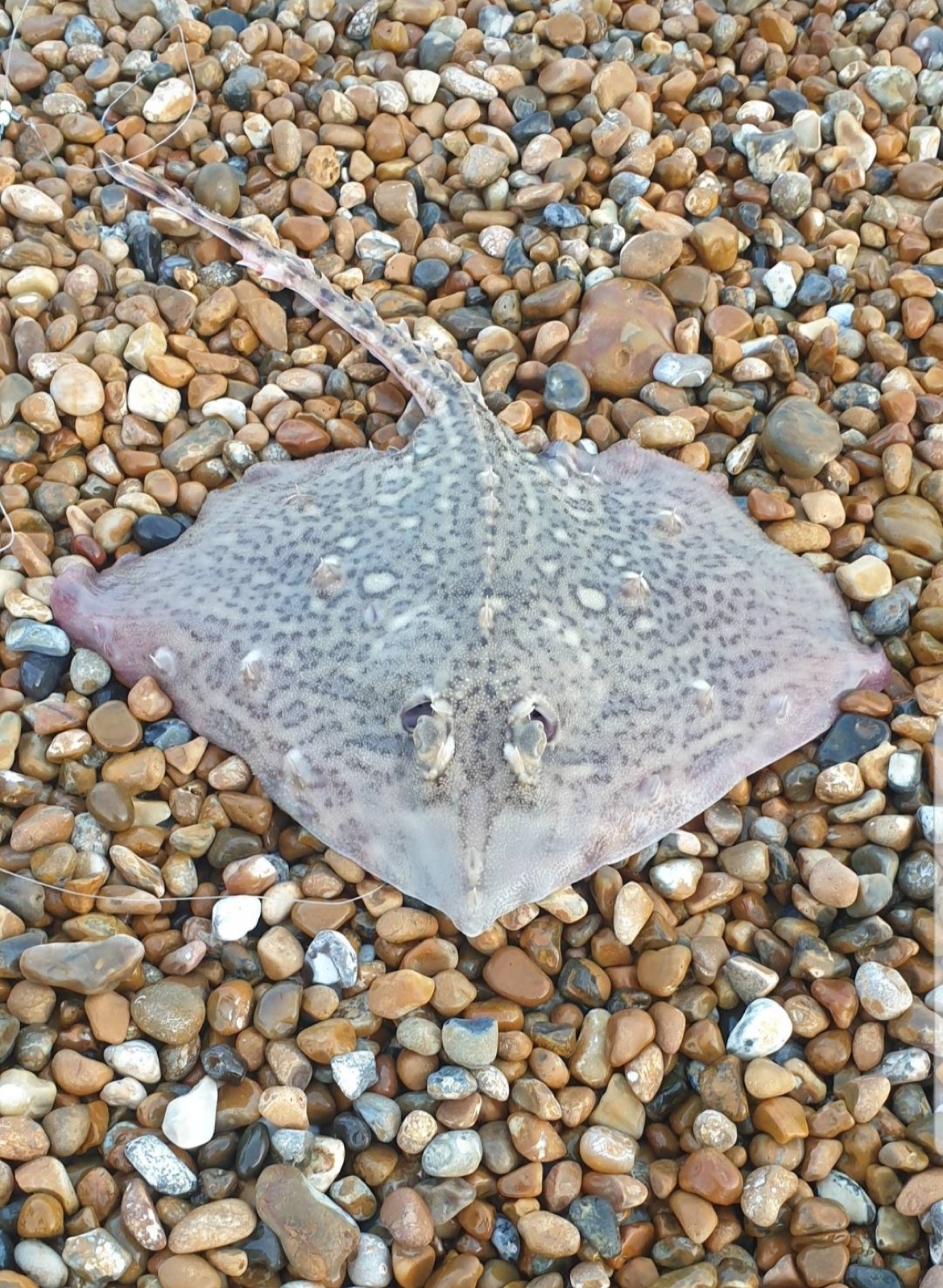
Raja clavata reaches 1.4 m. Large ray with a diamond-shaped disc, mottled brown-beige dorsal side, row of stout spines (bucklers) on the back and tail. Oviparous: lays rectangular egg capsules with long filamentous horns (mermaid's purses). Lives on sandy and sandy-rocky bottoms from 10 to 300 m. Classified Near Threatened, significant fishing pressure.
Frequently asked questions
- How big is the Thornback ray?
- Thornback ray (Raja clavata) reaches 60–140 cm in length.
- At what depth can you find the Thornback ray?
- Thornback ray is found between 10–300 m deep.
- Is the Thornback ray dangerous to divers?
- Danger level: Caution.
- What is the conservation status of the Thornback ray?
- IUCN status: Near threatened (NT).
- Where can you find the Thornback ray?
- Found in: East Atlantic, Mediterranean.
Other species in the genus Raja
- Raja microocellata - Small-eyed ray
- Raja brachyura - Blonde ray
- Raja montagui - Spotted Ray
- Raja undulata - Undulate Ray
Other species in the family Rajidae
- Leucoraja naevus - Cuckoo ray
- Amblyraja radiata - Starry ray
- Dipturus oxyrinchus - Longnose skate
- Dipturus batis - Common skate
Sources
- Taxonomy: WoRMS (AphiaID 105883)
- Photos: iNaturalist (CC BY-NC)
- Distribution: GBIF (taxonKey 5216024)
- Conservation: IUCN Red List
- Encyclopedia: Wikipedia