Ocellated plakobranchus (Plakobranchus ocellatus)
Key facts
- Scientific name
- Plakobranchus ocellatus
- Common name
- Ocellated plakobranchus
- Category
- Molluscs
- Family
- Plakobranchidae
- Genus
- Plakobranchus
- Size
- 3–6 cm
- Depth
- 1–20 m
- IUCN status
- Least concern (LC)
- Danger level
- Harmless
- Habitats
- sand, seagrass
- Behaviours
- benthic, slow-mover
- Ocean zones
- Asian Pacific, Indian Ocean & Red Sea
Description
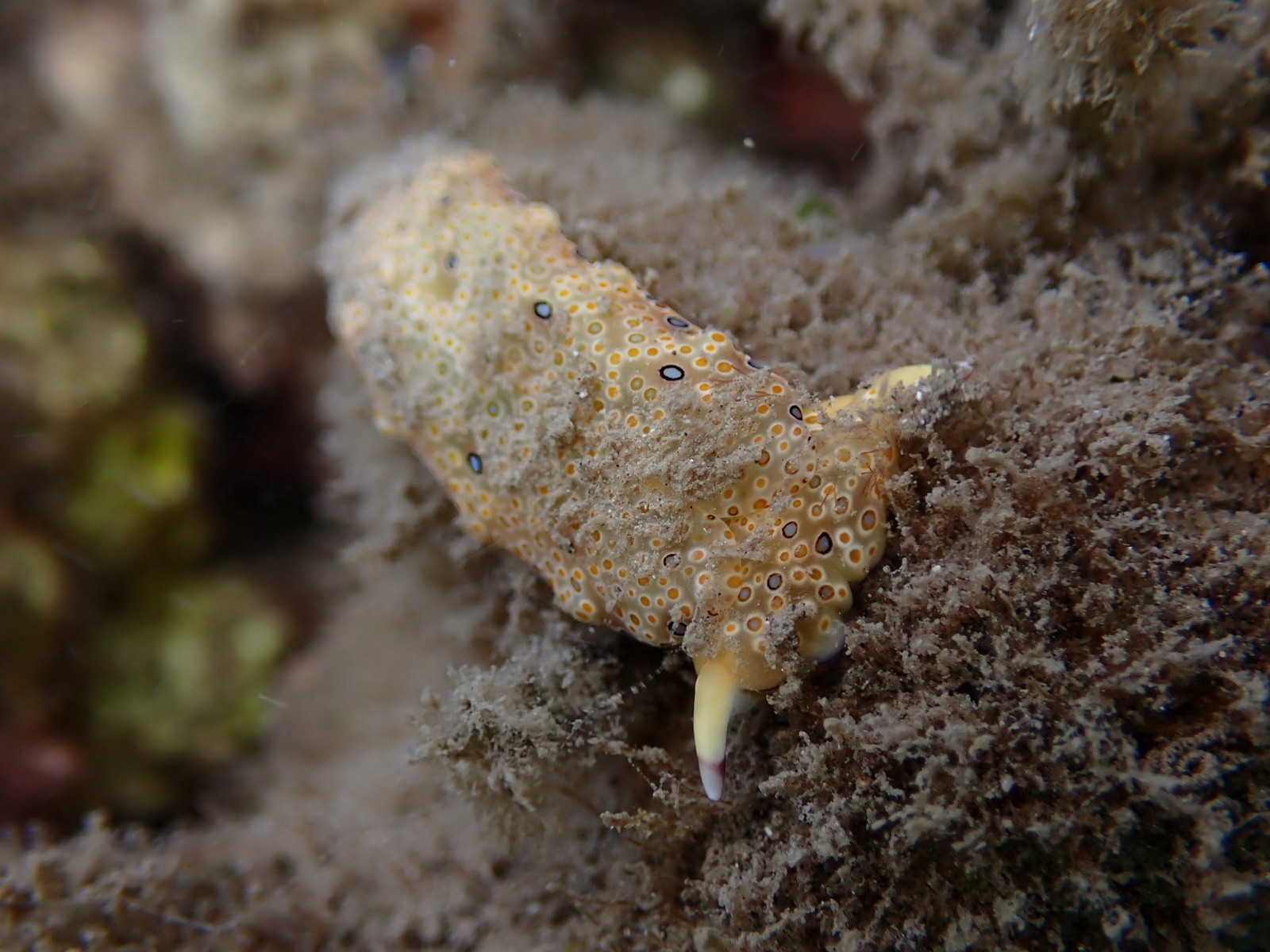
Plakobranchus ocellatus reaches 6 cm. Small sacoglossan (Plakobranchidae) Indo-Pacific with elongated green-brown to pink-brown body with distinctive dorsal ocelli (hence ocellatus). Flat foliaceous parapodia covering back. Lives from 1 to 20 m on sand and seagrass of Indo-Pacific. Remarkable species for highly scientifically studied photosynthetic kleptoplasty (can survive several months thanks to sequestered algae chloroplasts, transmitted trans-generationally to eggs). Discreet but biologically important macro photo subject.
Photo of Ocellated plakobranchus
Frequently asked questions
- How big is the Ocellated plakobranchus?
- Ocellated plakobranchus (Plakobranchus ocellatus) reaches 3–6 cm in length.
- At what depth can you find the Ocellated plakobranchus?
- Ocellated plakobranchus is found between 1–20 m deep.
- Is the Ocellated plakobranchus dangerous to divers?
- Danger level: Harmless.
- What is the conservation status of the Ocellated plakobranchus?
- IUCN status: Least concern (LC).
- Where can you find the Ocellated plakobranchus?
- Found in: Asian Pacific, Indian Ocean & Red Sea.
Other species in the family Plakobranchidae
- Thuridilla hopei - Hope's thuridilla
- Elysia timida - Solar-powered sea slug
- Thuridilla gracilis - Graceful thuridilla
- Elysia ornata - Ornate elysia
- Elysia crispata - Lettuce sea slug
- Thuridilla lineolata - Lineolate thuridilla
Sources
- Taxonomy: WoRMS (AphiaID 451657)
- Photos: iNaturalist (CC BY-NC)
- Distribution: GBIF (taxonKey 4597281)
- Conservation: IUCN Red List
- Encyclopedia: Wikipedia