Sperm whale (Physeter macrocephalus)
Key facts
- Scientific name
- Physeter macrocephalus
- Common name
- Sperm whale
- Category
- Marine mammals
- Family
- Physeteridae
- Genus
- Physeter
- Size
- 1100–1800 cm
- Depth
- 0–3000 m
- IUCN status
- Vulnerable (VU)
- Danger level
- Harmless
- Habitats
- open-water
- Behaviours
- solitary, schooling, slow-mover
- Ocean zones
- Asian Pacific, Caribbean, East Atlantic, Indian Ocean & Red Sea, Macaronesia, Mediterranean, Eastern Pacific
Description
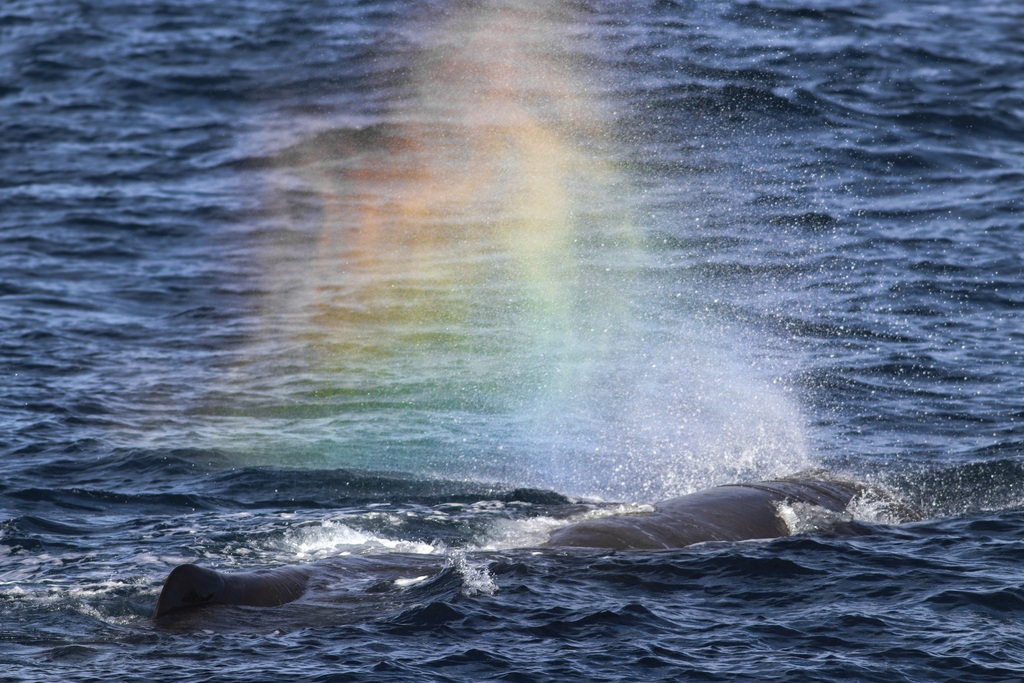
Physeter macrocephalus reaches 18 m and 50 tons. Largest toothed predator in the world. Huge square head occupying one third of body (contains spermaceti used for echolocation). Dark gray wrinkled, thin lower jaw with large teeth. Record dives to 2000 m to hunt giant squid (Architeuthis combat scars visible). Worldwide distribution. Azores are the number 1 spot worldwide to encounter them at surface between deep dives. Listed VU after centuries of whaling.
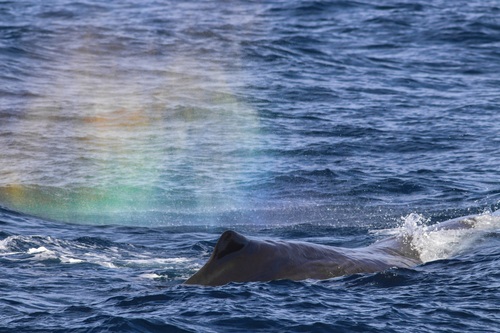
Photo of Sperm whale
Frequently asked questions
- How big is the Sperm whale?
- Sperm whale (Physeter macrocephalus) reaches 1100–1800 cm in length.
- At what depth can you find the Sperm whale?
- Sperm whale is found between 0–3000 m deep.
- Is the Sperm whale dangerous to divers?
- Danger level: Harmless.
- What is the conservation status of the Sperm whale?
- IUCN status: Vulnerable (VU).
- Where can you find the Sperm whale?
- Found in: Asian Pacific, Caribbean, East Atlantic, Indian Ocean & Red Sea, Macaronesia, Mediterranean, Eastern Pacific.
Similar species
- Tursiops truncatus - Common bottlenose dolphin
- Lutra lutra - Eurasian otter
- Ziphius cavirostris - Cuvier's beaked whale
- Megaptera novaeangliae - Humpback whale
- Balaenoptera edeni - Bryde's whale
- Balaenoptera physalus - Fin whale
Sources
- Taxonomy: WoRMS (AphiaID 137119)
- Photos: iNaturalist (CC BY-NC)
- Distribution: GBIF (taxonKey 8123917)
- Conservation: IUCN Red List
- Encyclopedia: Wikipedia