Mediterranean giant fern hydroid (Lytocarpia myriophyllum)
Key facts
- Scientific name
- Lytocarpia myriophyllum
- Common name
- Mediterranean giant fern hydroid
- Category
- Cnidarians
- Family
- Aglaopheniidae
- Genus
- Lytocarpia
- Size
- 30–100 cm
- Depth
- 20–200 m
- IUCN status
- Least concern (LC)
- Danger level
- Harmless
- Habitats
- rocky-reef
- Behaviours
- benthic, colonial
- Ocean zones
- Asian Pacific, East Atlantic, Macaronesia, Mediterranean
Description
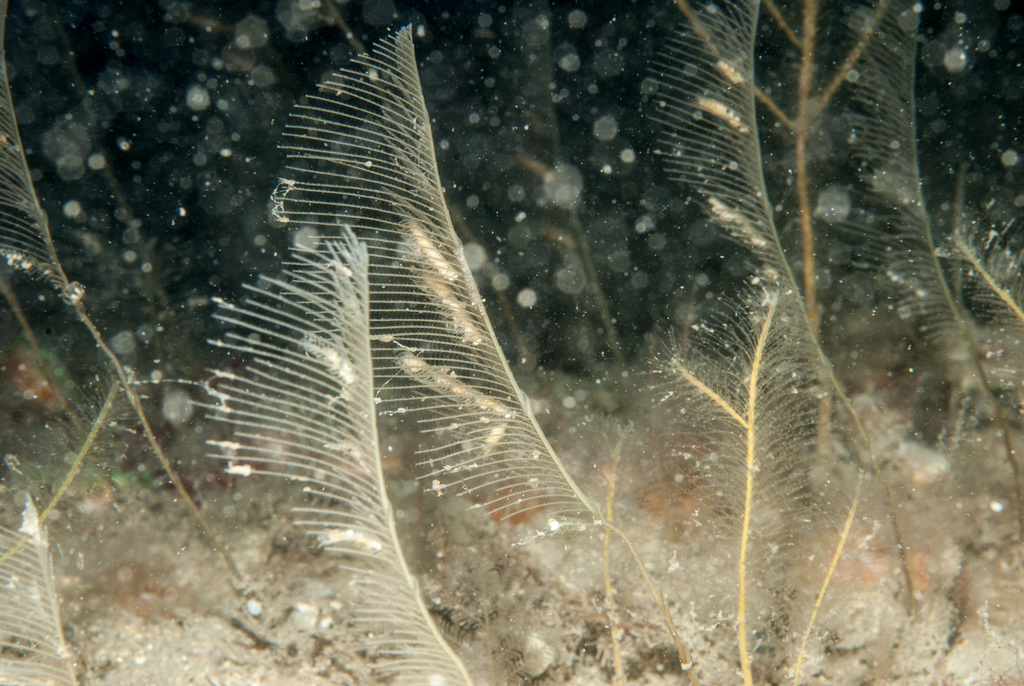
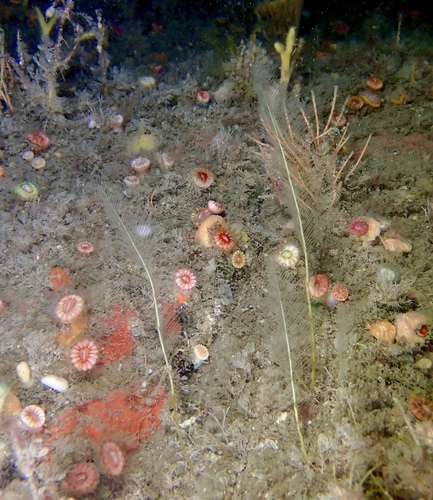
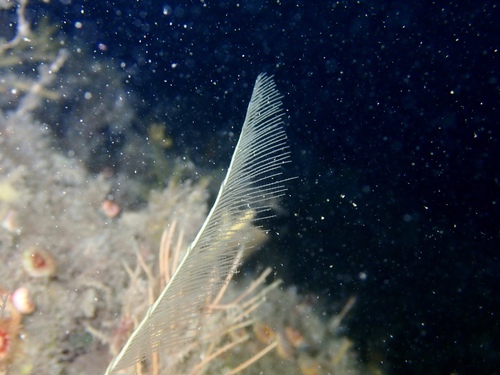
Lytocarpia myriophyllum reaches 1 m height. Large colonial hydroid (Aglaopheniidae) Mediterranean and East Atlantic temperate with erect colonial body in fern or bipinnate feather shape golden-yellow to orange-brown, highly branched structure. Lives from 20 to 200 m on rocky drop-offs and deep coralligenous, sometimes dense populations forming hydroid forests. Plankton filter feeder. Urticating for diver's skin. Spectacular Mediterranean deep dive photo subject, emblematic coralligenous landscape.
Photo of Mediterranean giant fern hydroid
Frequently asked questions
- How big is the Mediterranean giant fern hydroid?
- Mediterranean giant fern hydroid (Lytocarpia myriophyllum) reaches 30–100 cm in length.
- At what depth can you find the Mediterranean giant fern hydroid?
- Mediterranean giant fern hydroid is found between 20–200 m deep.
- Is the Mediterranean giant fern hydroid dangerous to divers?
- Danger level: Harmless.
- What is the conservation status of the Mediterranean giant fern hydroid?
- IUCN status: Least concern (LC).
- Where can you find the Mediterranean giant fern hydroid?
- Found in: Asian Pacific, East Atlantic, Macaronesia, Mediterranean.
Other species in the family Aglaopheniidae
Sources
- Taxonomy: WoRMS (AphiaID 117302)
- Photos: iNaturalist (CC BY-NC)
- Distribution: GBIF (taxonKey 2267470)
- Conservation: IUCN Red List
- Encyclopedia: Wikipedia