Peregrine aeolid (Cratena peregrina)
Key facts
- Scientific name
- Cratena peregrina
- Common name
- Peregrine aeolid
- Category
- Molluscs
- Family
- Facelinidae
- Genus
- Cratena
- Size
- 2–5 cm
- Depth
- 1–50 m
- IUCN status
- Least concern (LC)
- Danger level
- Harmless
- Habitats
- rocky, reef
- Behaviours
- slow, stinging-immune
- Ocean zones
- East Atlantic, Mediterranean
Description
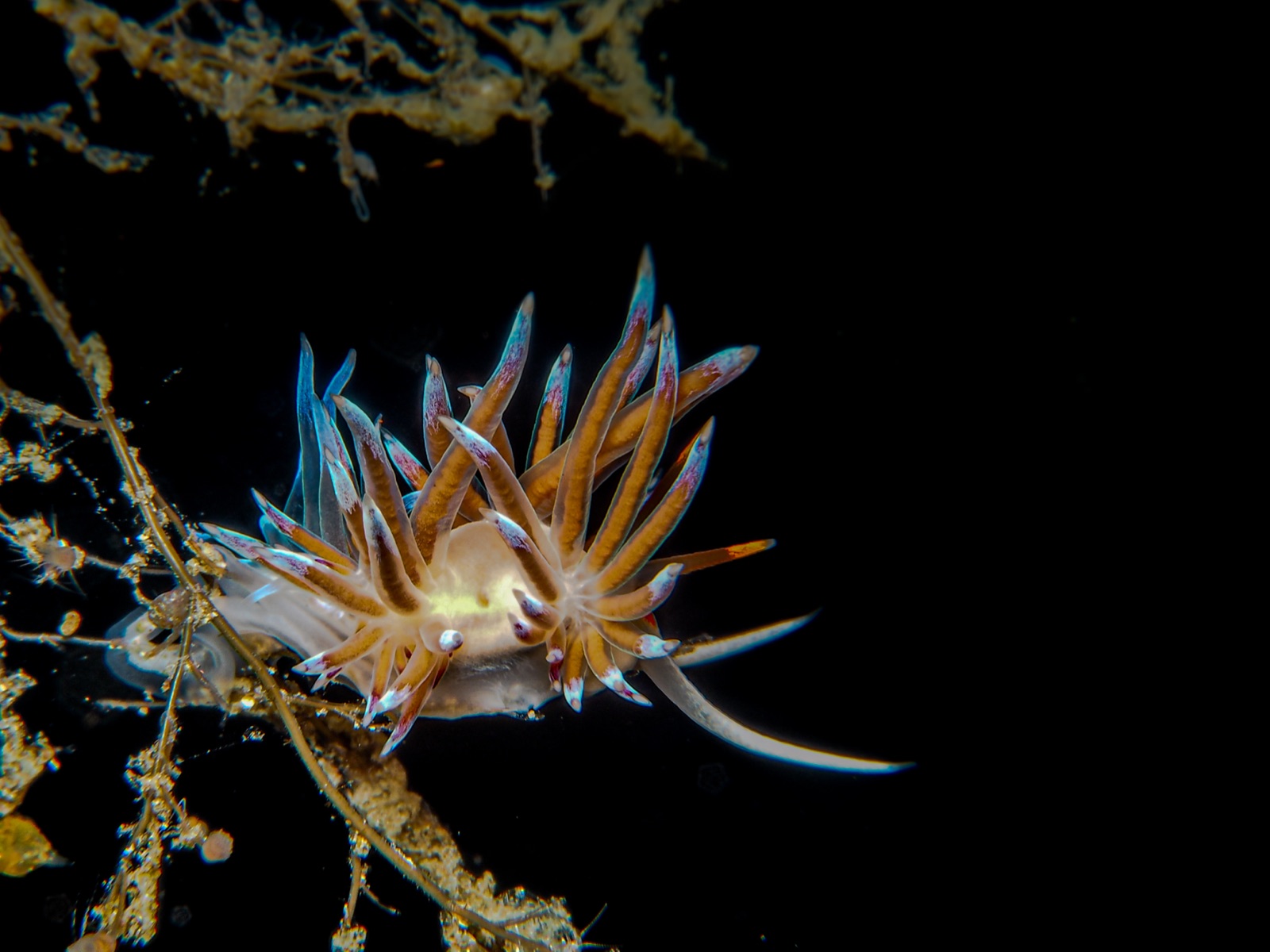
Cratena peregrina is a nudibranch of 2 to 5 cm, translucent body covered with bright-blue cerata tipped in orange. Lives on hydroid colonies on which it feeds, storing their stinging cells (nematocysts) in its own cerata for defense. A spectacular macro subject. Very common in the Mediterranean and nearby Atlantic in spring and summer.
Photo of Peregrine aeolid
Frequently asked questions
- How big is the Peregrine aeolid?
- Peregrine aeolid (Cratena peregrina) reaches 2–5 cm in length.
- At what depth can you find the Peregrine aeolid?
- Peregrine aeolid is found between 1–50 m deep.
- Is the Peregrine aeolid dangerous to divers?
- Danger level: Harmless.
- What is the conservation status of the Peregrine aeolid?
- IUCN status: Least concern (LC).
- Where can you find the Peregrine aeolid?
- Found in: East Atlantic, Mediterranean.
Other species in the genus Cratena
Other species in the family Facelinidae
- Pteraeolidia ianthina - Blue dragon aeolid
- Caloria indica - Indian caloria
- Phidiana indica - Indian phidiana
Sources
- Taxonomy: WoRMS (AphiaID 146862)
- Photos: iNaturalist (CC BY-NC)
- Distribution: GBIF (taxonKey 4359818)
- Conservation: IUCN Red List
- Encyclopedia: Wikipedia