Smaller cratena (Cratena minor)
Key facts
- Scientific name
- Cratena minor
- Common name
- Smaller cratena
- Category
- Molluscs
- Family
- Facelinidae
- Genus
- Cratena
- Size
- 1–3 cm
- Depth
- 1–30 m
- IUCN status
- Least concern (LC)
- Danger level
- Harmless
- Habitats
- rocky-reef
- Behaviours
- benthic, slow-mover, venomous
- Ocean zones
- Caribbean, Mediterranean, Eastern Pacific
Description
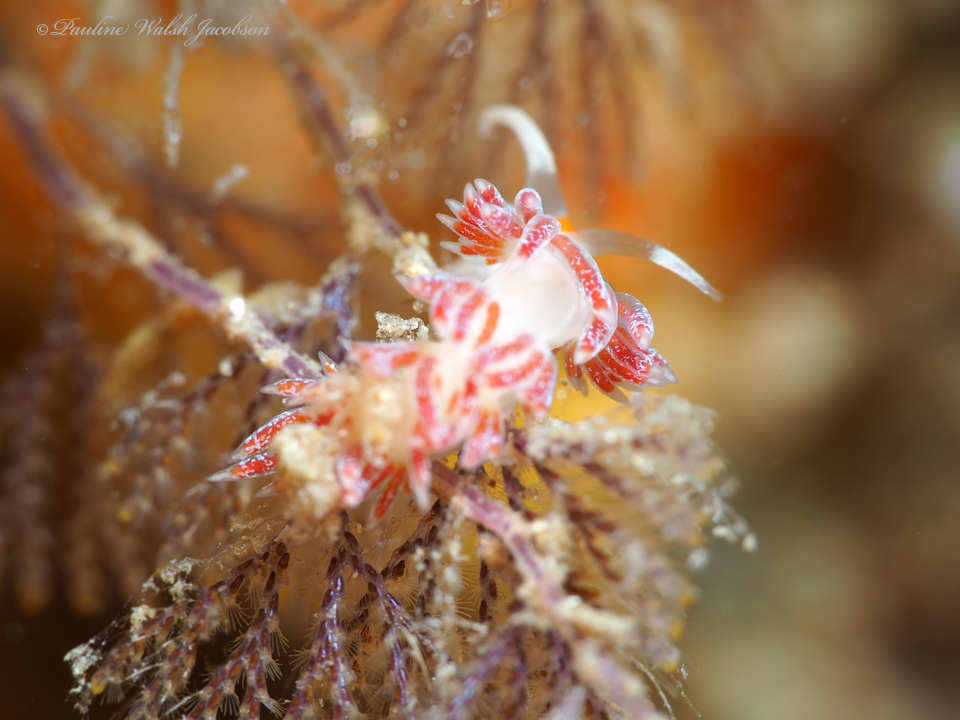
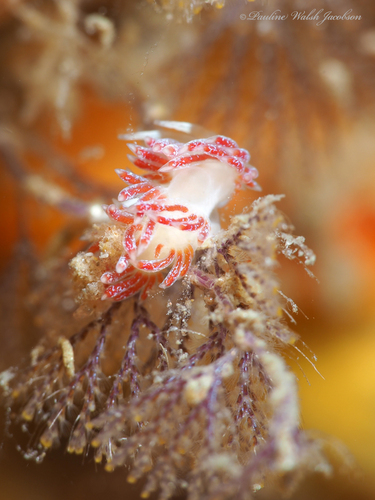
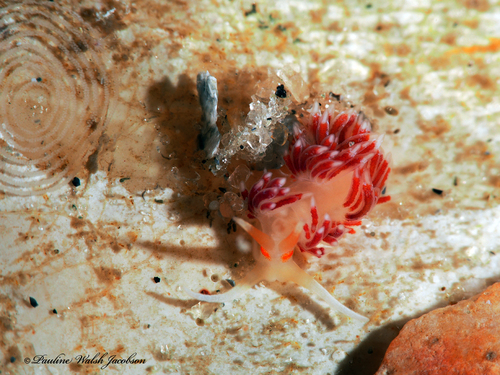
Cratena minor reaches 3 cm. Small Mediterranean aeolid nudibranch with thin elongated cream-white body with orange-red cerata in clusters on back, smaller and more discreet than cousin C. peregrina (already in base). Stinging cnidocysts sequestered in cerata for defense (originating from prey hydroids). Lives from 1 to 30 m on rocky bottoms with Eudendrium hydroids in Mediterranean. Macro photo subject for small aeolid enthusiasts. Relatively recent species in nomenclature.
Photo of Smaller cratena
Frequently asked questions
- How big is the Smaller cratena?
- Smaller cratena (Cratena minor) reaches 1–3 cm in length.
- At what depth can you find the Smaller cratena?
- Smaller cratena is found between 1–30 m deep.
- Is the Smaller cratena dangerous to divers?
- Danger level: Harmless.
- What is the conservation status of the Smaller cratena?
- IUCN status: Least concern (LC).
- Where can you find the Smaller cratena?
- Found in: Caribbean, Mediterranean, Eastern Pacific.
Other species in the genus Cratena
Other species in the family Facelinidae
- Pteraeolidia ianthina - Blue dragon aeolid
- Caloria indica - Indian caloria
- Phidiana indica - Indian phidiana
Sources
- Taxonomy: WoRMS (AphiaID 828468)
- Photos: iNaturalist (CC BY-NC)
- Distribution: GBIF (taxonKey 7685159)
- Conservation: IUCN Red List
- Encyclopedia: Wikipedia