Atlantic blue tang (Acanthurus tractus)
Key facts
- Scientific name
- Acanthurus tractus
- Common name
- Atlantic blue tang
- Category
- Fish
- Family
- Acanthuridae
- Genus
- Acanthurus
- Size
- 15–38 cm
- Depth
- 2–40 m
- IUCN status
- Least concern (LC)
- Danger level
- Harmless
- Habitats
- reef
- Behaviours
- schooling, herbivorous
- Ocean zones
- Caribbean, Eastern Pacific
Description
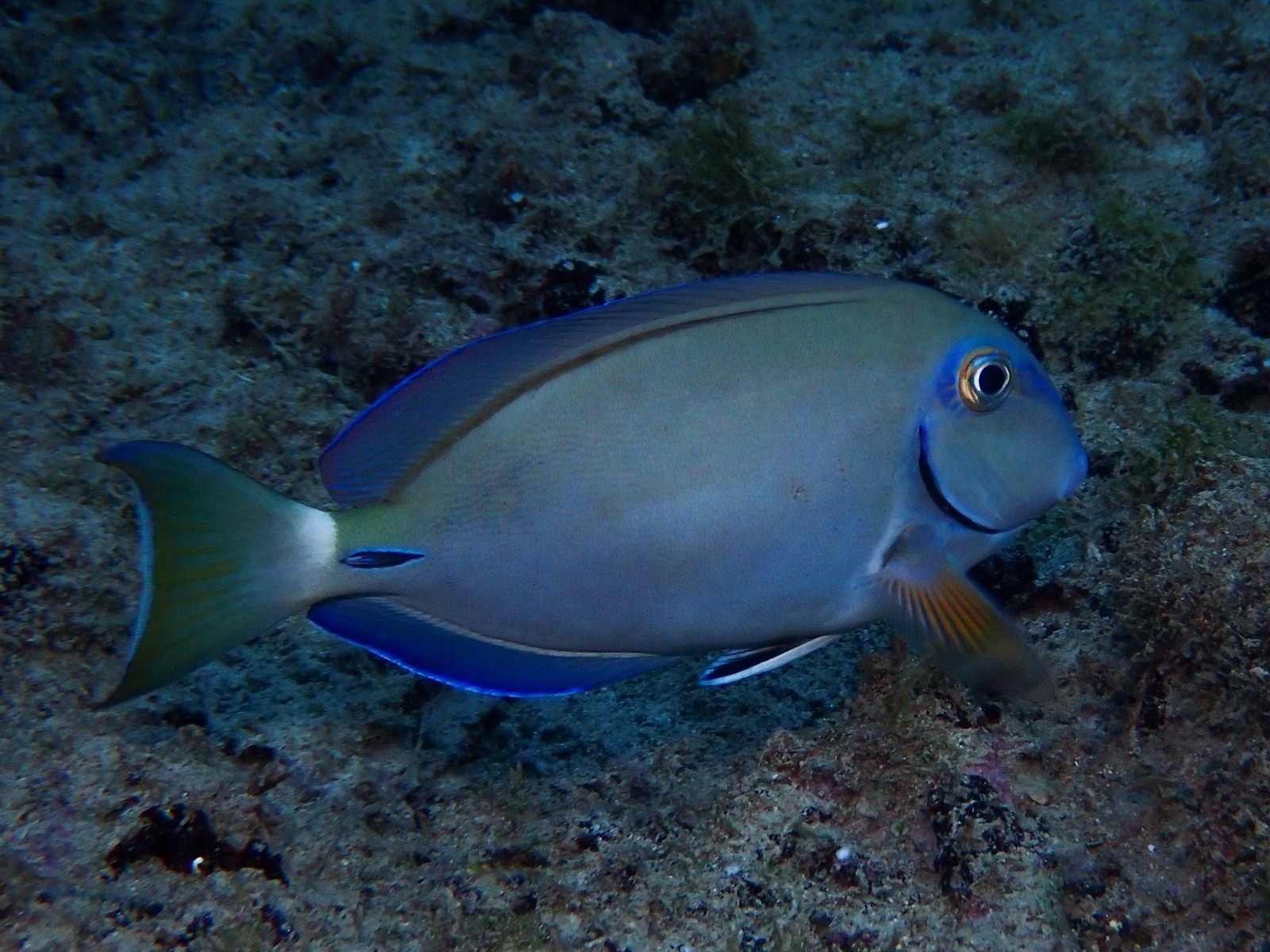
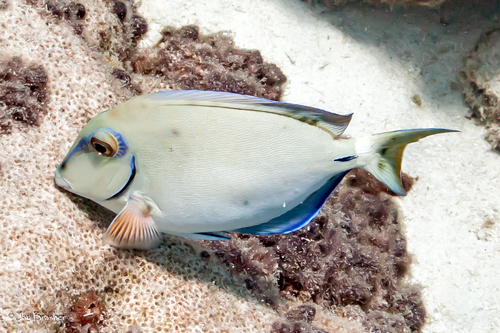
Acanthurus tractus reaches 38 cm (recently split from A. coeruleus which is strictly North Atlantic). Uniformly deep blue to blue-purple body, sometimes tinged with yellow depending on mood. Juveniles vivid yellow. Forms large schools that graze algae on Caribbean reefs, playing a key role in controlling algal overgrowth after the decline of Diadema urchins.
Photo of Atlantic blue tang
Frequently asked questions
- How big is the Atlantic blue tang?
- Atlantic blue tang (Acanthurus tractus) reaches 15–38 cm in length.
- At what depth can you find the Atlantic blue tang?
- Atlantic blue tang is found between 2–40 m deep.
- Is the Atlantic blue tang dangerous to divers?
- Danger level: Harmless.
- What is the conservation status of the Atlantic blue tang?
- IUCN status: Least concern (LC).
- Where can you find the Atlantic blue tang?
- Found in: Caribbean, Eastern Pacific.
Other species in the genus Acanthurus
- Acanthurus coeruleus - Blue tang surgeonfish
- Acanthurus chirurgus - Doctorfish
- Acanthurus sohal - Sohal surgeonfish
- Acanthurus achilles - Achilles Surgeonfish
- Acanthurus tennentii - Tennent's Surgeonfish
- Acanthurus auranticavus - Orange-mouth Surgeonfish
Other species in the family Acanthuridae
- Naso lituratus - Orangespine unicornfish
- Zebrasoma xanthurum - Yellowtail tang
- Zebrasoma desjardinii - Sailfin tang
- Naso brevirostris - Short-nosed unicornfish
- Paracanthurus hepatus - Blue tang
- Zebrasoma flavescens - Yellow tang
Sources
- Taxonomy: WoRMS (AphiaID 301914)
- Photos: iNaturalist (CC BY-NC)
- Distribution: GBIF (taxonKey 5209182)
- Conservation: IUCN Red List
- Encyclopedia: Wikipedia