Mediterranean fanworm (Sabella spallanzanii)
Key facts
- Scientific name
- Sabella spallanzanii
- Common name
- Mediterranean fanworm
- Category
- Worms
- Family
- Sabellidae
- Genus
- Sabella
- Size
- 10–40 cm
- Depth
- 1–30 m
- IUCN status
- Least concern (LC)
- Danger level
- Harmless
- Habitats
- rocky-reef, sand
- Behaviours
- sessile, filter-feeder
- Ocean zones
- East Atlantic, Macaronesia, Mediterranean
Description
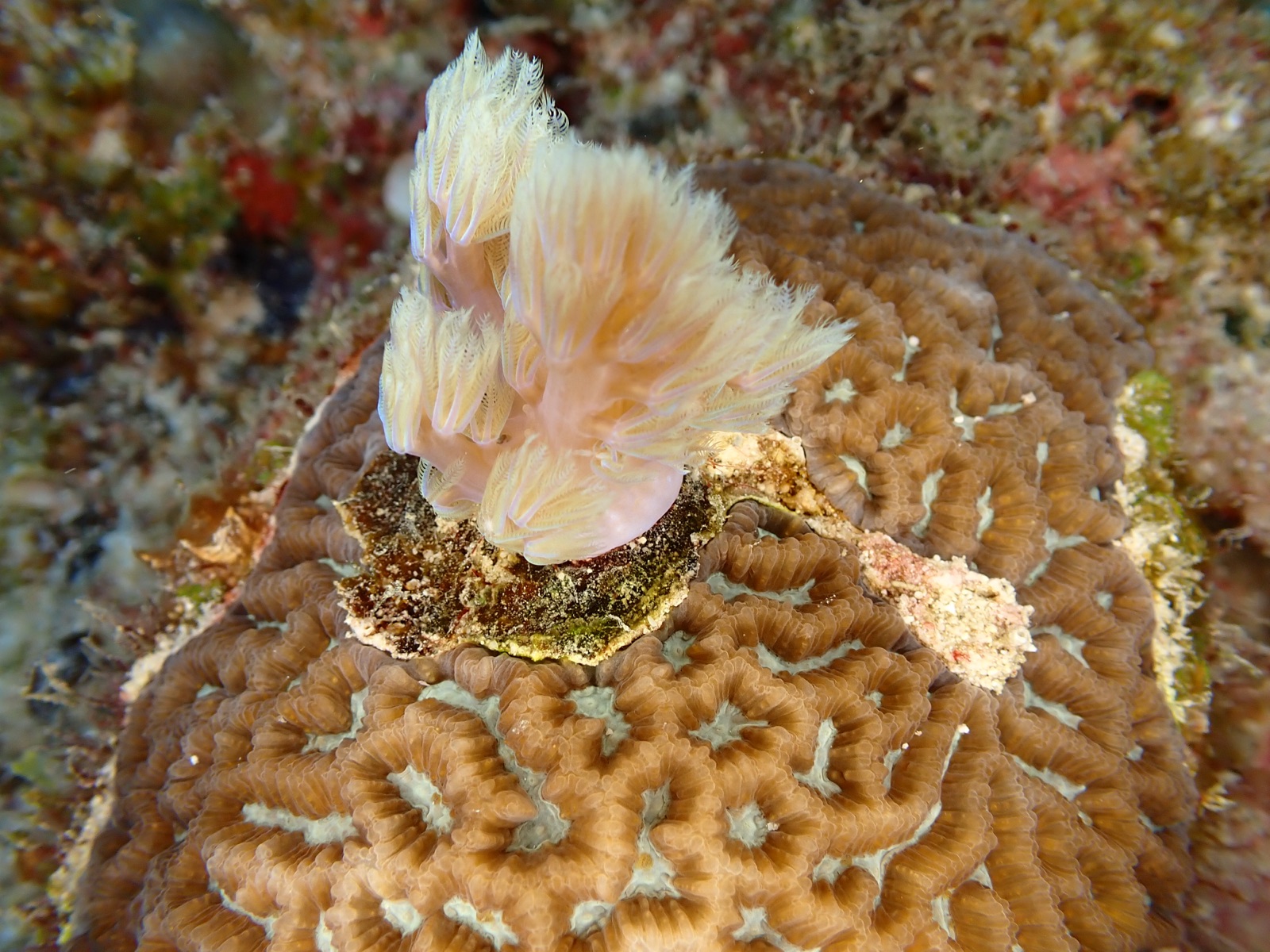
Sabella spallanzanii reaches 40 cm deployed crown. Large fanworm (Polychaeta, Sabellidae) endemic Mediterranean with cylindrical brown-beige parchment tube emerging vertically from sand or rocks. Highly developed cream-white branchial spiral crown with purple-mauve, yellow and orange spiral bands. Retraction at slightest movement. Lives from 1 to 30 m on sands, mud and soft coastal substrates of Mediterranean. Species introduced in some tropical regions (Australia). Iconic macro photo subject of seagrass and soft Med bottoms, named after Lazzaro Spallanzani 18th-century Italian naturalist.
Frequently asked questions
- How big is the Mediterranean fanworm?
- Mediterranean fanworm (Sabella spallanzanii) reaches 10–40 cm in length.
- At what depth can you find the Mediterranean fanworm?
- Mediterranean fanworm is found between 1–30 m deep.
- Is the Mediterranean fanworm dangerous to divers?
- Danger level: Harmless.
- What is the conservation status of the Mediterranean fanworm?
- IUCN status: Least concern (LC).
- Where can you find the Mediterranean fanworm?
- Found in: East Atlantic, Macaronesia, Mediterranean.
Other species in the family Sabellidae
- Bispira volutacornis - Twin fanworm
- Sabellastarte spectabilis - Indo-Pacific feather duster
- Myxicola infundibulum - Slime tube worm
Sources
- Taxonomy: WoRMS (AphiaID 130969)
- Photos: iNaturalist (CC BY-NC)
- Distribution: GBIF (taxonKey 2328603)
- Conservation: IUCN Red List
- Encyclopedia: Wikipedia