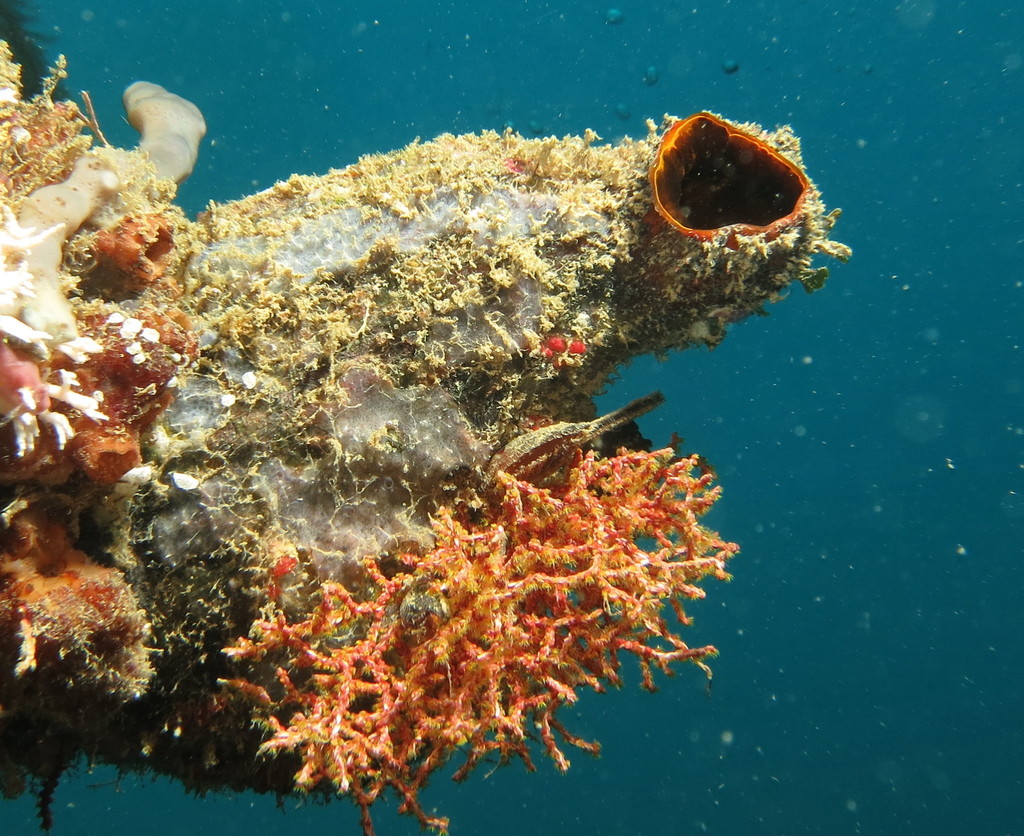
Mussel-like ascidian (Polycarpa mytiligera)
Key facts
- Scientific name
- Polycarpa mytiligera
- Common name
- Mussel-like ascidian
- Category
- Tunicates
- Family
- Styelidae
- Genus
- Polycarpa
- Size
- 5–12 cm
- Depth
- 3–30 m
- IUCN status
- Least concern (LC)
- Danger level
- Harmless
- Habitats
- coral-reef, rocky-reef
- Behaviours
- benthic, solitary
- Ocean zones
- Asian Pacific, Indian Ocean & Red Sea, Mediterranean
Description
Polycarpa mytiligera reaches 12 cm. Solitary ascidian (Styelidae) Red Sea and Indo-Pacific with body in vase or mussel shape (hence mytiligera, bearing mussel) rough red-brown to black-brown tunic with granular or warty appearance, white to cream siphons with thin edge. Lives from 3 to 30 m on coral and rocky reefs. Filter feeder. Remarkable regeneration capacity after partial predation studied in biology. Red Sea and Gulf of Aqaba dive photo subject, discreet but common.
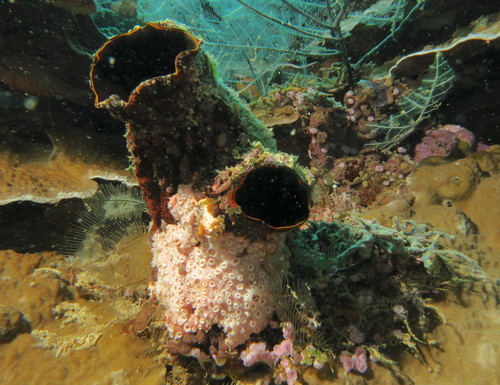
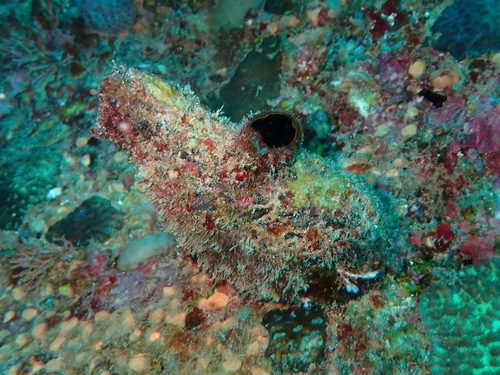
Photo of Mussel-like ascidian
Frequently asked questions
- How big is the Mussel-like ascidian?
- Mussel-like ascidian (Polycarpa mytiligera) reaches 5–12 cm in length.
- At what depth can you find the Mussel-like ascidian?
- Mussel-like ascidian is found between 3–30 m deep.
- Is the Mussel-like ascidian dangerous to divers?
- Danger level: Harmless.
- What is the conservation status of the Mussel-like ascidian?
- IUCN status: Least concern (LC).
- Where can you find the Mussel-like ascidian?
- Found in: Asian Pacific, Indian Ocean & Red Sea, Mediterranean.
Other species in the genus Polycarpa
Other species in the family Styelidae
Sources
- Taxonomy: WoRMS (AphiaID 215948)
- Photos: iNaturalist (CC BY-NC)
- Distribution: GBIF (taxonKey 5200809)
- Conservation: IUCN Red List
- Encyclopedia: Wikipedia