Gold-mouth sea squirt (Polycarpa aurata)
Key facts
- Scientific name
- Polycarpa aurata
- Common name
- Gold-mouth sea squirt
- Category
- Tunicates
- Family
- Styelidae
- Genus
- Polycarpa
- Size
- 5–15 cm
- Depth
- 3–35 m
- IUCN status
- Least concern (LC)
- Danger level
- Harmless
- Habitats
- coral-reef
- Behaviours
- benthic, solitary
- Ocean zones
- Asian Pacific, Mediterranean
Description
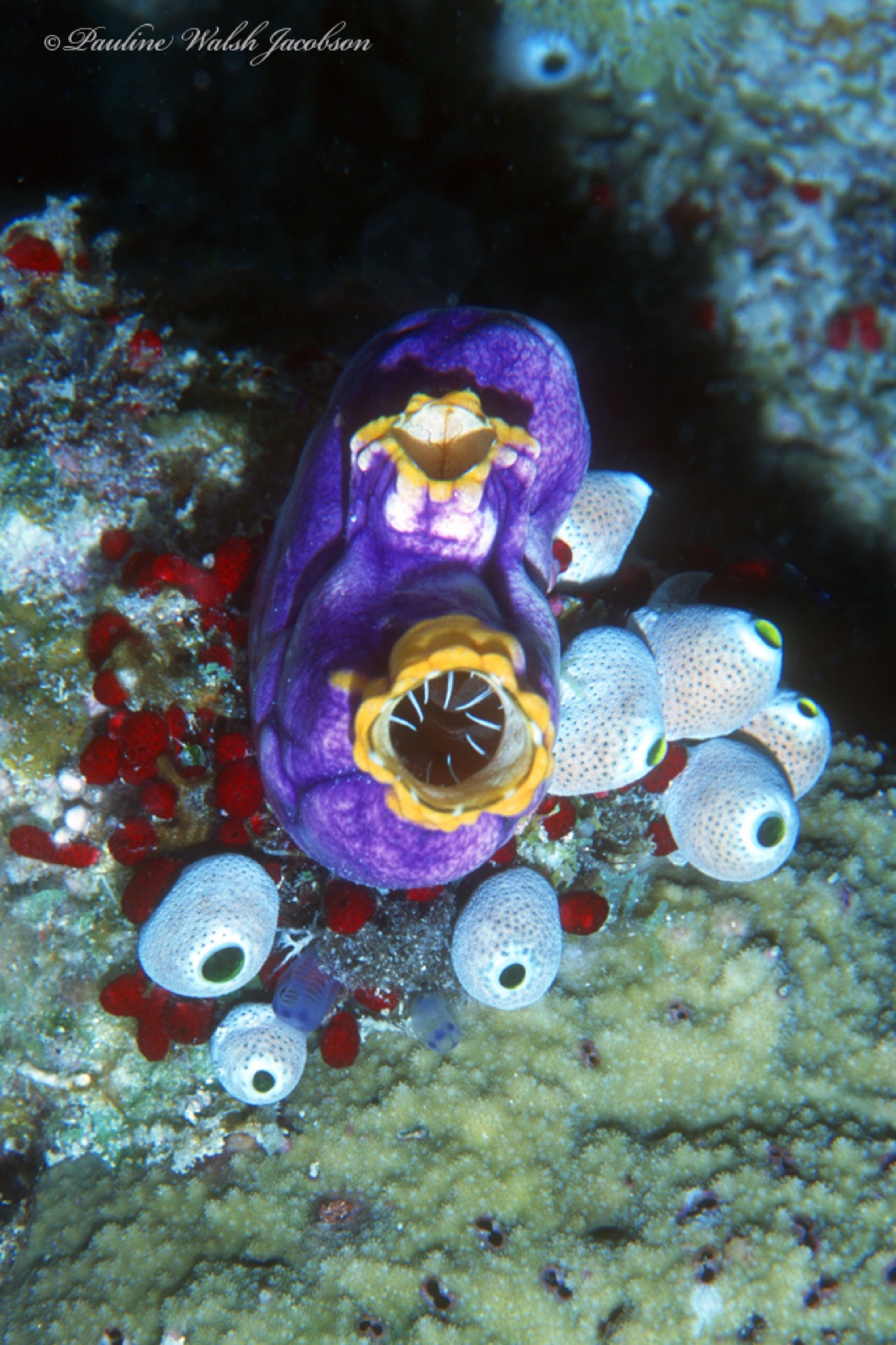
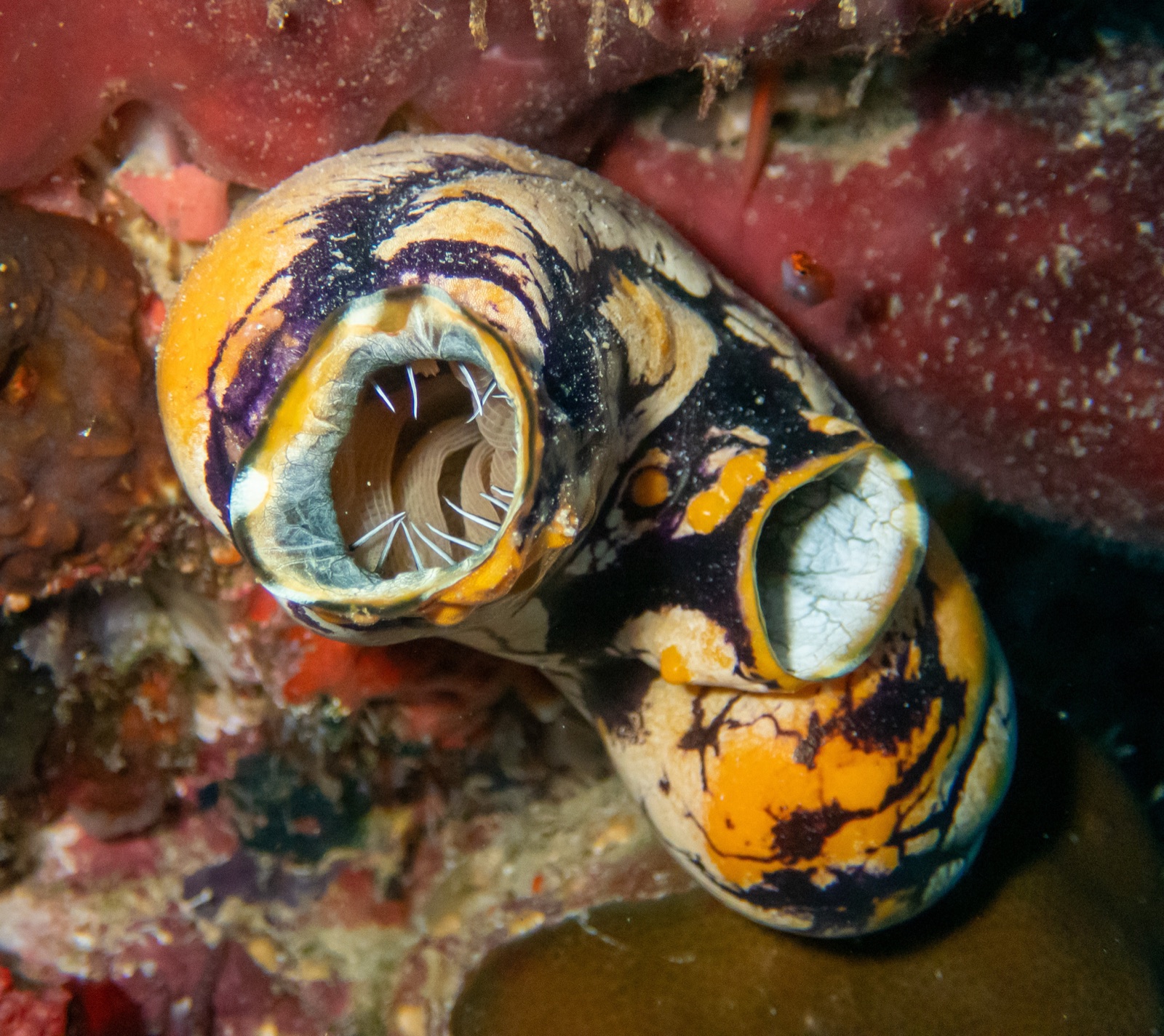
Polycarpa aurata reaches 15 cm. Solitary ascidian (Styelidae) Indo-Pacific and central Pacific with globular vase body beige to cream marbled with purple and yellow, characteristic oral and atrial (cloacal) siphons edged in vivid orange to yellow (hence aurata, golden) giving appearance of colored mouth. Lives from 3 to 35 m on coral reefs. Solitary filter feeder. Iconic Indo-Pacific species, probably the most photographed ascidian in diving for its magnificent contrasts and immediately recognizable 'open mouth' appearance.
Photo of Gold-mouth sea squirt
Frequently asked questions
- How big is the Gold-mouth sea squirt?
- Gold-mouth sea squirt (Polycarpa aurata) reaches 5–15 cm in length.
- At what depth can you find the Gold-mouth sea squirt?
- Gold-mouth sea squirt is found between 3–35 m deep.
- Is the Gold-mouth sea squirt dangerous to divers?
- Danger level: Harmless.
- What is the conservation status of the Gold-mouth sea squirt?
- IUCN status: Least concern (LC).
- Where can you find the Gold-mouth sea squirt?
- Found in: Asian Pacific, Mediterranean.
Other species in the genus Polycarpa
Other species in the family Styelidae
Sources
- Taxonomy: WoRMS (AphiaID 251001)
- Photos: iNaturalist (CC BY-NC)
- Distribution: GBIF (taxonKey 5200795)
- Conservation: IUCN Red List
- Encyclopedia: Wikipedia