Red Sea bannerfish (Heniochus intermedius)
Key facts
- Scientific name
- Heniochus intermedius
- Common name
- Red Sea bannerfish
- Category
- Fish
- Family
- Chaetodontidae
- Genus
- Heniochus
- Size
- 10–21 cm
- Depth
- 1–50 m
- IUCN status
- Least concern (LC)
- Danger level
- Harmless
- Habitats
- reef
- Behaviours
- pair-bonding
- Ocean zones
- Indian Ocean & Red Sea
Description
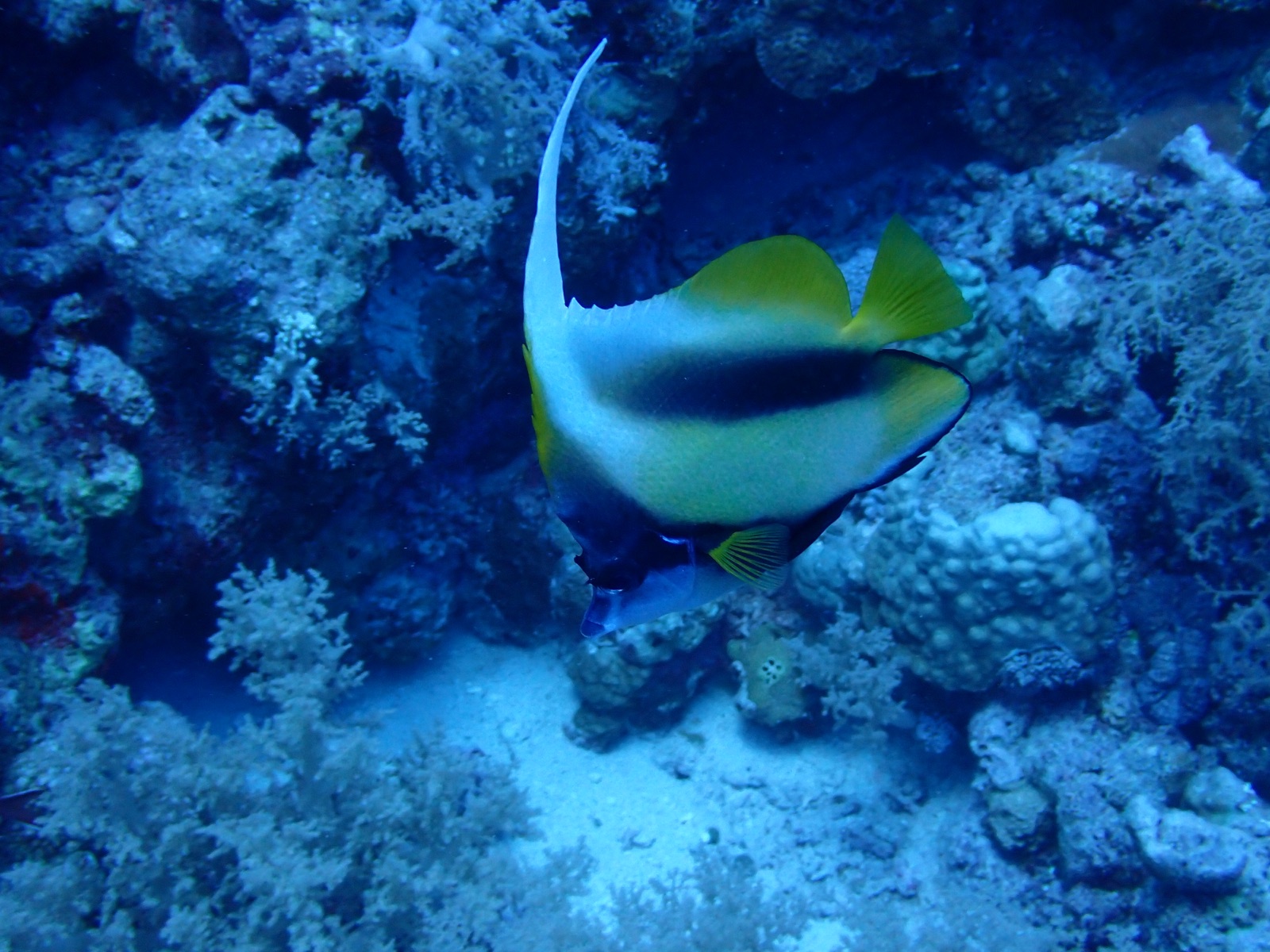
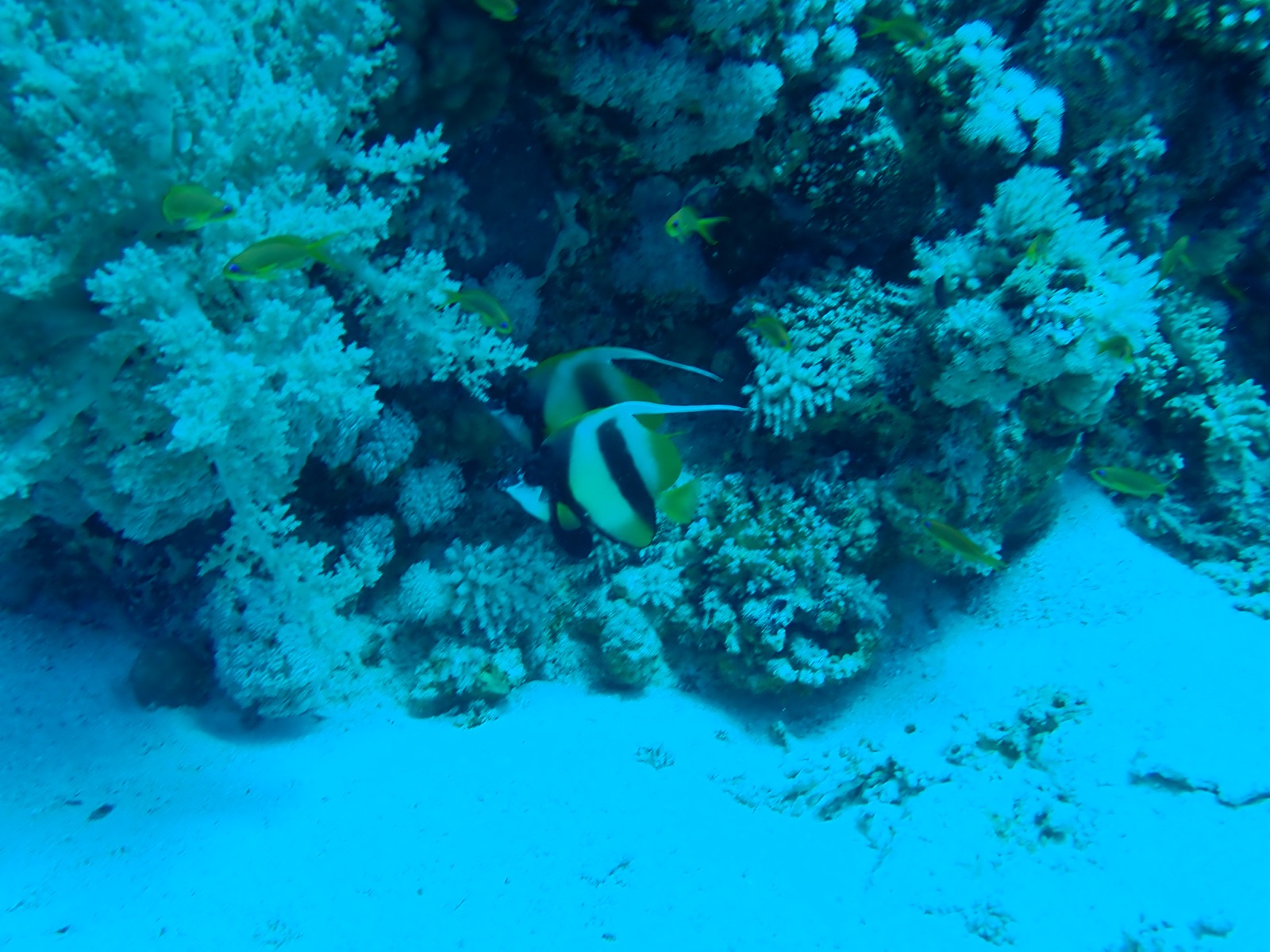
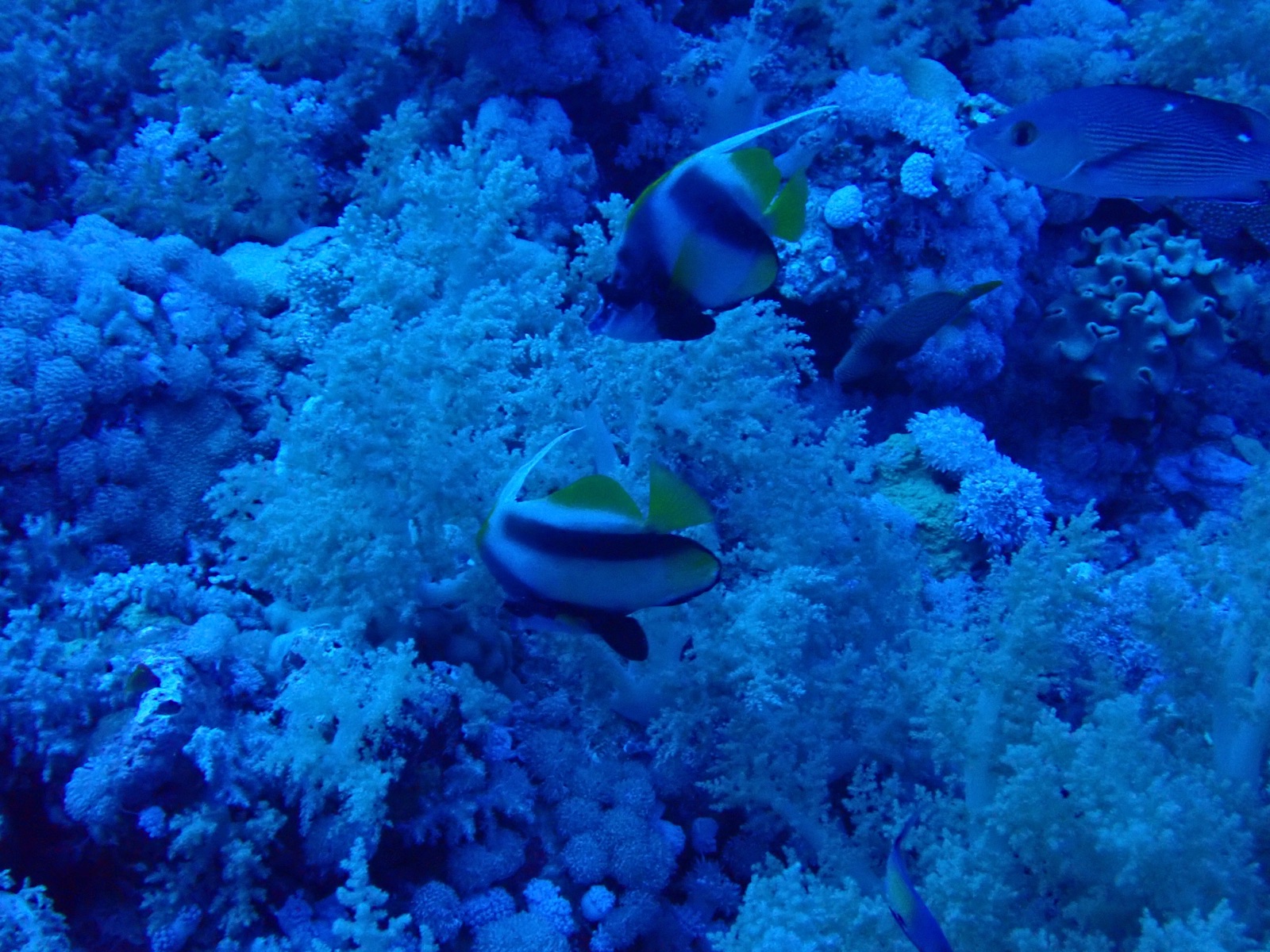
Heniochus intermedius reaches 21 cm. Deep white-to-yellow body crossed by two wide black bands, long white banner extending from the dorsal fin. Red Sea endemic. Often in pairs or small groups on coral drop-offs between 1 and 50 m. Feeds on zooplankton and small invertebrates. Swims gracefully with its waving banner. Can be confused with its more widespread cousin H. acuminatus.
Photo of Red Sea bannerfish
Frequently asked questions
- How big is the Red Sea bannerfish?
- Red Sea bannerfish (Heniochus intermedius) reaches 10–21 cm in length.
- At what depth can you find the Red Sea bannerfish?
- Red Sea bannerfish is found between 1–50 m deep.
- Is the Red Sea bannerfish dangerous to divers?
- Danger level: Harmless.
- What is the conservation status of the Red Sea bannerfish?
- IUCN status: Least concern (LC).
- Where can you find the Red Sea bannerfish?
- Found in: Indian Ocean & Red Sea.
Other species in the genus Heniochus
- Heniochus acuminatus - Pennant coralfish
- Heniochus diphreutes - Schooling bannerfish
- Heniochus varius - Humphead bannerfish
- Heniochus singularius - Singular Bannerfish
- Heniochus chrysostomus - Golden-striped Coachwhip
- Heniochus pleurotaenia - Black-striped Coachwhip
Other species in the family Chaetodontidae
- Chaetodon capistratus - Foureye butterflyfish
- Chaetodon fasciatus - Diagonal butterflyfish
- Chaetodon semilarvatus - Bluecheek butterflyfish
- Chaetodon auriga - Threadfin butterflyfish
- Forcipiger flavissimus - Longnose butterflyfish
- Chaetodon lunula - Raccoon butterflyfish
Sources
- Taxonomy: WoRMS (AphiaID 218767)
- Photos: iNaturalist (CC BY-NC)
- Distribution: GBIF (taxonKey 2385717)
- Conservation: IUCN Red List
- Encyclopedia: Wikipedia