Filigree tubeworm (Filograna implexa)
Key facts
- Scientific name
- Filograna implexa
- Common name
- Filigree tubeworm
- Category
- Worms
- Family
- Serpulidae
- Genus
- Filograna
- Size
- 3–10 cm
- Depth
- 5–50 m
- IUCN status
- Least concern (LC)
- Danger level
- Harmless
- Habitats
- rocky-reef, cave
- Behaviours
- sessile, colonial, filter-feeder
- Ocean zones
- Asian Pacific, Caribbean, East Atlantic, Eastern Pacific, Indian Ocean & Red Sea, Mediterranean
Description
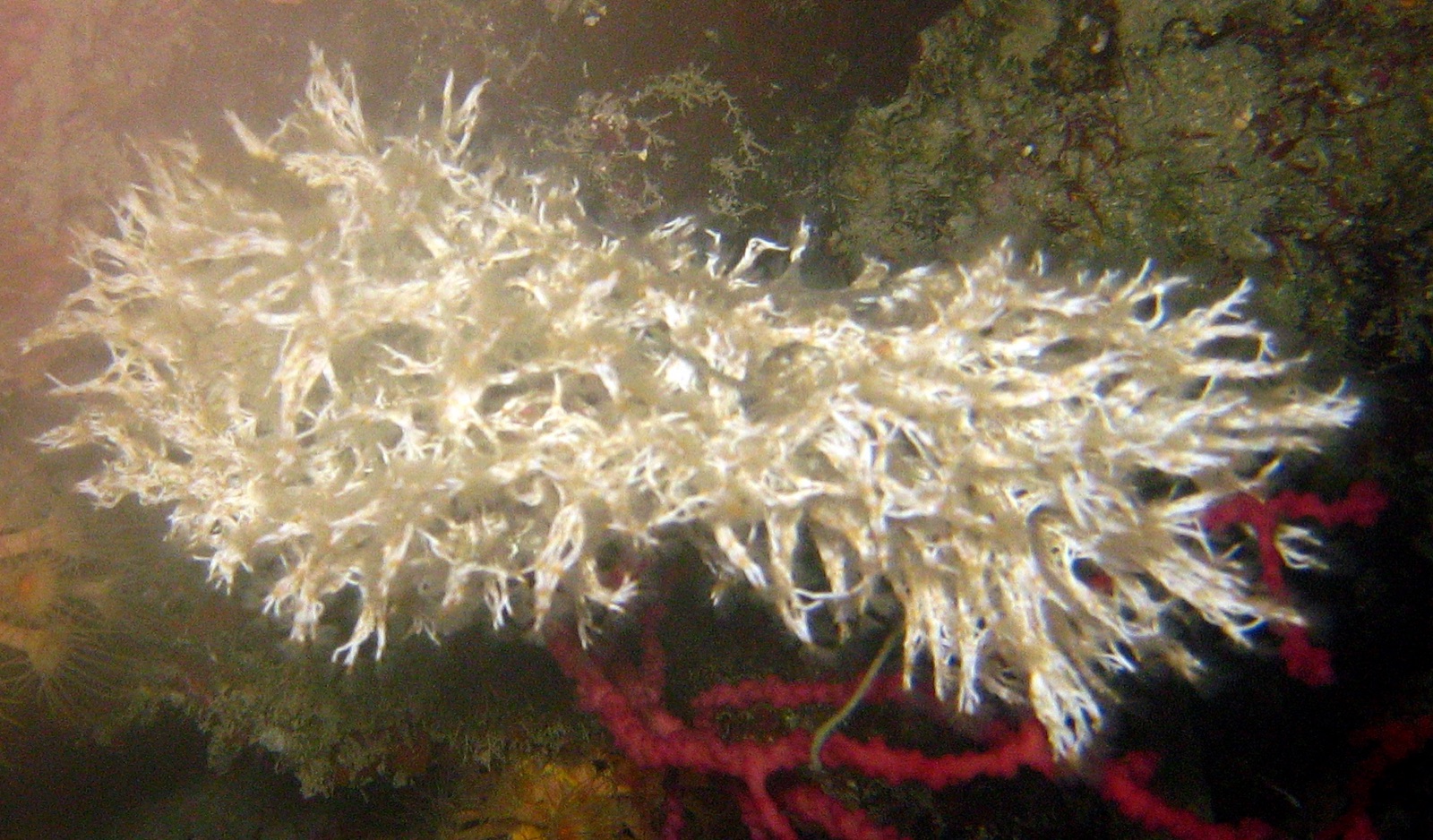
Filograna implexa reaches 10 cm colonies. Small tubeworm (Polychaeta, Serpulidae) Mediterranean and temperate Atlantic forming colonies of very thin intertwined white calcareous tubes (hence implexa) forming spongy white-pink masses. Each tiny worm emits small transparent branchial crown. Lives from 5 to 50 m on overhangs, caves and coralligenous of Mediterranean. Important contributor to calcareous fixation of Med coralligenous reefs. Macro photo subject for colonial Polychaeta enthusiasts.
Frequently asked questions
- How big is the Filigree tubeworm?
- Filigree tubeworm (Filograna implexa) reaches 3–10 cm in length.
- At what depth can you find the Filigree tubeworm?
- Filigree tubeworm is found between 5–50 m deep.
- Is the Filigree tubeworm dangerous to divers?
- Danger level: Harmless.
- What is the conservation status of the Filigree tubeworm?
- IUCN status: Least concern (LC).
- Where can you find the Filigree tubeworm?
- Found in: Asian Pacific, Caribbean, East Atlantic, Eastern Pacific, Indian Ocean & Red Sea, Mediterranean.
Other species in the family Serpulidae
- Salmacina dysteri - Cluster tubeworm
- Protula tubularia - Pink fanworm
- Spirobranchus triqueter - European fanworm
- Spirobranchus giganteus - Christmas tree worm
- Spirobranchus lamarcki - Lamarck's spirograph
- Serpula vermicularis - Calcareous tubeworm
Sources
- Taxonomy: WoRMS (AphiaID 130989)
- Photos: iNaturalist (CC BY-NC)
- Distribution: GBIF (taxonKey 5200039)
- Conservation: IUCN Red List
- Encyclopedia: Wikipedia