Hawksbill turtle (Eretmochelys imbricata)
Key facts
- Scientific name
- Eretmochelys imbricata
- Common name
- Hawksbill turtle
- Category
- Marine reptiles
- Family
- Cheloniidae
- Genus
- Eretmochelys
- Size
- 60–114 cm
- Depth
- 0–50 m
- IUCN status
- Critically endangered (CR)
- Danger level
- Harmless
- Habitats
- reef, open-water
- Behaviours
- migratory, solitary
- Ocean zones
- Asian Pacific, Caribbean, Indian Ocean & Red Sea, Eastern Pacific
Description
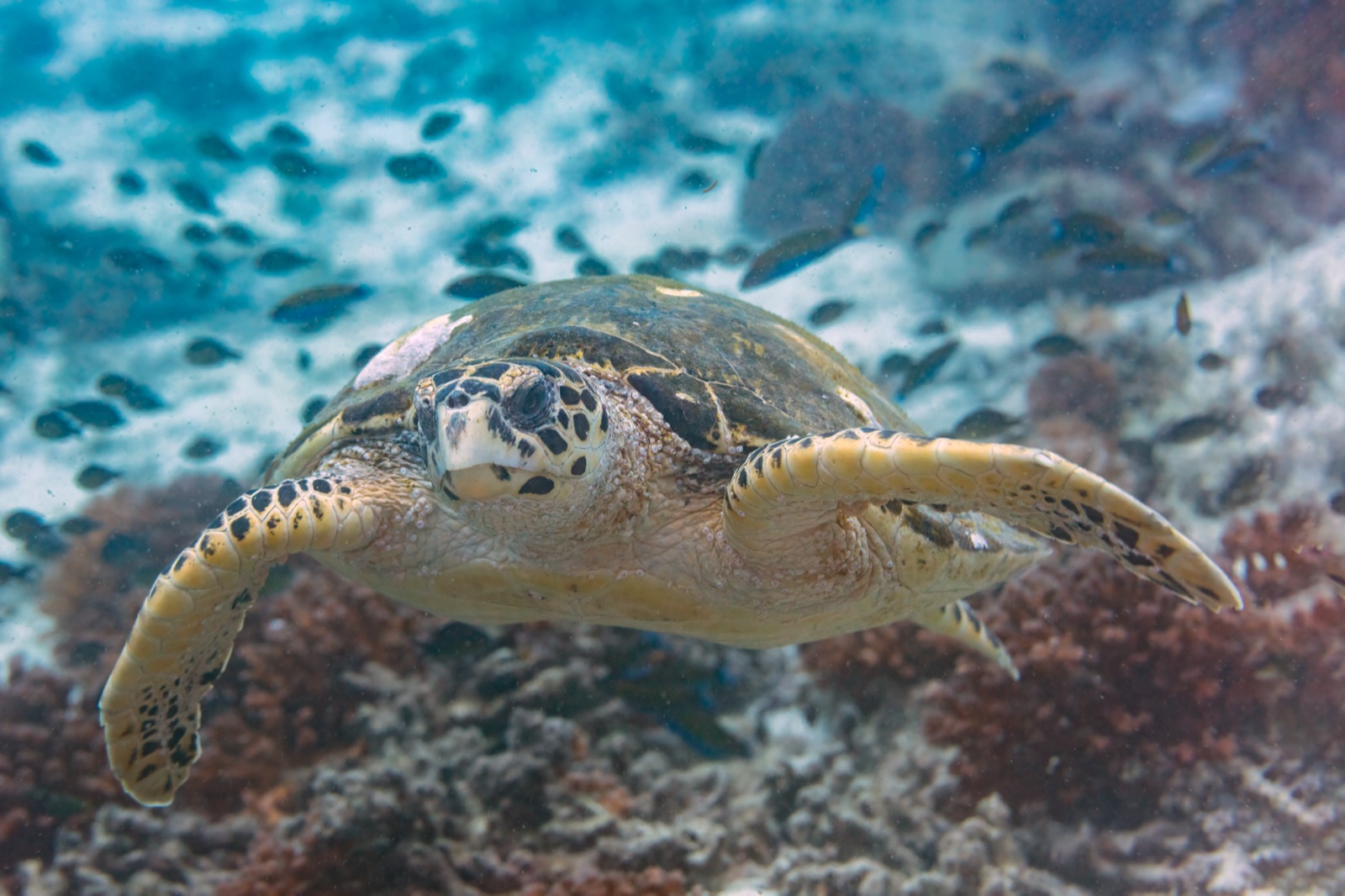
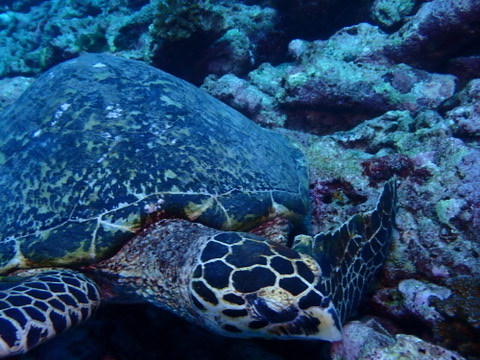
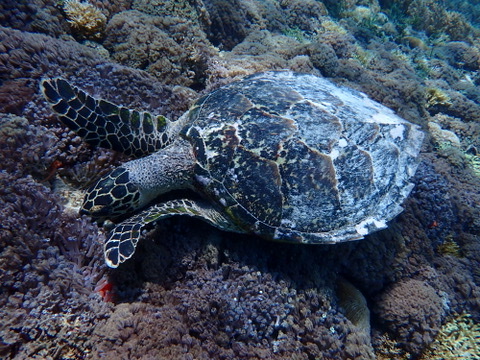
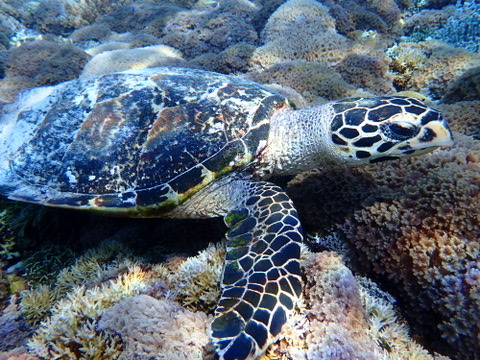
Eretmochelys imbricata has a narrow, hook-shaped beak perfectly suited to extracting sponges from between corals. Carapace of overlapping scutes, historically the source of tortoiseshell. IUCN Critically Endangered. Found on coral reefs, often calm around divers.
Photo of Hawksbill turtle
Frequently asked questions
- How big is the Hawksbill turtle?
- Hawksbill turtle (Eretmochelys imbricata) reaches 60–114 cm in length.
- At what depth can you find the Hawksbill turtle?
- Hawksbill turtle is found between 0–50 m deep.
- Is the Hawksbill turtle dangerous to divers?
- Danger level: Harmless.
- What is the conservation status of the Hawksbill turtle?
- IUCN status: Critically endangered (CR).
- Where can you find the Hawksbill turtle?
- Found in: Asian Pacific, Caribbean, Indian Ocean & Red Sea, Eastern Pacific.
Other species in the family Cheloniidae
- Chelonia mydas - Green sea turtle
- Caretta caretta - Loggerhead turtle
- Lepidochelys olivacea - Olive ridley turtle
- Natator depressus - Flatback turtle
- Lepidochelys kempii - Kemp's Ridley Sea Turtle
Sources
- Taxonomy: WoRMS (AphiaID 137207)
- Photos: iNaturalist (CC BY-NC)
- Distribution: GBIF (taxonKey 8841716)
- Conservation: IUCN Red List
- Encyclopedia: Wikipedia