Long-spined sea urchin (Diadema antillarum)
Key facts
- Scientific name
- Diadema antillarum
- Common name
- Long-spined sea urchin
- Category
- Echinoderms
- Family
- Diadematidae
- Genus
- Diadema
- Size
- 10–20 cm
- Depth
- 0–400 m
- IUCN status
- Least concern (LC)
- Danger level
- Venomous
- Habitats
- reef, rocky
- Behaviours
- nocturnal, herbivorous
- Ocean zones
- Caribbean, Eastern Pacific
Description
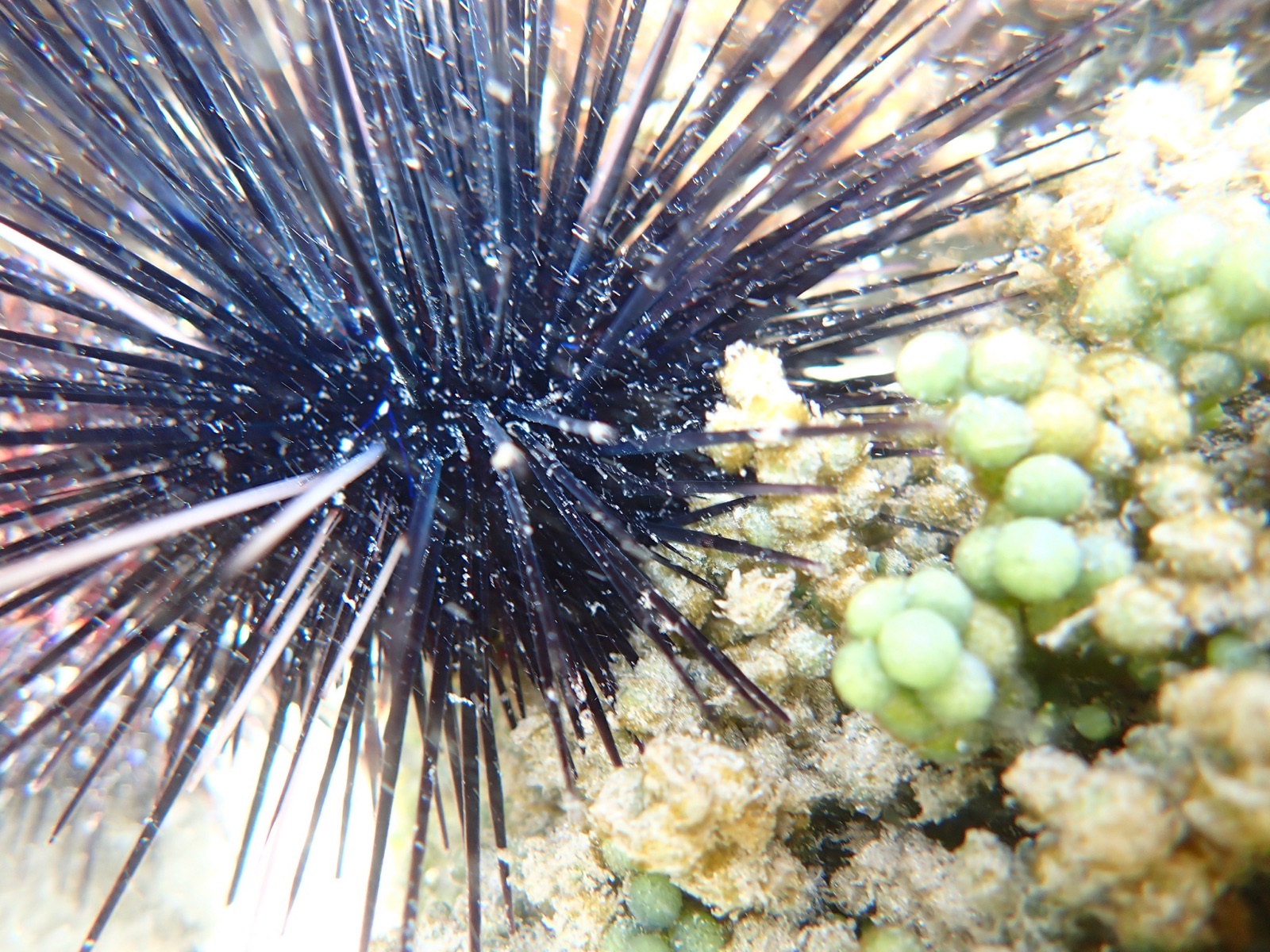
Diadema antillarum has a 10 to 20 cm test but its hollow venomous spines can reach 30 cm. Completely black. Key ecological role: algal grazer keeping coral reefs free of overgrowing algae. 97% collapse in 1983 from a Caribbean-wide epidemic, a major cause of reef decline. Populations in slow recovery. Stings are very painful. Often sheltered under corals by day, active at night.
Photo of Long-spined sea urchin
Frequently asked questions
- How big is the Long-spined sea urchin?
- Long-spined sea urchin (Diadema antillarum) reaches 10–20 cm in length.
- At what depth can you find the Long-spined sea urchin?
- Long-spined sea urchin is found between 0–400 m deep.
- Is the Long-spined sea urchin dangerous to divers?
- Danger level: Venomous.
- What is the conservation status of the Long-spined sea urchin?
- IUCN status: Least concern (LC).
- Where can you find the Long-spined sea urchin?
- Found in: Caribbean, Eastern Pacific.
Other species in the genus Diadema
Other species in the family Diadematidae
Sources
- Taxonomy: WoRMS (AphiaID 124332)
- Photos: iNaturalist (CC BY-NC)
- Distribution: GBIF (taxonKey 5188162)
- Conservation: IUCN Red List
- Encyclopedia: Wikipedia