Guinea fowl puffer (Arothron meleagris)
Key facts
- Scientific name
- Arothron meleagris
- Common name
- Guinea fowl puffer
- Category
- Fish
- Family
- Tetraodontidae
- Genus
- Arothron
- Size
- 30–50 cm
- Depth
- 3–73 m
- IUCN status
- Least concern (LC)
- Danger level
- Harmless
- Habitats
- coral-reef, rocky-reef
- Behaviours
- solitary, venomous
- Ocean zones
- Asian Pacific, Caribbean, Indian Ocean & Red Sea, Eastern Pacific
Description
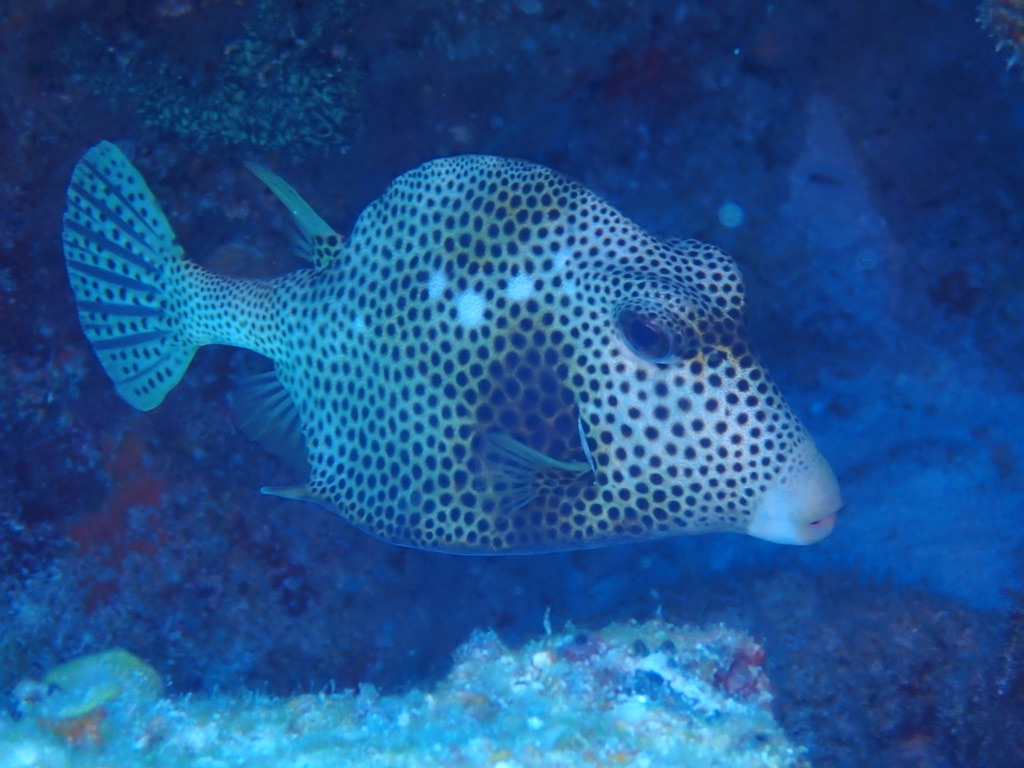
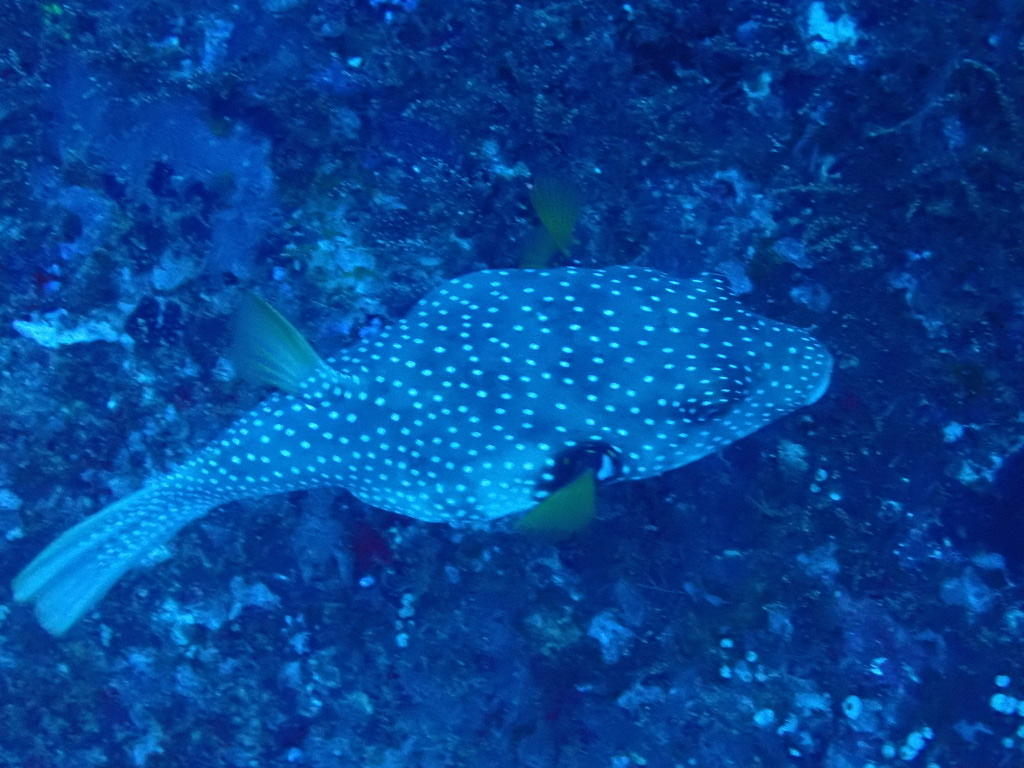
Arothron meleagris reaches 50 cm. Characteristic Eastern Pacific puffer existing in two dramatically different color phases: dark phase with black-brown body covered in small regularly scattered white spots (most common phase, hence guinea fowl or dorado), or bright uniform yellow phase (rarer). Characteristic fused beak mouth. Lives from 3 to 73 m on coral and rocky reefs of Eastern Pacific (Sea of Cortez, Galapagos, Costa Rica). Tetrodotoxin in internal organs. Iconic photo subject of Galapagos and Socorro dives.
Photo of Guinea fowl puffer
Frequently asked questions
- How big is the Guinea fowl puffer?
- Guinea fowl puffer (Arothron meleagris) reaches 30–50 cm in length.
- At what depth can you find the Guinea fowl puffer?
- Guinea fowl puffer is found between 3–73 m deep.
- Is the Guinea fowl puffer dangerous to divers?
- Danger level: Harmless.
- What is the conservation status of the Guinea fowl puffer?
- IUCN status: Least concern (LC).
- Where can you find the Guinea fowl puffer?
- Found in: Asian Pacific, Caribbean, Indian Ocean & Red Sea, Eastern Pacific.
Other species in the genus Arothron
Other species in the family Tetraodontidae
- Sphoeroides marmoratus - Guinean puffer
- Sphoeroides lobatus - Longnose puffer
- Sphoeroides annulatus - Bullseye puffer
Sources
- Taxonomy: WoRMS (AphiaID 219926)
- Photos: iNaturalist (CC BY-NC)
- Distribution: GBIF (taxonKey 2407418)
- Conservation: IUCN Red List
- Encyclopedia: Wikipedia