Angelshark (Squatina squatina)
Key facts
- Scientific name
- Squatina squatina
- Common name
- Angelshark
- Category
- Fish
- Family
- Squatinidae
- Genus
- Squatina
- Size
- 100–250 cm
- Depth
- 5–150 m
- IUCN status
- Critically endangered (CR)
- Danger level
- Harmless
- Habitats
- sand
- Behaviours
- solitary, cryptic, nocturnal
- Ocean zones
- East Atlantic, Macaronesia, Mediterranean
Description
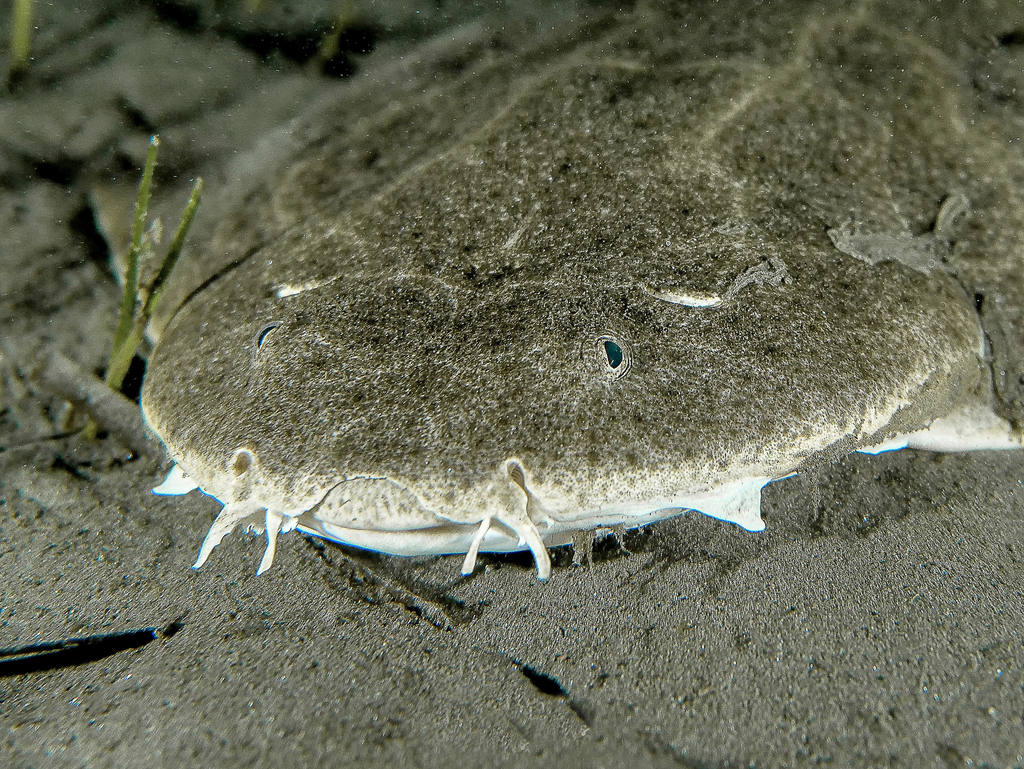
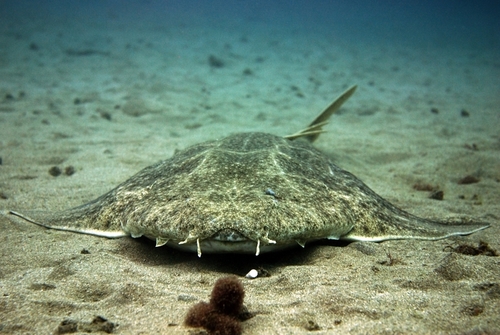
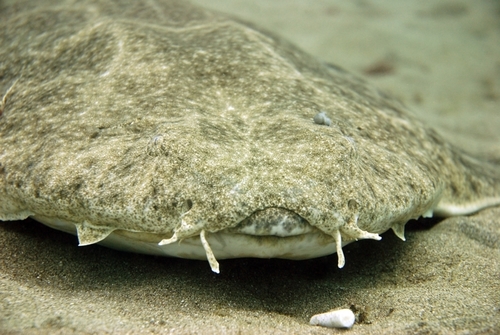
Squatina squatina reaches 2.5 m and 80 kg. Angel shark (Squatinidae) Mediterranean and Northeast temperate Atlantic. Very flat body resembling a ray with dorsal eyes and large wing-shaped pectoral and pelvic fins (hence angel shark), gray-brown marbled color perfect sand mimic. Lives from 5 to 150 m buried in sand of Mediterranean, Northeast Atlantic, North Sea, Macaronesia. Listed CR (Critically Endangered) by IUCN following commercial overfishing and trawl bycatch. Near-total collapse of historical populations. Major remaining refuge in Canaries (healthiest population worldwide). Nocturnal ambush predator. Iconic but threatened wide-angle photo subject.
Photo of Angelshark
Frequently asked questions
- How big is the Angelshark?
- Angelshark (Squatina squatina) reaches 100–250 cm in length.
- At what depth can you find the Angelshark?
- Angelshark is found between 5–150 m deep.
- Is the Angelshark dangerous to divers?
- Danger level: Harmless.
- What is the conservation status of the Angelshark?
- IUCN status: Critically endangered (CR).
- Where can you find the Angelshark?
- Found in: East Atlantic, Macaronesia, Mediterranean.
Other species in the genus Squatina
Sources
- Taxonomy: WoRMS (AphiaID 105928)
- Photos: iNaturalist (CC BY-NC)
- Distribution: GBIF (taxonKey 2417781)
- Conservation: IUCN Red List
- Encyclopedia: Wikipedia