Ochre sea star (Pisaster ochraceus)
Key facts
- Scientific name
- Pisaster ochraceus
- Common name
- Ochre sea star
- Category
- Echinoderms
- Family
- Asteriidae
- Genus
- Pisaster
- Size
- 15–50 cm
- Depth
- 0–90 m
- IUCN status
- Least concern (LC)
- Danger level
- Harmless
- Habitats
- rocky-reef
- Behaviours
- benthic, slow-mover
- Ocean zones
- Eastern Pacific
Description
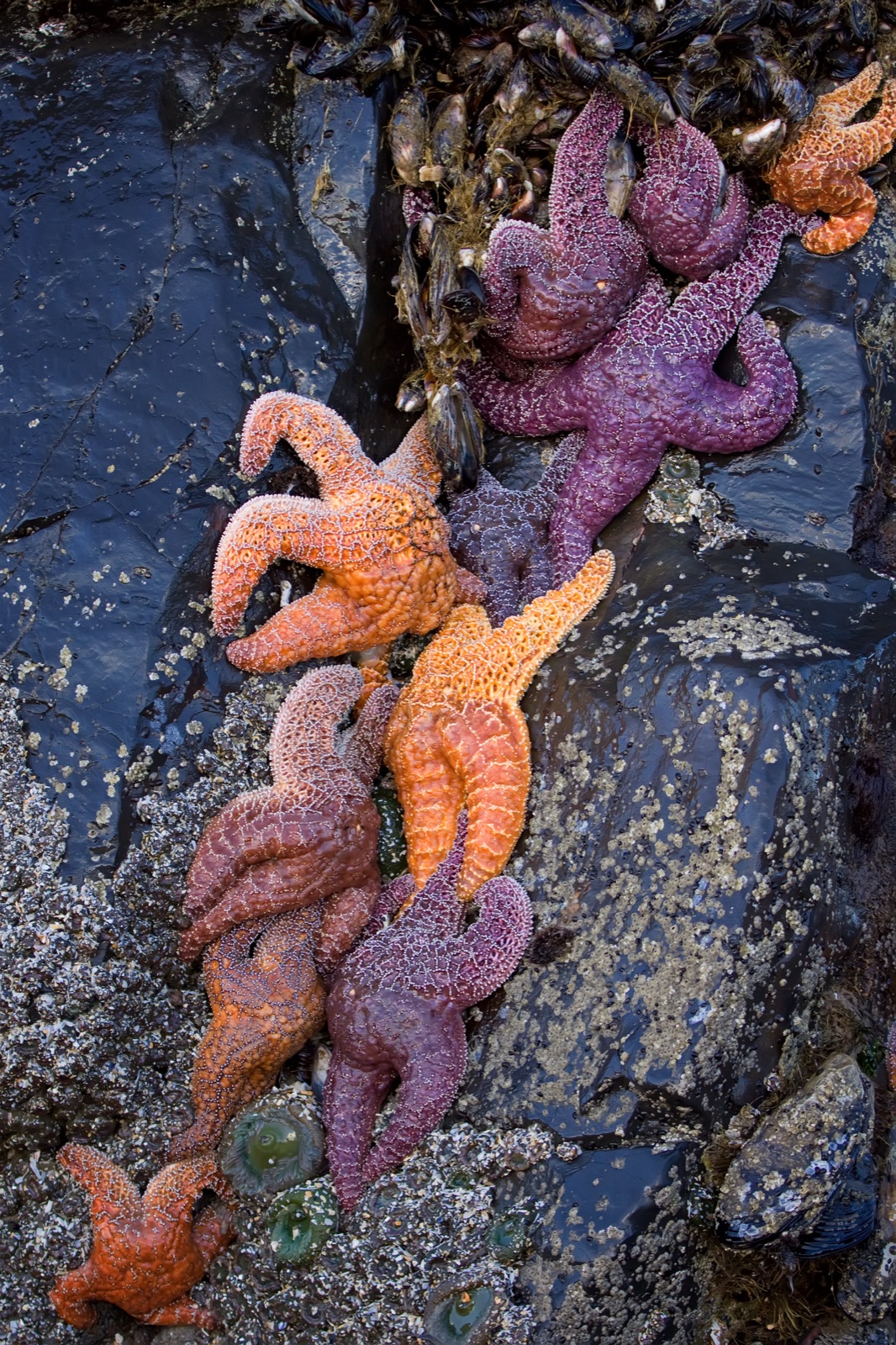
Pisaster ochraceus reaches 50 cm diameter. Large sea star (Asteriidae) East Pacific temperate from Alaska to Baja California with pentagonal body with five robust arms variable color orange to ochre, brown-orange, or purple-magenta, granular surface with white papillae. Lives from 0 to 90 m in rocky intertidal and subtidal zones. Keystone species: predator of mussels Mytilus californianus, controls biodiversity. Severely affected by sea star wasting disease (SSWD) since 2013. Iconic dive photo subject of North-East Pacific kelp forests and rocks.
Frequently asked questions
- How big is the Ochre sea star?
- Ochre sea star (Pisaster ochraceus) reaches 15–50 cm in length.
- At what depth can you find the Ochre sea star?
- Ochre sea star is found between 0–90 m deep.
- Is the Ochre sea star dangerous to divers?
- Danger level: Harmless.
- What is the conservation status of the Ochre sea star?
- IUCN status: Least concern (LC).
- Where can you find the Ochre sea star?
- Found in: Eastern Pacific.
Other species in the family Asteriidae
- Coscinasterias tenuispina - Blue spiny starfish
- Marthasterias glacialis - Spiny sea star
- Asterias rubens - Common starfish
Sources
- Taxonomy: WoRMS (AphiaID 240755)
- Photos: iNaturalist (CC BY-NC)
- Distribution: GBIF (taxonKey 2273754)
- Conservation: IUCN Red List
- Encyclopedia: Wikipedia