Noble pen shell (Pinna nobilis)
Key facts
- Scientific name
- Pinna nobilis
- Common name
- Noble pen shell
- Category
- Molluscs
- Family
- Pinnidae
- Genus
- Pinna
- Size
- 30–120 cm
- Depth
- 1–60 m
- IUCN status
- Critically endangered (CR)
- Danger level
- Harmless
- Habitats
- seagrass, sand
- Behaviours
- sessile, filter-feeder
- Ocean zones
- East Atlantic, Mediterranean
Description
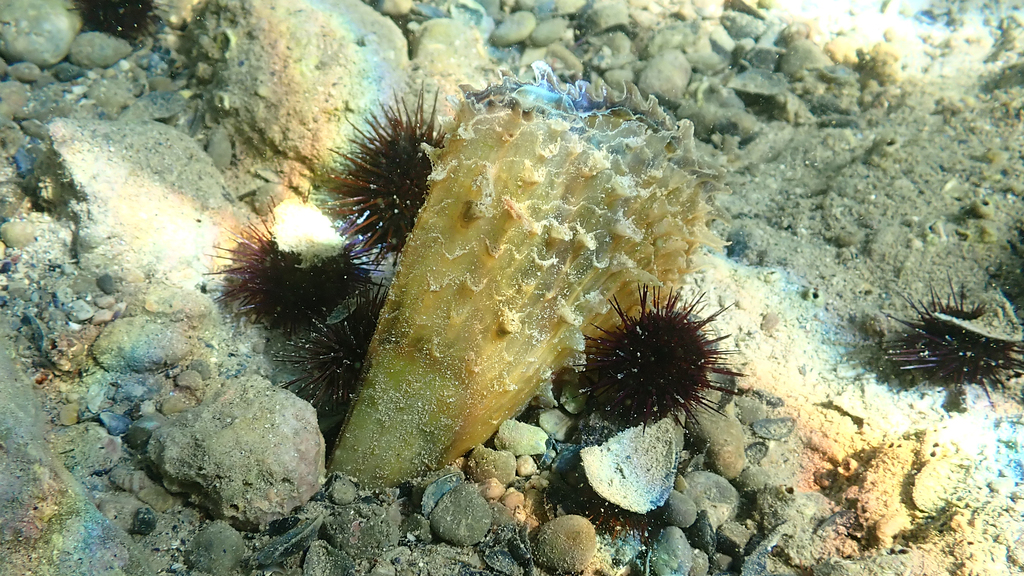
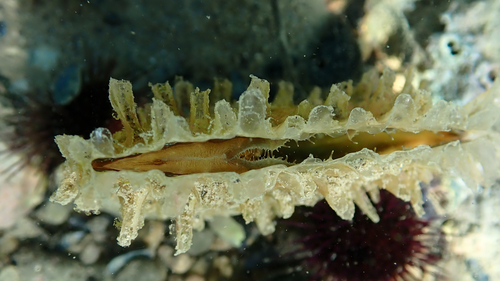
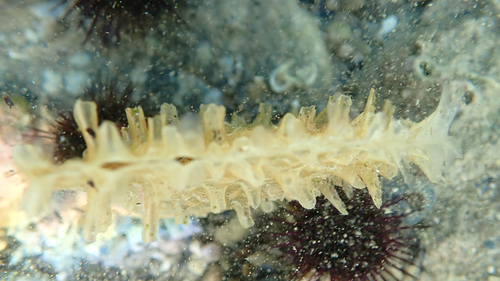
Pinna nobilis is the largest bivalve in the Mediterranean, reaching 120 cm, with a triangular shell planted vertically in Posidonia seagrass and anchored by a byssus. Since 2016, a massive epidemic caused by the parasite Haplosporidium pinnae has driven near-extinction across much of the Mediterranean. Classified Critically Endangered. Mediterranean endemic, symbol of seagrass meadows, strictly protected.
Photo of Noble pen shell
Frequently asked questions
- How big is the Noble pen shell?
- Noble pen shell (Pinna nobilis) reaches 30–120 cm in length.
- At what depth can you find the Noble pen shell?
- Noble pen shell is found between 1–60 m deep.
- Is the Noble pen shell dangerous to divers?
- Danger level: Harmless.
- What is the conservation status of the Noble pen shell?
- IUCN status: Critically endangered (CR).
- Where can you find the Noble pen shell?
- Found in: East Atlantic, Mediterranean.
Other species in the family Pinnidae
Sources
- Taxonomy: WoRMS (AphiaID 140780)
- Photos: iNaturalist (CC BY-NC)
- Distribution: GBIF (taxonKey 4374731)
- Conservation: IUCN Red List
- Encyclopedia: Wikipedia