Porcelain anemone crab (Neopetrolisthes maculatus)
Key facts
- Scientific name
- Neopetrolisthes maculatus
- Common name
- Porcelain anemone crab
- Category
- Crustaceans
- Family
- Porcellanidae
- Genus
- Neopetrolisthes
- Size
- 2–4 cm
- Depth
- 1–25 m
- IUCN status
- Least concern (LC)
- Danger level
- Harmless
- Habitats
- coral-reef
- Behaviours
- symbiotic
- Ocean zones
- Asian Pacific, Indian Ocean & Red Sea
Description
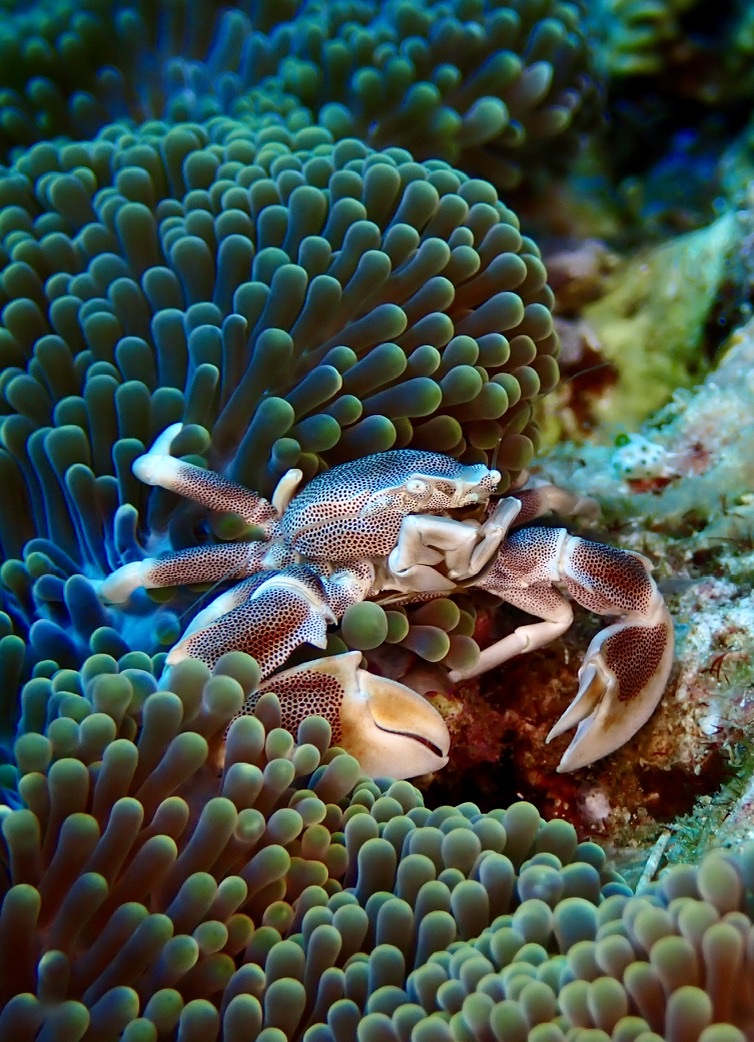
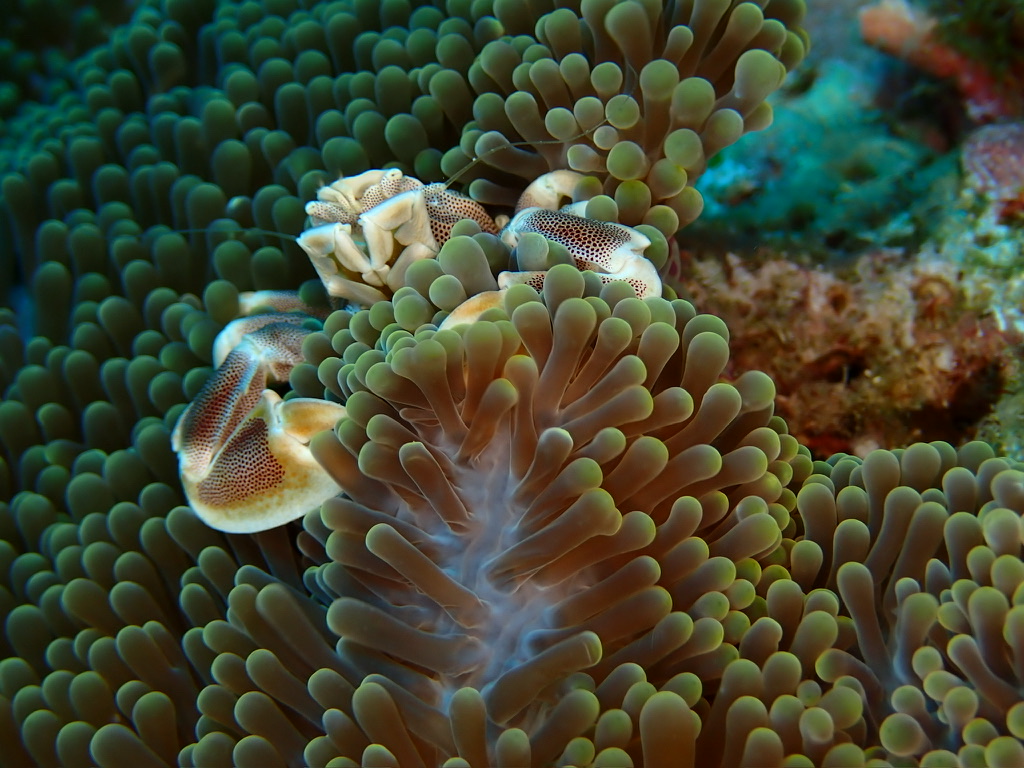
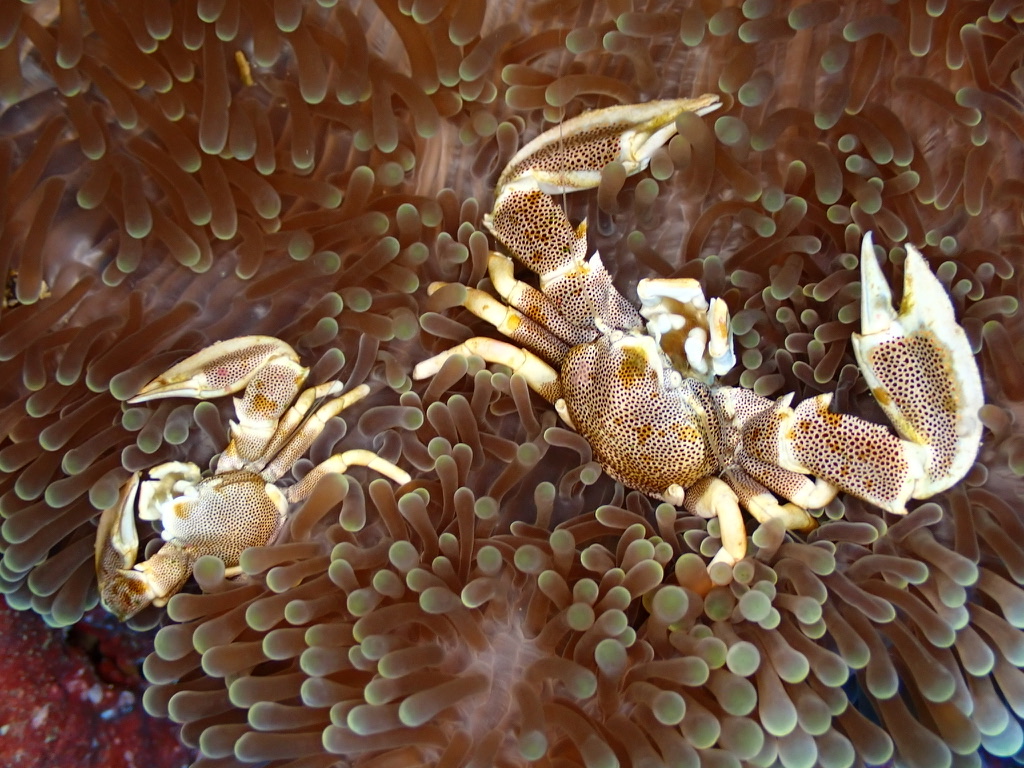
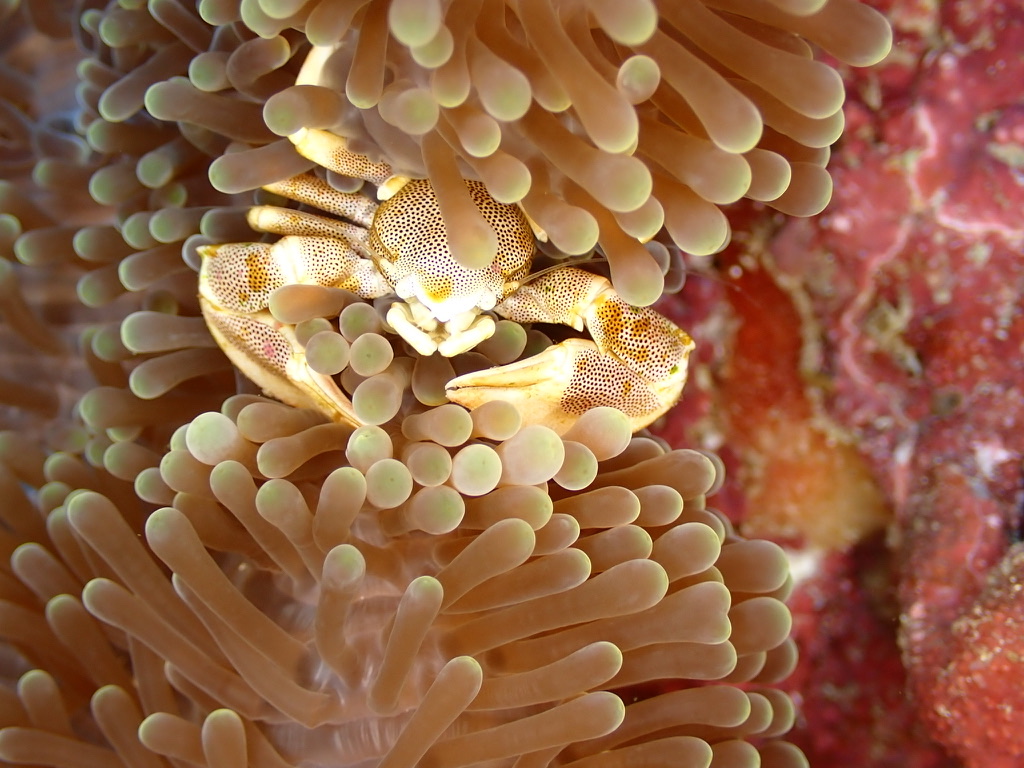
Neopetrolisthes maculatus reaches 4 cm. Small crab with flattened cream-white body spotted with red-brown, two broad flat claws and 4 pairs of legs. Filters plankton with specialized maxillipeds (fan). Lives commensally on large anemones (Stichodactyla, Heteractis, Cryptodendrum) from 1 to 25 m on coral reefs of entire Indo-Pacific. Listed LC. Often in pairs. Accessible classic macro photo subject, lets itself be approached. Sometimes confused with Petrolisthes ornatus, less spotted.
Photo of Porcelain anemone crab
Frequently asked questions
- How big is the Porcelain anemone crab?
- Porcelain anemone crab (Neopetrolisthes maculatus) reaches 2–4 cm in length.
- At what depth can you find the Porcelain anemone crab?
- Porcelain anemone crab is found between 1–25 m deep.
- Is the Porcelain anemone crab dangerous to divers?
- Danger level: Harmless.
- What is the conservation status of the Porcelain anemone crab?
- IUCN status: Least concern (LC).
- Where can you find the Porcelain anemone crab?
- Found in: Asian Pacific, Indian Ocean & Red Sea.
Similar species
- Palinurus elephas - European spiny lobster
- Homarus gammarus - European lobster
- Maja crispata - Lesser spider crab
- Palaemon elegans - Rockpool prawn
- Ligia italica - Sea slater
- Clibanarius erythropus - Red-legged hermit crab
Sources
- Taxonomy: WoRMS (AphiaID 217271)
- Photos: iNaturalist (CC BY-NC)
- Distribution: GBIF (taxonKey 4310352)
- Conservation: IUCN Red List
- Encyclopedia: Wikipedia