Bentfin devil ray (Mobula thurstoni)
Key facts
- Scientific name
- Mobula thurstoni
- Common name
- Bentfin devil ray
- Category
- Fish
- Family
- Mobulidae
- Genus
- Mobula
- Size
- 150–220 cm
- Depth
- 0–100 m
- IUCN status
- Endangered (EN)
- Danger level
- Harmless
- Habitats
- open-water
- Behaviours
- pelagic, schooling
- Ocean zones
- Asian Pacific, Caribbean, Eastern Pacific, Indian Ocean & Red Sea, Macaronesia
Description
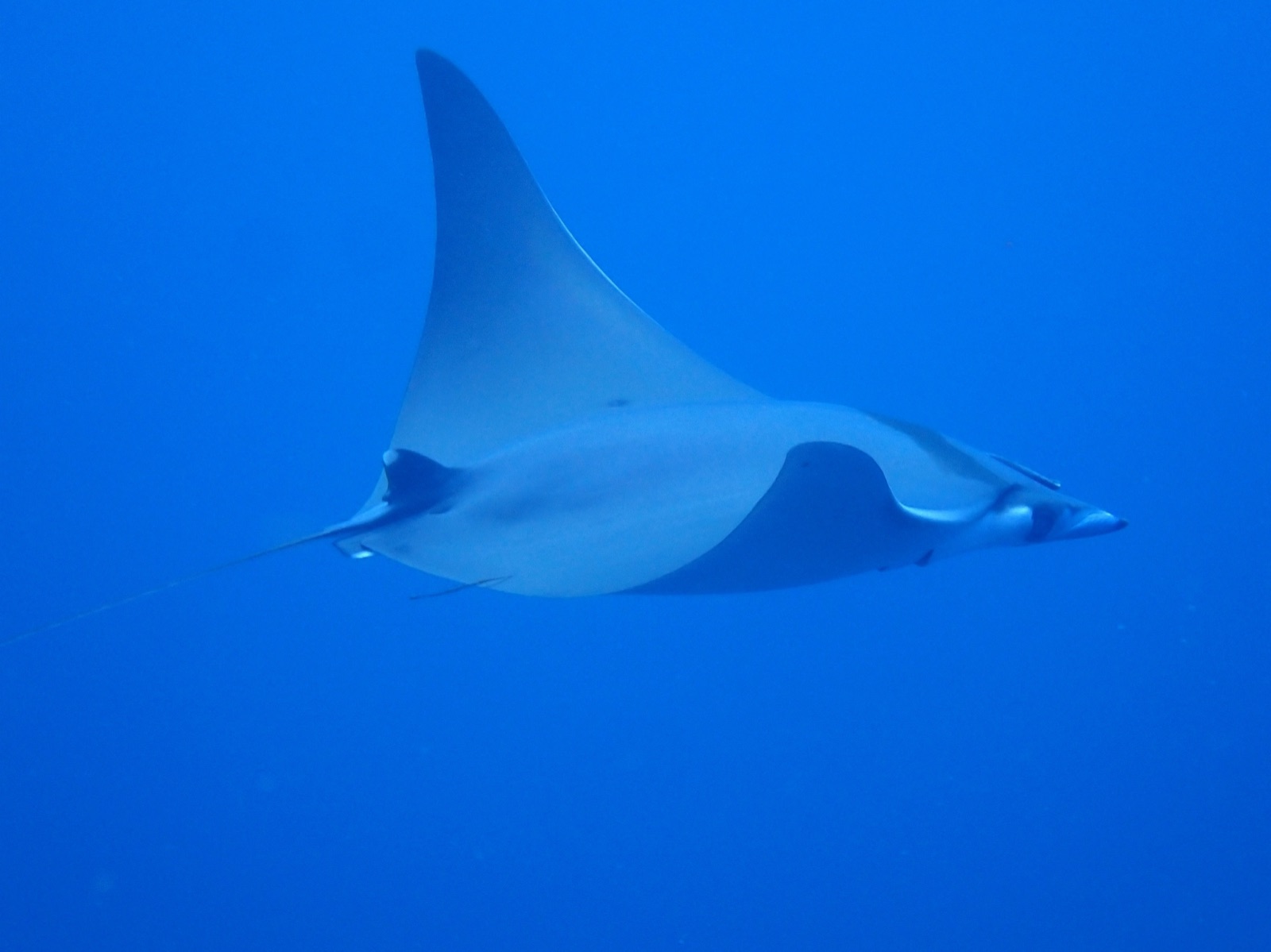
Mobula thurstoni reaches 2.2 m wingspan. Pelagic circumtropical mobula (Mobulidae) with diamond-shaped body black above and white below, flattened head with deployable cephalic horns, no caudal spine (unlike stingrays). Lives from 0 to 100 m in open water, forms migratory schools and spectacular out-of-water breaching. Feeds on zooplankton by filter feeding. IUCN Endangered (targeted gill fishery, bycatch). Iconic dive photo subject at Sea of Cortez, Revillagigedo, Galapagos for gatherings of hundreds.
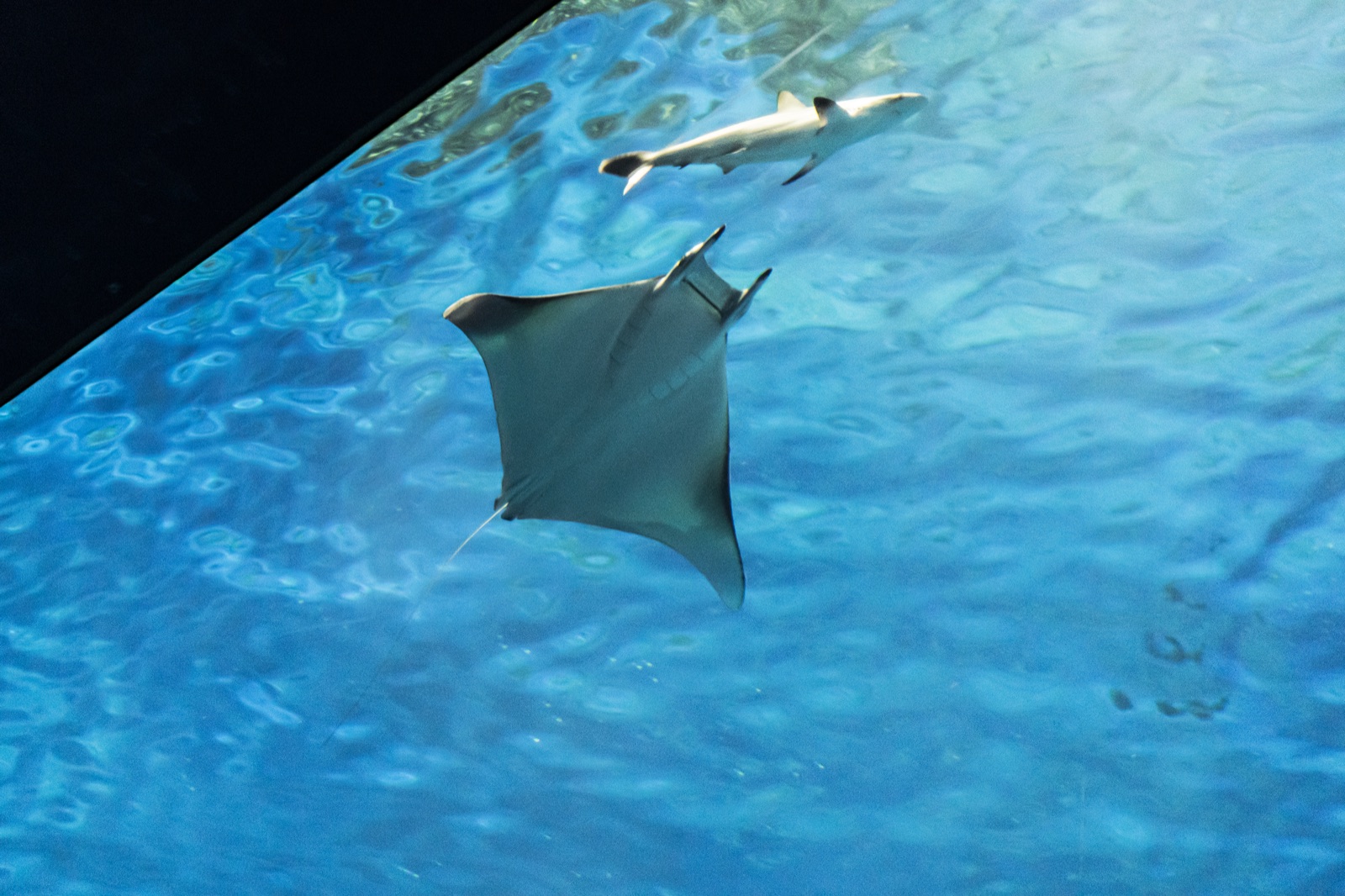
Photo of Bentfin devil ray
Frequently asked questions
- How big is the Bentfin devil ray?
- Bentfin devil ray (Mobula thurstoni) reaches 150–220 cm in length.
- At what depth can you find the Bentfin devil ray?
- Bentfin devil ray is found between 0–100 m deep.
- Is the Bentfin devil ray dangerous to divers?
- Danger level: Harmless.
- What is the conservation status of the Bentfin devil ray?
- IUCN status: Endangered (EN).
- Where can you find the Bentfin devil ray?
- Found in: Asian Pacific, Caribbean, Eastern Pacific, Indian Ocean & Red Sea, Macaronesia.
Other species in the genus Mobula
- Mobula alfredi - Reef manta ray
- Mobula tarapacana - Sicklefin devil ray
- Mobula mobular - Giant devil ray
- Mobula munkiana - Munk's devil ray
- Mobula birostris - Giant manta ray
Other species in the family Mobulidae
Sources
- Taxonomy: WoRMS (AphiaID 217430)
- Photos: iNaturalist (CC BY-NC)
- Distribution: GBIF (taxonKey 2419218)
- Conservation: IUCN Red List
- Encyclopedia: Wikipedia