Sea fig (Microcosmus sabatieri)
Key facts
- Scientific name
- Microcosmus sabatieri
- Common name
- Sea fig
- Category
- Tunicates
- Family
- Pyuridae
- Genus
- Microcosmus
- Size
- 5–15 cm
- Depth
- 3–50 m
- IUCN status
- Least concern (LC)
- Danger level
- Harmless
- Habitats
- rocky-reef
- Behaviours
- benthic, solitary
- Ocean zones
- East Atlantic, Mediterranean
Description
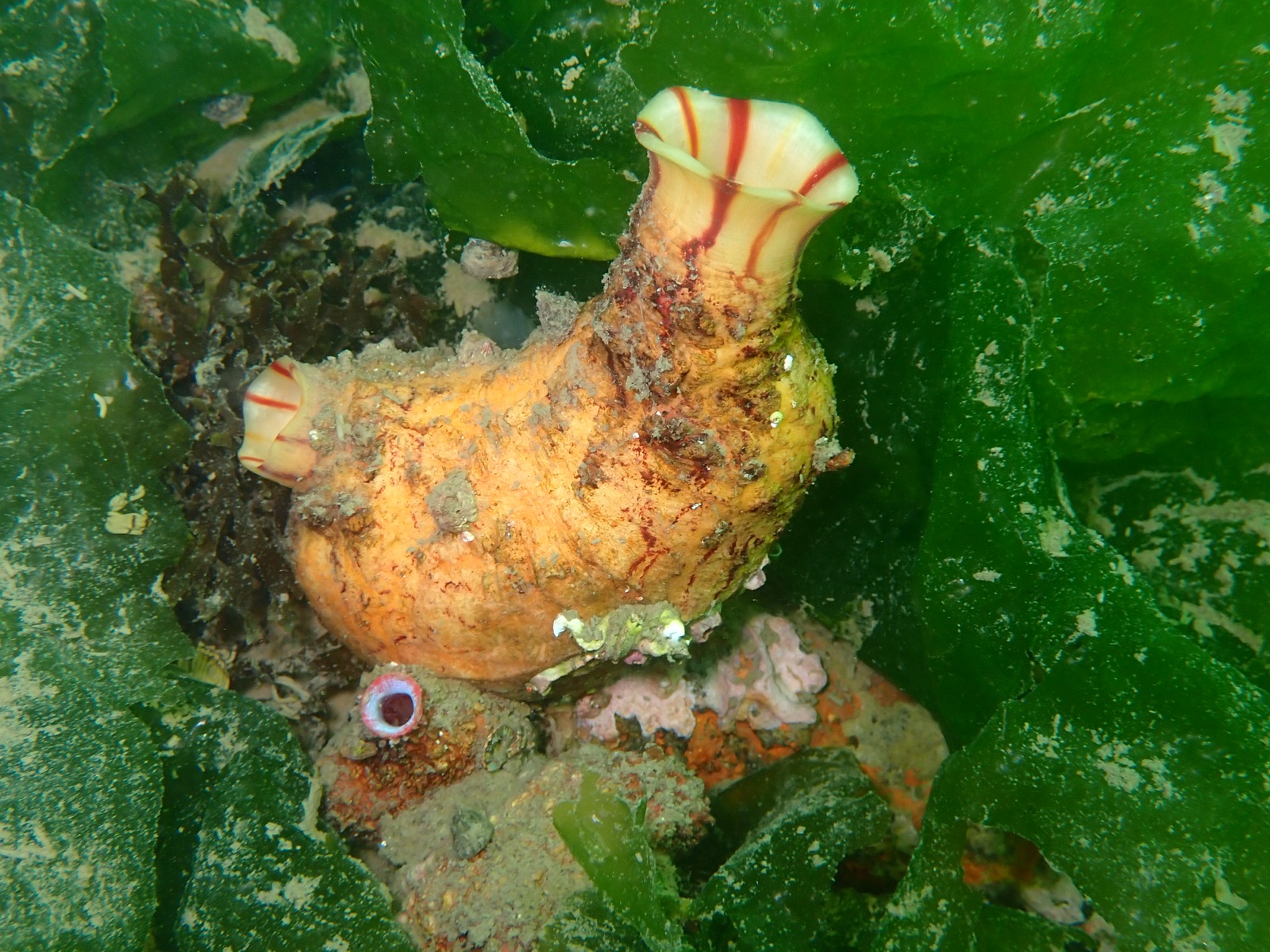
Microcosmus sabatieri reaches 15 cm. Solitary Mediterranean ascidian (Pyuridae) with vase or barrel body red-brown to orange-brown with thick rough tunic covered with sediments, algae and encrusting organisms (epibionts), siphons clearly visible. Lives from 3 to 50 m on Mediterranean rocky reefs and posidonia. Eaten raw in Provence, Sardinia, Greece, Egypt, Lebanon and especially Turkey where it is called 'meyve' and sold in markets. Discreet but characteristic dive photo subject of Mediterranean rocky landscapes.
Frequently asked questions
- How big is the Sea fig?
- Sea fig (Microcosmus sabatieri) reaches 5–15 cm in length.
- At what depth can you find the Sea fig?
- Sea fig is found between 3–50 m deep.
- Is the Sea fig dangerous to divers?
- Danger level: Harmless.
- What is the conservation status of the Sea fig?
- IUCN status: Least concern (LC).
- Where can you find the Sea fig?
- Found in: East Atlantic, Mediterranean.
Other species in the family Pyuridae
Sources
- Taxonomy: WoRMS (AphiaID 103844)
- Photos: iNaturalist (CC BY-NC)
- Distribution: GBIF (taxonKey 5200682)
- Conservation: IUCN Red List
- Encyclopedia: Wikipedia