Spotted Mantis Shrimp (Lysiosquillina maculata)
Key facts
- Scientific name
- Lysiosquillina maculata
- Common name
- Spotted Mantis Shrimp
- Category
- Crustaceans
- Family
- Lysiosquillidae
- Genus
- Lysiosquillina
- Size
- 25–40 cm
- Depth
- 3–35 m
- IUCN status
- Least concern (LC)
- Danger level
- Harmless
- Habitats
- coral-reef, rocky-reef
- Behaviours
- benthic, territorial, nocturnal
- Ocean zones
- Asian Pacific, Caribbean, Indian Ocean & Red Sea
Description
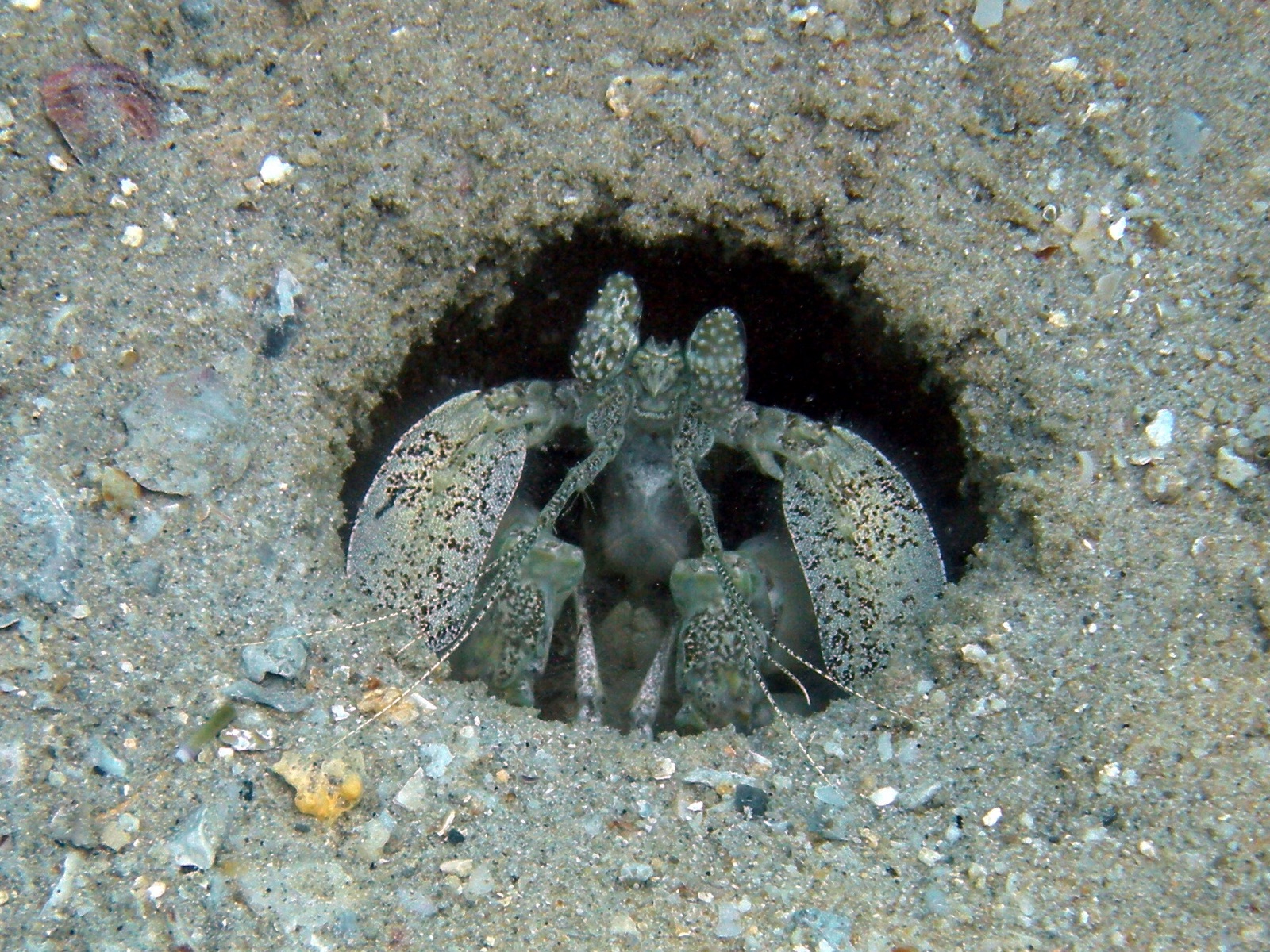
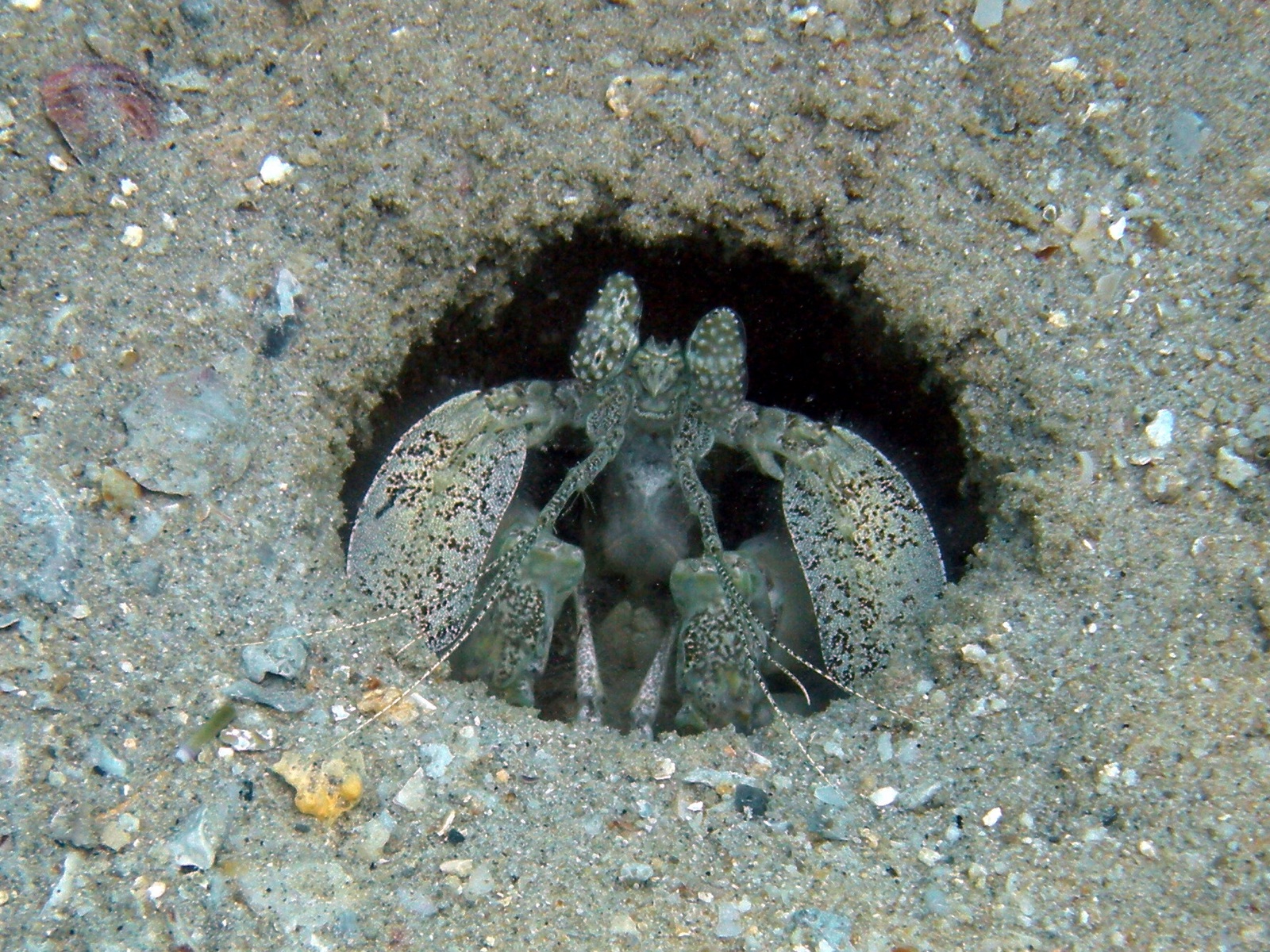
Lysiosquillina maculata reaches 40 cm. Robust mantis shrimp (Stomatopoda) from Indo-Pacific tropical and subtropical waters. Rich brown with scattered white spots. Massive body, powerful hunting appendages. Burrower: excavates deep burrows under rocks and corals. Specialized predator of small fish, shrimp, mollusks. Nocturnal-active in dusk zone. Marked territoriality. Minimally threatened = LC. Often observed in coastal macro photography trips.
Photo of Spotted Mantis Shrimp
Frequently asked questions
- How big is the Spotted Mantis Shrimp?
- Spotted Mantis Shrimp (Lysiosquillina maculata) reaches 25–40 cm in length.
- At what depth can you find the Spotted Mantis Shrimp?
- Spotted Mantis Shrimp is found between 3–35 m deep.
- Is the Spotted Mantis Shrimp dangerous to divers?
- Danger level: Harmless.
- What is the conservation status of the Spotted Mantis Shrimp?
- IUCN status: Least concern (LC).
- Where can you find the Spotted Mantis Shrimp?
- Found in: Asian Pacific, Caribbean, Indian Ocean & Red Sea.
Similar species
- Palinurus elephas - European spiny lobster
- Homarus gammarus - European lobster
- Maja crispata - Lesser spider crab
- Palaemon elegans - Rockpool prawn
- Ligia italica - Sea slater
- Clibanarius erythropus - Red-legged hermit crab
Sources
- Taxonomy: WoRMS (AphiaID 409044)
- Photos: iNaturalist (CC BY-NC)
- Distribution: GBIF (taxonKey 2214147)
- Conservation: IUCN Red List
- Encyclopedia: Wikipedia