Pacific nurse shark (Ginglymostoma unami)
Key facts
- Scientific name
- Ginglymostoma unami
- Common name
- Pacific nurse shark
- Category
- Fish
- Family
- Ginglymostomatidae
- Genus
- Ginglymostoma
- Size
- 150–300 cm
- Depth
- 0–100 m
- IUCN status
- Near threatened (NT)
- Danger level
- Harmless
- Habitats
- rocky-reef, coral-reef, cave
- Behaviours
- solitary, nocturnal
- Ocean zones
- Caribbean, Eastern Pacific
Description
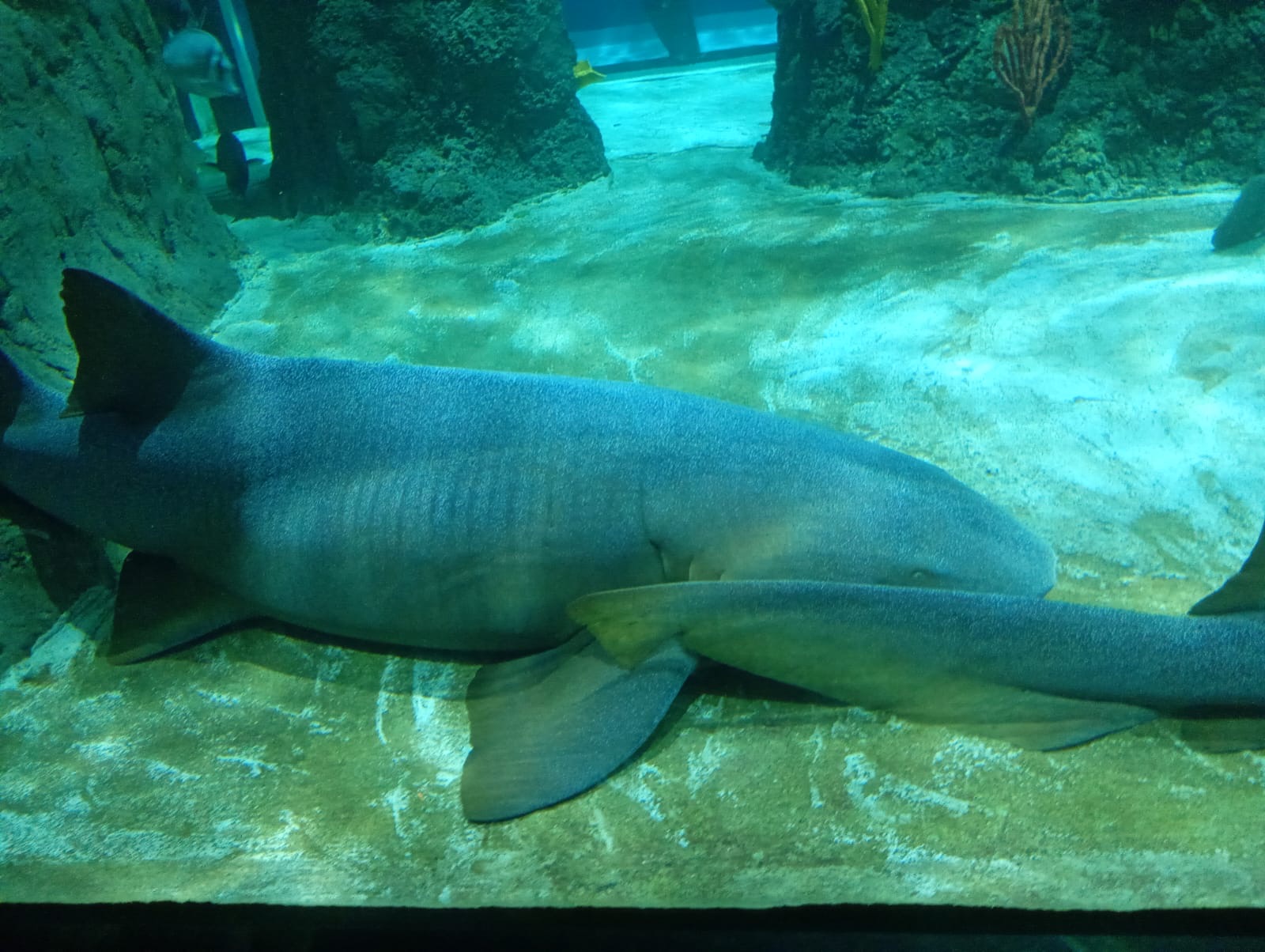
Ginglymostoma unami reaches 3 m. Nurse shark recently described as distinct species in 2015 (separated from Atlantic G. cirratum), endemic to Eastern Pacific (Gulf of California to Peru, Galapagos). Name derived from UNAM (Universidad Nacional Autonoma de Mexico) which led the research. Robust brown-beige to olive-gray body with two sensory barbels at snout, rounded caudal and dorsal fins. Lives from 0 to 100 m on rocky reefs, corals and caves. Nocturnal, diurnal rest piled under rocks. Listed NT. Harmless if undisturbed. Iconic encounters in Cabo Pulmo, Sea of Cortez, Socorro.
Frequently asked questions
- How big is the Pacific nurse shark?
- Pacific nurse shark (Ginglymostoma unami) reaches 150–300 cm in length.
- At what depth can you find the Pacific nurse shark?
- Pacific nurse shark is found between 0–100 m deep.
- Is the Pacific nurse shark dangerous to divers?
- Danger level: Harmless.
- What is the conservation status of the Pacific nurse shark?
- IUCN status: Near threatened (NT).
- Where can you find the Pacific nurse shark?
- Found in: Caribbean, Eastern Pacific.
Other species in the genus Ginglymostoma
Other species in the family Ginglymostomatidae
Sources
- Taxonomy: WoRMS (AphiaID 1006832)
- Photos: iNaturalist (CC BY-NC)
- Distribution: GBIF (taxonKey 9346494)
- Conservation: IUCN Red List
- Encyclopedia: Wikipedia