Red encrusting sponge (Crambe crambe)
Key facts
- Scientific name
- Crambe crambe
- Common name
- Red encrusting sponge
- Category
- Sponges
- Family
- Crambeidae
- Genus
- Crambe
- Size
- 5–30 cm
- Depth
- 0–40 m
- IUCN status
- Least concern (LC)
- Danger level
- Harmless
- Habitats
- rocky, reef
- Behaviours
- sessile, filter-feeder
- Ocean zones
- East Atlantic, Macaronesia, Mediterranean
Description
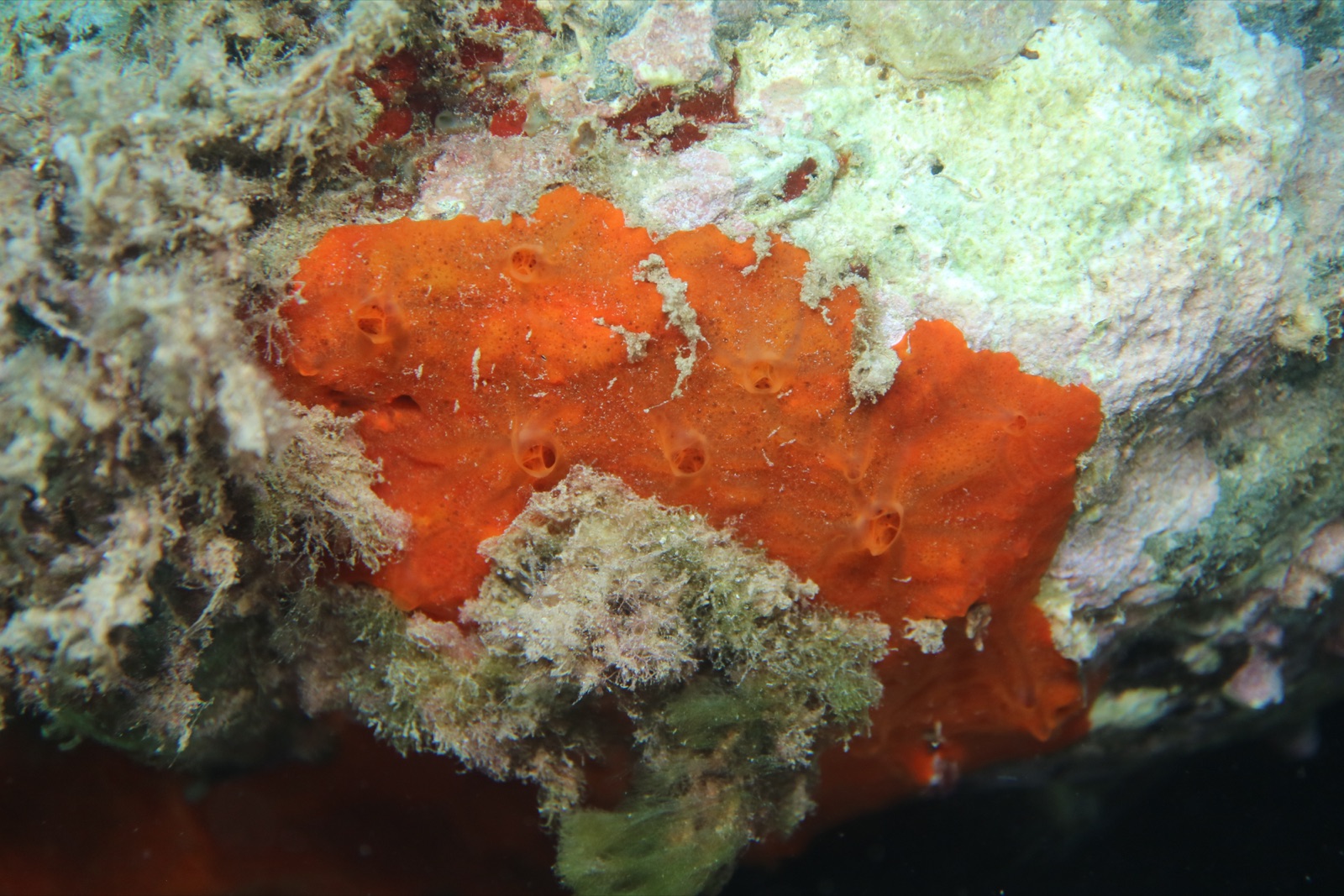
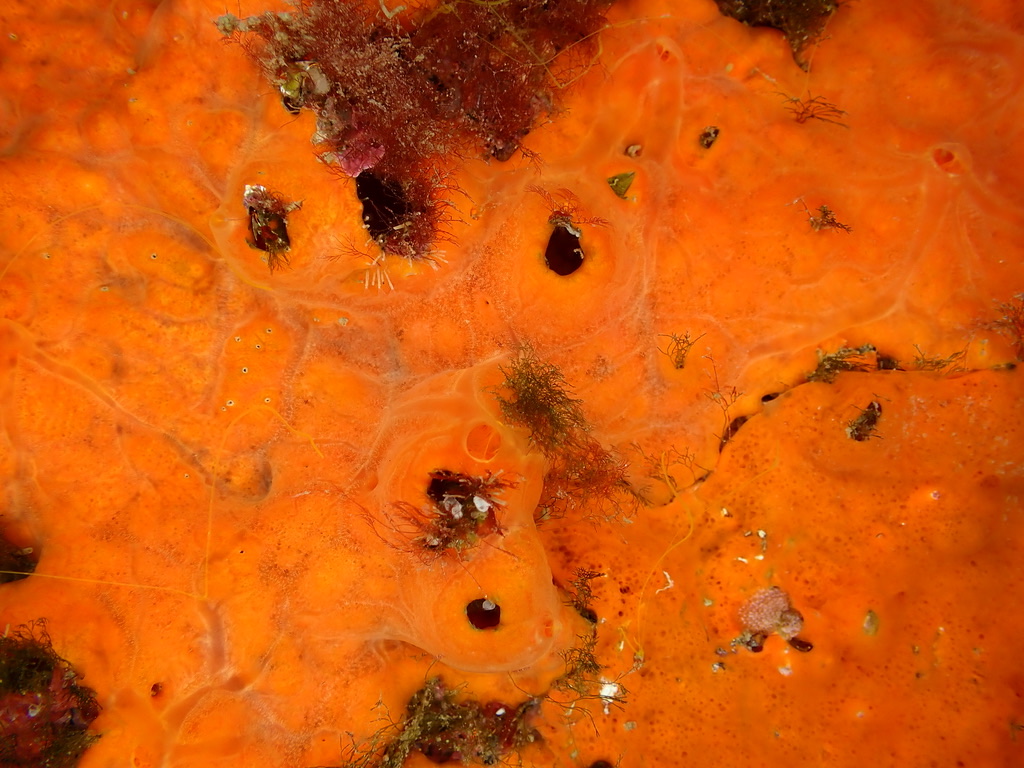
Crambe crambe forms vivid red-to-orange encrusting patches on rock, from a few centimeters to 30 cm. Oscula (exhalant pores) clearly visible on the surface. Produces toxic alkaloids that protect it from most predators, except a few specialist nudibranchs. Very common on shaded Mediterranean walls from 0 to 40 m. Spectacular color.
Photo of Red encrusting sponge
Frequently asked questions
- How big is the Red encrusting sponge?
- Red encrusting sponge (Crambe crambe) reaches 5–30 cm in length.
- At what depth can you find the Red encrusting sponge?
- Red encrusting sponge is found between 0–40 m deep.
- Is the Red encrusting sponge dangerous to divers?
- Danger level: Harmless.
- What is the conservation status of the Red encrusting sponge?
- IUCN status: Least concern (LC).
- Where can you find the Red encrusting sponge?
- Found in: East Atlantic, Macaronesia, Mediterranean.
Similar species
- Spongia officinalis - Bath sponge
- Chondrosia reniformis - Kidney sponge
- Sarcotragus spinosulus - Spiny sponge
- Aplysina aerophoba - Yellow tube sponge
- Aplysina fulva - Yellow-brown rope sponge
- Aplysina cauliformis - Row pore rope sponge
Sources
- Taxonomy: WoRMS (AphiaID 133445)
- Photos: iNaturalist (CC BY-NC)
- Distribution: GBIF (taxonKey 5181275)
- Conservation: IUCN Red List
- Encyclopedia: Wikipedia