Sand sea star (Astropecten irregularis)
Key facts
- Scientific name
- Astropecten irregularis
- Common name
- Sand sea star
- Category
- Echinoderms
- Family
- Astropectinidae
- Genus
- Astropecten
- Size
- 8–25 cm
- Depth
- 0–1000 m
- IUCN status
- Least concern (LC)
- Danger level
- Harmless
- Habitats
- sand
- Behaviours
- benthic, predator
- Ocean zones
- East Atlantic, Mediterranean
Description
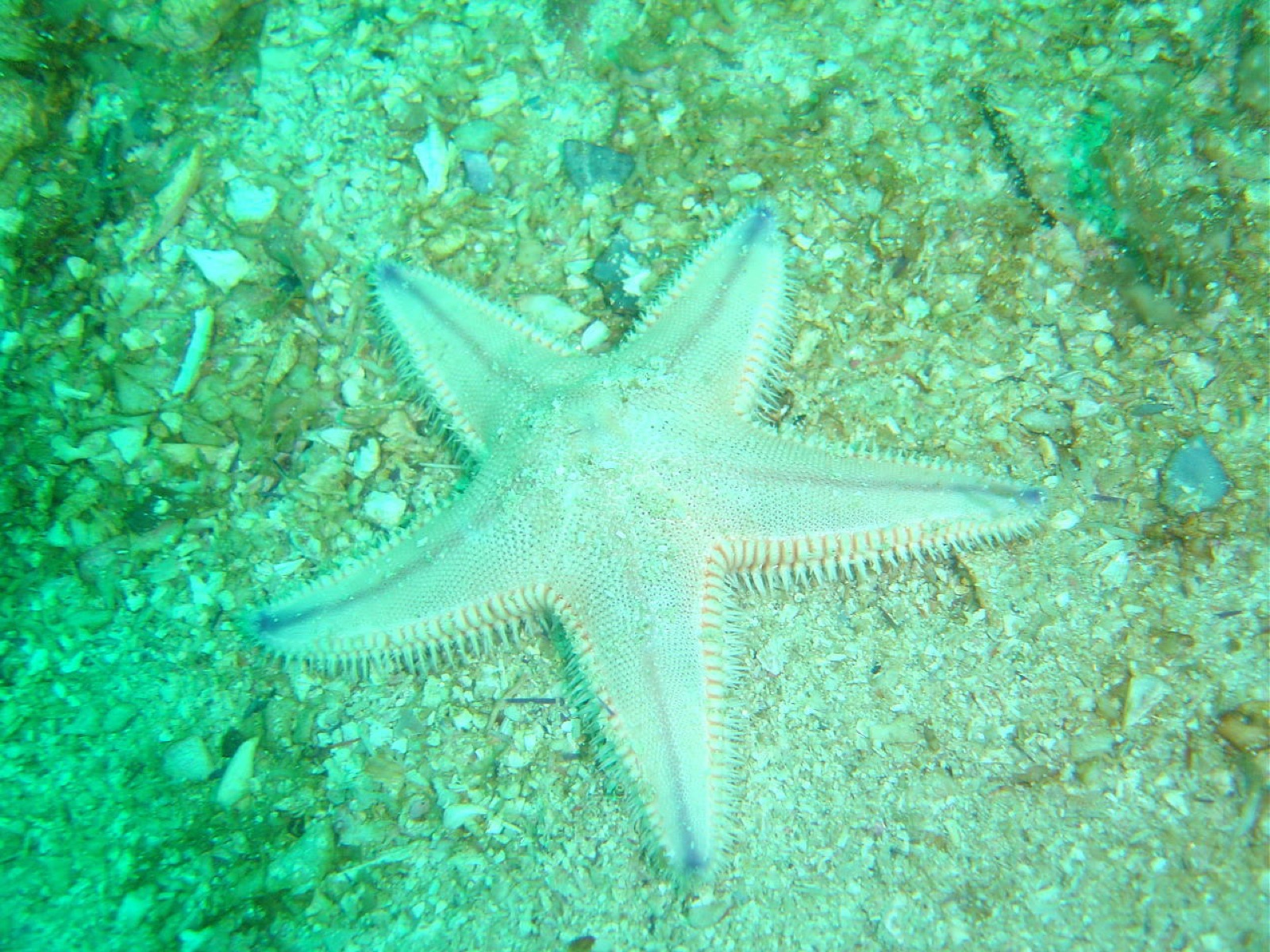
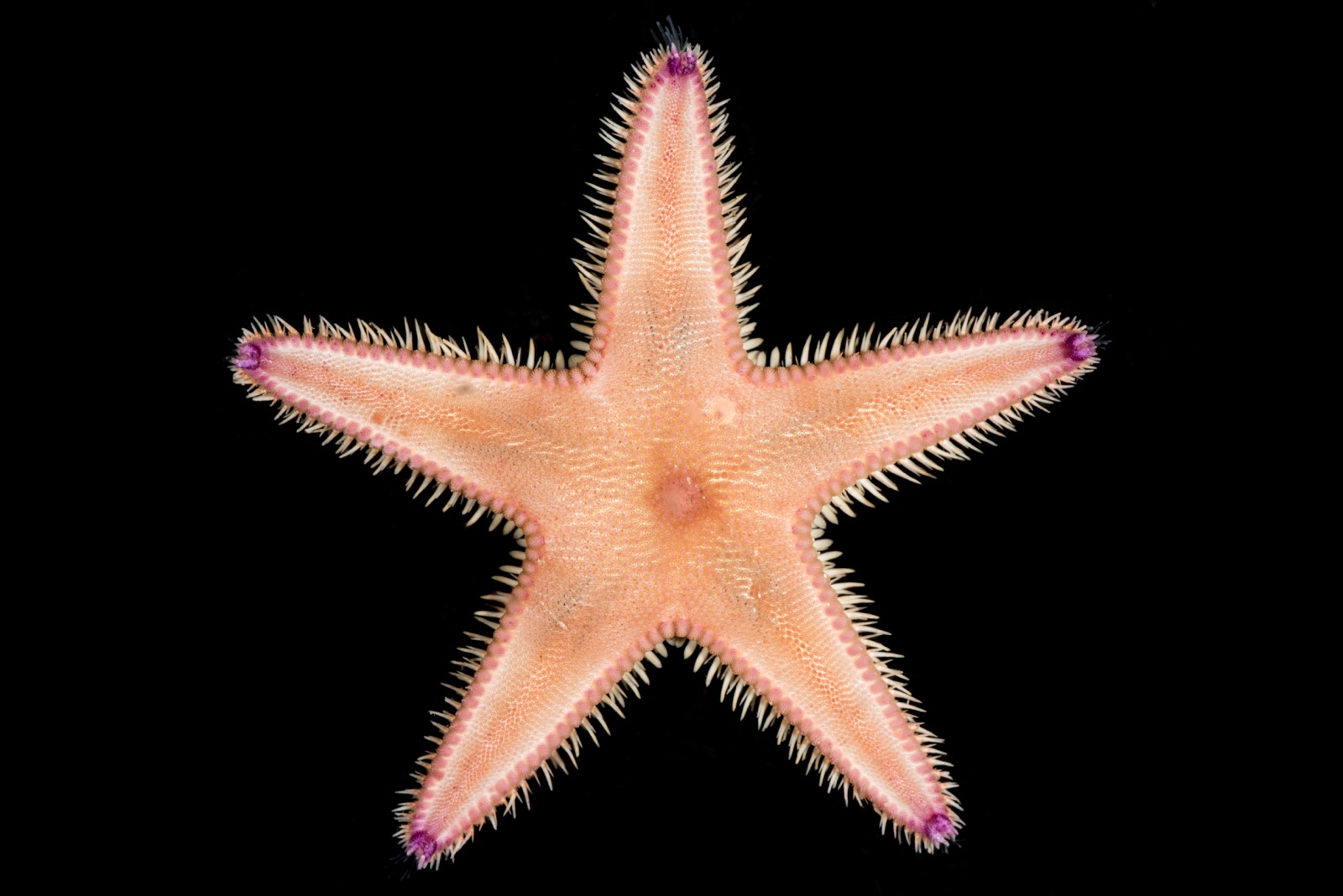
Astropecten irregularis reaches 25 cm. Mediterranean and East-North Atlantic sea star with body of 5 distinctive rectangular pointed arms with two rows of large characteristic comb-shaped marginal plates (hence Astropecten, comb star) edged with short spines. Beige-pink to brown-purple color. Lives from 0 to 1000 m on fine sands, mud and shell debris zones of Mediterranean and Atlantic. Predator of bivalve mollusks in sediment. Discreet macro photo subject for sea star enthusiasts. Smaller cousin of A. aranciacus (already in base).
Photo of Sand sea star
Frequently asked questions
- How big is the Sand sea star?
- Sand sea star (Astropecten irregularis) reaches 8–25 cm in length.
- At what depth can you find the Sand sea star?
- Sand sea star is found between 0–1000 m deep.
- Is the Sand sea star dangerous to divers?
- Danger level: Harmless.
- What is the conservation status of the Sand sea star?
- IUCN status: Least concern (LC).
- Where can you find the Sand sea star?
- Found in: East Atlantic, Mediterranean.
Other species in the genus Astropecten
Sources
- Taxonomy: WoRMS (AphiaID 123867)
- Photos: iNaturalist (CC BY-NC)
- Distribution: GBIF (taxonKey 8236696)
- Conservation: IUCN Red List
- Encyclopedia: Wikipedia