Adam's anemone (Adamsia palliata)
Key facts
- Scientific name
- Adamsia palliata
- Common name
- Adam's anemone
- Category
- Corals
- Family
- Hormathiidae
- Genus
- Adamsia
- Size
- 5–10 cm
- Depth
- 5–80 m
- IUCN status
- Least concern (LC)
- Danger level
- Harmless
- Habitats
- sand
- Behaviours
- sessile, symbiotic
- Ocean zones
- East Atlantic, Mediterranean
Description
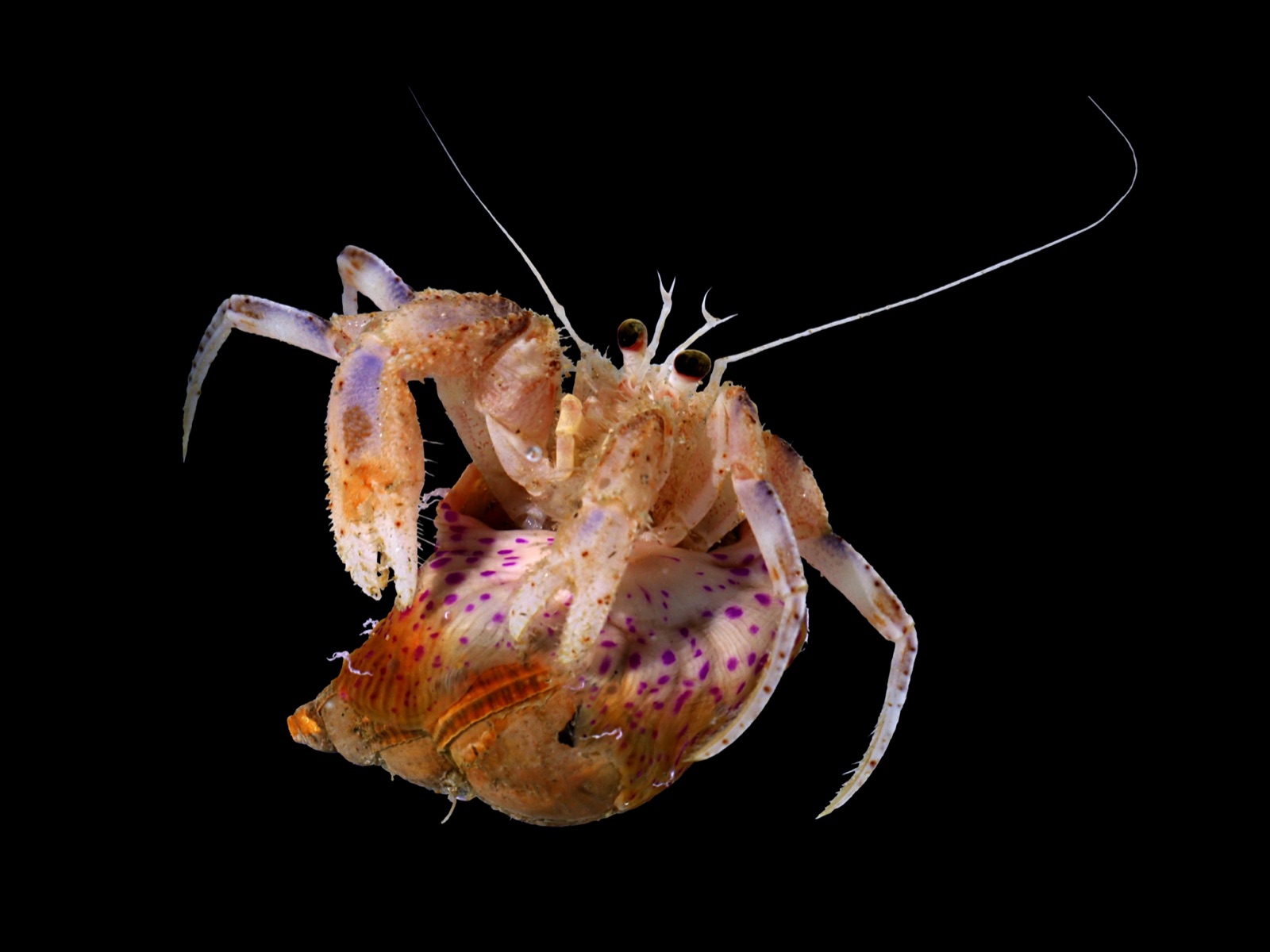
Adamsia palliata reaches 10 cm. Mediterranean and temperate East Atlantic anemone (Cnidaria, Actiniaria) very particular: develops in mantle shape (palliata, mantle) totally enveloping shell of hermit crab Pagurus prideauxi (strict obligate symbiosis) with shell extension whose edges are widened by anemone itself. Pink-white body spotted with pink-red, long purple tentacles below hermit body. Lives from 5 to 80 m on sands of Mediterranean and temperate Atlantic. One of the most accomplished mutualisms. Classic macro photo subject.
Frequently asked questions
- How big is the Adam's anemone?
- Adam's anemone (Adamsia palliata) reaches 5–10 cm in length.
- At what depth can you find the Adam's anemone?
- Adam's anemone is found between 5–80 m deep.
- Is the Adam's anemone dangerous to divers?
- Danger level: Harmless.
- What is the conservation status of the Adam's anemone?
- IUCN status: Least concern (LC).
- Where can you find the Adam's anemone?
- Found in: East Atlantic, Mediterranean.
Other species in the family Hormathiidae
Sources
- Taxonomy: WoRMS (AphiaID 100932)
- Photos: iNaturalist (CC BY-NC)
- Distribution: GBIF (taxonKey 5184247)
- Conservation: IUCN Red List
- Encyclopedia: Wikipedia